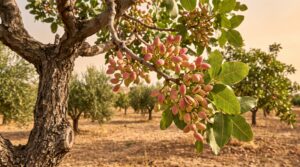
At Agro Vivero del Mediterráneo, we have spent years wholeheartedly dedicated to the fascinating world of pistachio farming. We have seen projects born from a simple idea on paper and have accompanied them as they grew into thriving, profitable orchards. Along this journey, we have shared the enthusiasm of hundreds of farmers and have witnessed an undeniable truth: success in pistachio cultivation is rarely the result of chance. It is the outcome of planning, knowledge, and above all, making the right decisions at the right time. 🌱
Starting a pistachio orchard is one of the most attractive agricultural investments with the greatest future potential. However, it is also a long-term commitment that leaves no room for improvisation. A mistake in the initial phase can have consequences that drag on for years, affecting productivity and the profitability of the orchard. That is why the question posed in this article’s title is no small matter: Do I need professional advice? When should I hire a specialized technical engineering firm?
From our experience, the answer is clear: from the very moment the idea of planting pistachios becomes serious. Bringing in a team of experts is not an expense, but the smartest investment one can make to ensure project viability and maximize returns. Below, we are going to break down, phase by phase, why and when it is crucial to have this specialized support.
Before Buying the First Plant: The Study and Feasibility Phase
Dreaming is the first step, but for that dream not to turn into a nightmare, it is essential to test it with rigorous data and analysis. This is the first, and perhaps most critical, stage where the involvement of agronomic engineering becomes indispensable.
Land and Climate Analysis 🔬
Not all soils are suitable for pistachio farming. This tree has very specific requirements. It needs deep, well-drained soils, preferably of loamy or sandy-loam texture. The presence of high water tables, heavy soils, or very clay-rich ground can be fatal for the roots, causing root asphyxiation and the onset of fungal diseases such as Verticillium wilt.
Our technical team always begins with a complete soil study. We carry out thorough sampling of the plot, taking samples at different depths (30, 60, 90 cm) for laboratory analysis. What are we looking for?
-
pH: The pistachio tree prefers neutral to slightly alkaline soils (pH between 7.0 and 8.5).
-
Organic matter: An adequate level is key to fertility.
-
Nutrients: We analyze nitrogen, phosphorus, potassium, and essential micronutrient levels.
-
Electrical conductivity: To rule out salinity issues that could limit tree development.
Alongside this, we carry out a detailed agroclimatic study of the area. The pistachio tree needs many hours of winter cold (below 7°C) to break bud dormancy and ensure uniform budding and flowering. At the same time, it is highly sensitive to late spring frosts, which can wipe out the blossom and, consequently, that year’s entire harvest. It also requires long, dry, hot summers for the proper ripening of its prized nut. A historical analysis of weather data for the exact location of the farm allows us to assess risks and select the varieties best suited to it.
Water Availability and Quality 💧
Although the pistachio tree is famous for its drought resistance, we must not confuse resistance with productivity. To achieve commercial, profitable harvests, irrigation is essential, especially under the conditions found on the Iberian Peninsula. A specialized engineering team will assess:
-
Water sources: Is there access to a well, a river concession, an irrigation community?
-
Flow rate and legality: How much water can be legally extracted, and is it sufficient for the number of hectares to be planted?
-
Water quality: We carry out physicochemical analyses of the water to determine its pH, electrical conductivity, and the presence of salts or toxic elements (such as boron) that could damage the orchard in the long term.
With these three analyses (soil, climate, and water), we draw up a complete feasibility report. This document is the first major decision-making tool. If the report is positive, excellent! We can move forward on solid ground. If it identifies problems, such as poor drainage or frost risk, that does not mean the end of the project. Our job is to propose solutions: soil amendments, drainage systems, frost control methods, and so on.
Orchard Design: The Blueprint of Our Future Pistachio “Factory”
Once feasibility has been confirmed, we move on to the design phase. This is where the expertise of a technical engineering firm makes a huge difference. Designing a pistachio orchard is like designing a factory: every element must be in its proper place for the production process to run efficiently over the next 50 or 60 years.
Choosing the Rootstock and Variety ✅
This is, without a doubt, one of the most important decisions. There is no such thing as “the best variety” in absolute terms, only the most suitable one for each specific project. The choice depends directly on the conclusions of the feasibility study.
-
The Rootstock: This is the foundation of the tree, its roots. Its selection is crucial for adapting to the soil. The most widely used is Pistacia terebinthus (Terebinth), thanks to its great hardiness and adaptation to our calcareous soils. However, in replanting situations or soils at risk of Verticillium, rootstocks such as UCB-1, a hybrid of P. atlantica x P. integerrima, offer superior resistance and vigor, albeit with greater water and soil requirements. At Agro Vivero del Mediterráneo, we offer a wide range of pistachio plants grafted onto the best rootstocks to ensure success right from the foundation.
-
The (Female) Variety: The choice of productive variety will depend on the area’s chilling hours. Varieties such as Kerman, the most well-known worldwide, require many chilling hours. In milder areas, varieties such as Larnaka, Sirora, or Lost Hills adapt much better, ensuring good production. We also consider the intended market for the harvest (snack market, industry) and the variety’s vigor.
-
The Pollinator (Male): The pistachio tree is dioecious, meaning there are male and female trees. Without proper pollination, there is no harvest. The male must be compatible with the female — that is, their flowering periods must coincide. For example, for Kerman, the classic pollinator is Peter. For Sirora, Randy is an excellent option. We also calculate the optimal percentage and distribution of males within the orchard (typically 8-10%) so that the wind, the pollinating agent, can do its job effectively.
Planting Layout and Orientation 🗺️
How far apart should we plant the trees? The classic 7×6 or 7×5 meter layout has historically been the most widely used, but the current trend, with mechanization and newer, more vigorous rootstocks, is moving toward slightly more intensive layouts. A 6×5 or 6×4 layout can be viable under certain conditions. The decision affects everything:
-
Number of plants per hectare: Determines the initial investment.
-
Entry into production: Denser layouts can speed up ground cover and initial production.
-
Future management: There must be enough space for machinery to pass through (tractors, sprayers, harvest shakers).
-
Light exposure: We aim for maximum sunlight capture across all parts of the tree.
Row orientation is also key, generally aiming for a north-south direction for uniform light use throughout the day.
Irrigation System Design 💧
We design a high-efficiency drip irrigation system, custom-tailored to each orchard. It is not just about laying pipes and emitters. We calculate:
-
Crop water requirements: These vary throughout the year and across the orchard’s lifetime.
-
Emitter type: Pressure-compensating and anti-drain emitters to ensure uniform irrigation across the entire plot, regardless of slope.
-
Emitter flow rate and spacing: Based on soil texture to create an optimal wetted bulb.
-
Hydraulic design: We size the primary, secondary, and tertiary pipelines, as well as the irrigation control head (pumping, filtration, fertigation system) so the entire system operates at the correct pressure and efficiently.
Poor irrigation design causes waterlogging in some areas and drought in others, resulting in uneven tree development and reduced production. Our services include detailed engineering for the entire irrigation system — a key element for profitability.
The Early Years: Protecting Our Investment
Planting the trees is only the beginning of a journey that lasts between 5 and 7 years until the first significant harvest. During this juvenile phase, the goal is to build a strong, balanced tree structure capable of supporting large harvests in the future. Ongoing technical advice is vital.
Formative Pruning ✂️
The pistachio tree cannot be left to grow on its own. It must be guided from day one. Formative pruning, carried out during the first 3-4 years, aims to create the tree’s structure, usually in an open-vase shape with 3 or 4 well-distributed main branches.
-
Year 1: We select the main leader and head it at the desired height (usually between 80-100 cm) to force the emission of primary branches.
-
Years 2 and 3: We select the definitive main branches, removing those that compete with each other or are poorly positioned. Initial pinching is carried out to encourage secondary branching.
Incorrect formative pruning can result in unbalanced trees, with weak branches that will break under the weight of the harvest, or with such a dense structure that proper lighting and ventilation are impeded, encouraging disease. Our field monitoring ensures each tree is shaped optimally.
Fertilization Plan (Fertigation) 🥗
A young tree has very different nutritional needs from a tree in full production. Excess nitrogen, for example, can cause excessive, weak vegetative growth. A professional fertilization plan is based on:
-
Leaf analyses: We take annual leaf samples to know exactly the nutritional status of the tree.
-
Soil analyses: These let us know the nutrients available in the soil.
-
Crop phenological stage: Requirements change depending on whether the tree is budding, flowering, or developing the nut.
With this data, we design a precise fertigation calendar, delivering through the drip irrigation system exactly the nutrients the plant needs at each moment. This not only optimizes growth but also represents a considerable savings in fertilizer.
Pest and Disease Control 🐛
Young trees are more vulnerable. A severe attack of psyllids or a trunk-boring insect can delay their growth for several years or even kill them. Technical advice focuses on Integrated Pest Management (IPM):
-
Monitoring: We carry out periodic visits to the orchard to detect the first signs of pests or diseases.
-
Prevention: We promote practices that help prevent problems, such as keeping the plot free of weeds that act as a pest reservoir.
-
Justified treatments: We only recommend applying phytosanitary treatments once a damage threshold that justifies it has been reached, always using the active substances most respectful of beneficial fauna and the environment.
Toward Full Production: Optimizing Results
From the 7th or 8th year onward, the orchard enters its mature phase, and the goal shifts to maximizing the sustained production of high-quality pistachios over time.
Production and Fruiting Pruning 🌳
Once the tree has been formed, annual pruning becomes crucial for balancing vegetative growth and production. The pistachio tree has a strong tendency toward alternate bearing — that is, a year of high harvest followed by one of low or zero yield. Well-executed production pruning, removing shaded wood, poorly directed branches, and carrying out thinning, helps to:
-
Mitigate alternate bearing: Ensuring more consistent harvests year after year.
-
Improve quality: By allowing better light and air penetration to the clusters, larger nuts with fewer stains are obtained.
-
Facilitate harvesting: Keeping the tree at a manageable size for shakers.
Fine-Tuning Irrigation and Nutrition 🎯
At this stage, irrigation control is absolutely critical. Water stress at key moments, such as kernel filling, can cause a high percentage of empty pistachios, which translates into a direct loss of income. Through the use of soil moisture sensors, dendrometers, and the monitoring of climate data, we adjust irrigation doses almost daily to meet the crop’s exact demand, avoiding both stress and the waste of water and energy.
The fertilization plan becomes more complex, since we must replace the nutrients removed with the harvest, which can exceed 100-120 kg of nitrogen and 80-90 kg of potassium per hectare in high-yielding orchards.
Harvest and Post-Harvest Management 🏭
The harvest is the most eagerly awaited moment, and also one of the most delicate. Hiring a technical engineering firm helps plan it for success:
-
Determining the optimal harvest time: Neither too early (immature nuts) nor too late (risk of aflatoxins and nuts falling to the ground).
-
Harvest logistics: Organizing machinery (shakers, catching umbrellas, trailers) and personnel to harvest the entire farm within the optimal time window.
-
Rapid processing: Pistachios must be hulled and dried within 24 hours of harvest to prevent the development of fungi and shell stains, which reduce their value. We advise on processing plant design or on nearby contract-processing options.
What If I Already Have an Established Orchard?
Technical advice is not only for new projects. Many farmers come to us with established orchards that are not delivering the expected results. The most common problems we encounter are:
-
Low production or excessive alternate bearing: Usually related to poor pollination (too few males or incompatible varieties), incorrect pruning, or poor nutritional management.
-
High percentage of empty pistachios: Generally a symptom of irrigation problems at critical stages or deficiencies in certain nutrients.
-
Recurring health problems: Serious pest or disease outbreaks that indicate an imbalance in the plot’s ecosystem.
-
Trees with poor vigor or uneven development: May be due to soil problems (compaction, waterlogging) that went undetected at the time, or a poorly designed irrigation system.
In these cases, we carry out a complete technical audit of the orchard. We analyze all parameters (soil, water, plant, historical management) to identify the root cause of the problems and develop a corrective action plan. Sometimes, with simple adjustments to pruning or the fertigation plan, results improve dramatically.
Modern agriculture is a high-tech enterprise. Pistachio farming, with its high added value and long life cycle, is the perfect example. Leaving decisions that will determine the profitability of a 50-year investment to chance is too great a risk. Having a specialized agronomic engineering firm such as Agro Vivero del Mediterráneo on your side means having a strategic partner — a team of professionals who apply science, technology, and valuable experience to turn an agricultural project into a success story.
If you are thinking of taking the next step, if you have already taken it but the results are not what you expected, or if you simply want to optimize your orchard to take it to the next level, we invite you to get in touch with us. We will be delighted to study your case and offer you the solutions you need. You can even request an initial estimate through our reservation and quote form. Together, we can make your investment yield the best possible nuts. 🚀
Need a quote?
Tell us about your project and we will send you a proposal with no obligation.
Request a quote