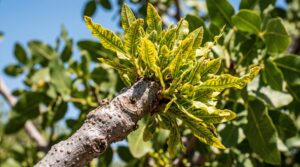
At Agro Vivero del Mediterráneo, we have a long history of intense work and specialization in the exciting world of the pistachio. Our experience is not measured in units of time, but in the number of successful projects we have seen flourish and in the trust that hundreds of farmers place in us every year. We understand the pistachio not just as a plant, but as a life project, a long-term investment that transcends the farmer themselves and becomes a legacy for future generations. In an enterprise of this magnitude, every initial decision counts exponentially. And the first, the most fundamental and irreversible of all, is the choice of the correct variety. This decision, more than any other, is intimately linked to a factor that we cannot control, but which we can and must understand perfectly down to its smallest details: the climate. 🗺️
The climate is the conductor of our plantation’s orchestra, the invisible partner working with us day and night. It defines the pace of growth, the exact moment of flowering, the final quality of the nut, and ultimately, the economic viability of the entire operation for the next 50 or 60 years. Choosing a variety that does not adapt to the microclimate of our plot is like trying to navigate the desert in a sailboat; the tools are simply not right for the environment, and failure is a certainty. A neighbor’s success five kilometers away does not guarantee ours, as a small difference in altitude, a hollow, or proximity to a body of water can drastically change climatic conditions. That is why, in this comprehensive article, we are going to pour out our accumulated knowledge, the result of analyzing thousands of plots and watching hundreds of plantations evolve, to guide you through this critical process. Together, we will explore the complexities of the climate, breaking down each of its components and how they influence the selection of pistachio varieties, so that your investment is not only safe but extraordinarily profitable. Join us on this deep journey, where climate science and advanced agronomy go hand in hand to lay the immovable foundations of success.
The capital importance of chill hours (CH)
When we talk about the annual cycle of the pistachio tree, we must understand that the tree, like many other deciduous species of temperate climates, has evolved to survive adverse winters. To do this, it enters a period of rest or winter lethargy, physiologically known as dormancy. This state is not a simple pause; it is an active and essential process during which the plant accumulates energy reserves in its roots and wood, readjusts its hormonal balances, and prepares for the explosion of life that will come with spring. For this “awakening” to be uniform and vigorous, the tree needs an unequivocal signal that winter is over. That signal is not the rise in temperatures or the length of the days, but the accumulation of a specific amount of cold. This is what we call “chill hours” or CH. 🌡️❄️
But what exactly is a chill hour and why is it so crucial? Although there are several mathematical models for its calculation (such as the Utah model, which even subtracts hours when winter temperatures are too high), the most commonly used and accepted in the pistachio sector is the Weinberger model. This model is simple and effective: it counts as one chill hour (CH) every complete hour in which the air temperature remains below 7.2º C. This threshold is not arbitrary; it corresponds to a point at which a series of biochemical processes are triggered in the plant that degrade budding-inhibiting hormones (such as abscisic acid) and promote the synthesis of promoting hormones (such as gibberellins). The tree functions like a biological odometer, adding up each of these hours.
If by the end of winter, the plant has accumulated the number of chill hours that its genetics demand, the result is a spectacular budding: all the buds, both those that will give rise to flowers (flower buds) and those that will generate new shoots and leaves (vegetative buds), activate synchronously in a short period of time. This homogeneity is the basis of a good harvest.
Conversely, if the accumulated chill hours are insufficient, the consequences are very damaging and cascading, affecting the entire season. This phenomenon is known as “erratic budding” or “irregular dormancy break,” and its effects are:
-
Uneven and Prolonged Flowering: This is the most catastrophic problem. In an ideal situation, all female flowers in a plantation should be receptive for a period of 7 to 10 days, coinciding with the peak of pollen release by the males. With a lack of CH, some flowers open on the expected date, others a week later, and some even two or three weeks later. Meanwhile, the males, which also suffer from this irregularity, release their pollen in an equally disorderly manner. A synchronization disaster occurs. The pollen, which in pistachio travels by wind (anemophilous pollination), is released when many female flowers are not yet ready, or vice versa, the flowers open when most of the pollen has already dispersed. The direct result is a very low fruit set percentage and, consequently, a harvest full of empty pistachios, which have the same formation cost for the tree but zero commercial value.
-
Low Budding Percentage and Bud Abortion: Many buds, especially floral ones which are more demanding in cold, simply do not manage to “wake up.” They remain dormant throughout the season or even die and dry out. This translates into a direct loss of productive potential. Instead of having a cluster with 15 or 20 flowers, we may have barely 4 or 5, or directly none. On the branches, we will see bare areas where new leaves should have sprouted, reducing the plant’s photosynthetic capacity.
-
Irregular Nut Development: Prolonged flowering causes pistachios of very different ages to exist in the same cluster and on the same tree. While some are already starting kernel filling, others have just been fertilized. This heterogeneity is a logistical nightmare. It complicates the application of phytosanitary treatments, as the sensitivity state of the nut is not the same. But, above all, it makes it impossible to determine an optimal harvest time. If we harvest early, a significant part of the product will be immature (unfilled kernel, unopened shell). If we wait for the later ones to ripen, the first ones will be overripe, with a risk of falling, fungal development, and loss of quality. Look at it how you will, it is a loss of value and kilos.
-
General Weakening and Accentuation of Alternate Bearing: The plant’s constant and disorderly effort to try to sprout over a prolonged period consumes a large amount of its energy reserves inefficiently. This leaves it weakened and more vulnerable to pest and disease attacks. Furthermore, this physiological stress aggravates the pistachio’s natural tendency towards alternate bearing (or biennial bearing), causing a mediocre production year to be followed by one of almost zero production.
For all the above reasons, knowing the average chill hours of our area as precisely as possible is not a recommendation, it is an obligation. It is the first filter, the most implacable and the most important, to discard varieties and pre-select candidates. We cannot fight against the plant’s physiology; it is much smarter and more profitable to select a variety whose genetic cold needs fit like a glove to what our local climate can offer, not only in an average year but also in the mildest winters.
Detailed analysis of chill needs by variety
Each pistachio variety, a result of its geographical origin and human selection, has genetically programmed cold requirements. At Agro Vivero del Mediterráneo, we do not limit ourselves to offering a catalog; our job consists of knowing each of these varieties in depth to be able to offer the perfect combination that guarantees the success of each project. Let’s analyze in depth the needs and characteristics of the most important ones:
-
Kerman (Female): It is, without a doubt, the reference variety worldwide. Originating from Iran and selected at the Chico experimental station in California in the 50s, Kerman has earned its fame on its own merits. It produces a large-caliber nut, rounded, with a very white and attractive shell, and most importantly, a very high percentage of natural opening (“split”). These characteristics make it the favorite for the snack market, reaching the highest prices. However, all this quality comes at a price: it is the most demanding in cold. Kerman needs to consistently accumulate between 800 and 1,000 chill hours to express its full potential. This restricts it to areas with cold, long, and well-defined winters, such as the interior plateaus of the peninsula (much of Castilla-La Mancha, Aragon, interior Andalusia, northern Extremadura). Trying to implant Kerman in an area that averages 700 CH is a recipe for disaster, as in warmer years production will be nil.
-
Larnaka (Female): Coming from the island of Cyprus, this variety is one of our best tools for climates with milder winters. Its cold needs are considerably lower, located in a much more accessible range of 600 to 750 hours. This characteristic makes it a top-tier option for areas of the Mediterranean pre-coastal region, the Guadalquivir Valley, or low-altitude interior valleys where the cold is not as intense. Although its caliber is somewhat smaller than Kerman’s and its shape more elongated, it is a very productive, rustic variety with a relatively fast entry into production. It adapts very well to different soil and management conditions.
-
Sirora (Female): This variety is a clear example of modern genetic improvement. It was developed in Australia by the CSIRO with very clear objectives: to maintain nut quality similar to Kerman but with lower cold needs and, above all, with an earlier harvest. And they succeeded. Sirora presents intermediate cold needs, generally estimated between 700 and 850 hours, which gives it great versatility. Its great strategic advantage is that it is harvested between 2 and 3 weeks earlier than Kerman, which in many areas of Spain means harvesting in late August or early September, completely dodging the risk of autumn rains. Its nut is of high quality, good caliber, and an excellent opening percentage.
-
Aegina (Female): Originating from the Greek island of Aegina, this variety shares with Larnaka its excellent adaptation to temperate winter climates. Its cold requirements are low, around 600-700 hours. It is known for its great productivity and its precocity in entering production, being able to give interesting harvests at earlier ages than other varieties. The nut is elongated in shape, of good quality and flavor, although of a more contained caliber. It is a magnificent alternative for the warmest areas of the Spanish geography.
-
Mateur (Female): Originating from Tunisia, it is another champion of adaptation to hot climates. With cold needs similar to Aegina and Larnaka (approximately 600-700 hours), it stands out for its great rusticity and excellent behavior in conditions of aridity and high summer temperatures. It is a very vigorous and productive plant. Its nut is elongated and highly appreciated in North African markets.
-
Lost Hills and Golden Hills (Females): These are two varieties that represent the future and adaptation to climate change. Developed by the University of California, Davis, to respond to the increasingly mild winters of California, they are designed to be direct alternatives to Kerman. Their cold requirements are lower, usually in the range of 700-800 hours. They are very productive and, very importantly, their harvest is significantly earlier than Kerman’s, which reduces the time the nut is exposed to late summer pests like bugs. Their quality is excellent and they are rapidly gaining ground in new plantations.
The choice does not stop at the female variety. It is equally crucial, or even more so, to select the appropriate pollinator (male). A mistake here is fatal, as the plantation will never produce. The male’s cold needs must be consistent with those of the female to ensure flowering synchrony.
-
Peter (Male): It is the historical and perfect pollinator for Kerman. It has identical cold needs, around 800-1,000 hours. Its main characteristic is a late and very prolonged flowering, which can last more than two weeks. This ensures that viable pollen is available throughout the receptivity window of Kerman flowers.
-
C-Especial (Male): Selected in Spain, it is one of the most versatile and used pollinators. Its flowering is mid-season. Its cold needs are intermediate, about 750-850 hours. It synchronizes excellently with varieties like Sirora or Larnaka, and can also be used as a complementary pollinator in Kerman plantations to ensure the start of pollination.
-
Randy (Male): It is a pollinator with earlier flowering. Its cold requirements are somewhat lower than those of C-Especial, around 700-800 hours. It is a good option to pollinate the earliest flowering varieties, or as a first pollinator in a cocktail of males for Sirora plantations, thus covering the start of female flowering.
-
Guerrero (Male): Selected at El Chaparrillo (Ciudad Real), this pollinator stands out for its low cold needs, making it the ideal companion for varieties like Aegina, Mateur, or Larnaka in the warmest areas. Its early flowering and good pollen production make it very reliable in these environments.
As you can see, the range of possibilities is wide and complex. At Agro Vivero del Mediterráneo, our added value lies precisely in this knowledge. We do not limit ourselves to selling a pistachio plant; we offer comprehensive and personalized advice. We carry out an exhaustive study of the historical climatic data of your farm to precisely determine the chill hours available year by year, and thus recommend the exact combination of females and males that guarantees perfect pollination and lays the foundations for maximum productivity.
Heat accumulation: Heat Units (HU) or Growing Degree Days (GDD)
If winter cold is the key that starts the pistachio engine, summer heat is the fuel that keeps it running at full capacity throughout the season. ☀️🔥 Once the tree has come out of dormancy and flowered, it needs to accumulate a sufficient amount of heat throughout the spring and, above all, the summer, to successfully complete all the physiological processes that culminate in a quality harvest. These processes include the vegetative growth of new shoots, the expansion of the pericarp (the fleshy skin covering the pistachio), the lignification or hardening of the endocarp (the hard shell), and the most important of all from a commercial point of view: kernel filling.
This accumulated heat is measured through an agronomic concept called Heat Units (HU) or, more technically, Growing Degree Days (GDD). This parameter estimates the useful thermal energy available to the plant each day. It is calculated using a simple formula: take the maximum and minimum temperature of the day, calculate the average, and subtract a base or threshold temperature from that value. This base temperature is that below which the metabolic activity of the plant is considered to be practically nil. For the pistachio tree, this base is commonly established at 10º C. The formula would be: GDD = [(Max Temp + Min Temp) / 2] – 10º C. If the result of a day is negative, it counts as zero. The GDD of each day is added up throughout the growing season (generally, from April 1st to harvest) to obtain the accumulated total.
Insufficient accumulation of heat units at the end of the cycle has direct and very serious consequences on the value of the harvest:
-
Poor Kernel Filling and Increased Blanks: This is the most recurrent and serious problem in areas with short or cool summers. The plant may have set perfectly and the tree may be loaded with normal-looking pistachios. However, if during the months of July and August it does not have enough heat, the process of translocation of sugars and nutrients from the leaves to the nut slows down or stops prematurely. The result is a kernel that does not develop completely. It remains small, shriveled, with little weight and, in the worst cases, does not even form, resulting in a “physiological blank.” This not only drastically reduces the total weight of the harvest (and therefore income), but also affects organoleptic quality and commercial value.
-
Low Percentage of “Split” (Shell Opening): Shell opening, so desired by the market, is not a random process. It is a mechanical phenomenon that occurs when the kernel, upon reaching its maximum development, exerts such strong internal pressure on the already lignified shell that it forces it to open along its natural suture. If the kernel does not grow enough due to lack of heat, this pressure is never reached and the pistachio remains closed. Closed pistachios are destined for industrial markets (shelling, pastes, ice creams) which have a significantly lower price than open pistachios for snacks.
-
Delayed Ripening and Climatic Risks: Lack of heat lengthens the entire ripening cycle. A variety that is harvested in early September in a warm area may not be ready until early or mid-October in a cooler area. This delay shifts the harvest to a period with a much higher risk of rain, fog, and high humidity. Rain during harvest is a formidable enemy: it can stain the shell, make it difficult for machinery to enter the field, and worse, favor the development of fungi and the appearance of aflatoxins, very dangerous mycotoxins whose presence is highly regulated and can lead to the rejection of entire batches.
-
Lower Reserve Accumulation for the Following Year: A summer that isn’t warm enough limits the plant’s ability to perform photosynthesis optimally. This not only affects the filling of that year’s kernel but also reduces the amount of carbohydrates the plant can store in its wood and roots as a reserve for the following year’s budding and harvest. This fact can drastically accentuate the phenomenon of alternate bearing, causing the tree to enter a cycle of a mediocre year followed by another of almost non-existent production.
Therefore, the perfect tandem for pistachio is a cold winter followed by a very long, dry, and hot summer. This duality is what makes the continental Mediterranean climate the ideal habitat for this species.
Heat needs and ripening cycle of the main varieties
Just as each variety has its “thermostat” for cold, it also has its own internal “calendar” that requires a certain accumulation of heat to complete its cycle. This need determines its ripening period and, consequently, the harvest date, a strategic factor of the first order.
-
Kerman: It is the “marathon runner” of the group. It is the latest variety and the one that needs the most heat to cross the finish line. Generally, it requires an accumulation exceeding 3,500 Heat Units (calculated from April 1st). In most areas of Spain, its harvest takes place in the second half of September, potentially extending until the first days of October in cooler locations or in years with less hot summers. This characteristic makes it totally unsuitable for mountain areas or the northern peninsula with short summers, where it would be impossible for the kernel to ripen correctly.
-
Sirora: It is a variety with a much shorter cycle, a “middle-distance runner.” It ripens considerably earlier than Kerman, usually between two and three weeks earlier. This places its harvest in late August or the first week of September in most producing areas. This precocity is a huge competitive advantage: it allows “dodging” the risk of autumn rains, reduces the period of exposure to certain pests, and allows the plant to be freed from the weight of the harvest sooner, giving it more time to accumulate reserves before leaf fall. Its heat needs are lower, around 3,000 HU.
-
Larnaka and Aegina: Both are also varieties with a shorter cycle than Kerman, with behavior similar to Sirora. They are usually ready for harvest in the first half of September. This characteristic, combined with their lower cold needs, makes them very safe and reliable options for areas where summer, although intense, may not be as prolonged as in the southern plateau.
-
Lost Hills and Golden Hills: These Californian varieties were selected, among other things, for their precocity. They are “sprinters.” They are harvested even before Sirora, in some cases arriving up to a month ahead of the Kerman harvest. This extreme precocity is very interesting from a logistical point of view in large plantations, as it allows staggering the harvest and optimizing the use of expensive harvesting machinery (shakers, carts, etc.). In addition, it minimizes end-of-cycle climatic risks to the maximum.
The choice based on available heat units is, therefore, a quality insurance for our product. It is useless to have a large quantity of pistachios on the trees if they do not fill well or do not open. The profitability of the plantation is not measured only in gross kilos, but in the commercial quality of those kilos. A high percentage of open, large-caliber, and well-formed pistachios can double the final selling price. Understanding the interaction between the variety’s genetics and the heat our farm can offer is absolutely key to achieving that premium quality. That is why, in the feasibility study we carry out within our services, the detailed analysis of degree days is a fundamental and non-negotiable pillar.
The ghost of late spring frosts
We have talked about the need for winter cold, a beneficial and necessary cold. But there is another type of cold, extemporaneous cold, which is the number one public enemy of the pistachio tree: spring cold. Late frosts, those that occur once the tree has already interpreted the signs of the end of winter and has begun to mobilize its sap to sprout or flower, can be absolutely devastating. 🥶🌱
The newly formed organs of the plant are extremely vulnerable to low temperatures. Swollen buds, tender herbaceous shoots, and, above all, flowers, contain a high percentage of water and lack protective structures. A frost of just -1º C or -2º C maintained for a short period of time can be enough to freeze the water in their cells, causing cell walls to rupture and death. The result is that the flowers burn, turn black, and fall, which means the total and sudden loss of that year’s harvest. The pistachio tree is especially sensitive because its budding and flowering occur relatively early in the spring, generally in the month of April for most varieties in the Iberian Peninsula, a month known for its climatic instability.
The risk of late frosts is enormously influenced by the terrain’s topography. We must understand that cold air is denser than warm air. During the night, especially on clear, windless nights (radiation frosts), the ground loses heat rapidly and cools the layer of air in contact with it. This heavier cold air tends to slide down slopes and accumulate in the lowest areas, as if it were water. Therefore, hollows, closed valley bottoms, and low areas without a clear outlet for cold air are the most dangerous. They become authentic “cold pools” where the temperature can be several degrees lower than that of a slope located just 200 meters away. Conversely, mid-height slopes and well-ventilated areas, where air can circulate, present a much lower risk.
Varietal choice is our main and most economical tool for passive defense against this huge risk. The strategy is simple and logical: in areas with a history of spring frosts, we must opt for later budding and flowering varieties, which “wait” a little longer for the risk to pass before exposing their delicate flowers.
-
Kerman and its pollinator Peter: This combination is the safest from the point of view of frosts. They are the latest flowering varieties of the entire classic repertoire. Their flowering usually occurs towards the end of April, sometimes even overlapping with the first days of May. This characteristic allows them to dodge the vast majority of frost events that would affect other varieties that flower in early or mid-April. This is one of the fundamental reasons for their success in many areas of the interior of the peninsula, where the risk of frost extends well into spring. If we are in an area with a known history of frosts in April, Kerman/Peter is undoubtedly the combination that will allow us to sleep most soundly.
-
Sirora, Larnaka and their pollinators (C-Especial, Randy): This group of varieties flowers earlier than Kerman. They usually flower between one and two weeks earlier, which places them in full bloom in mid-April. This makes them more vulnerable to spring frosts. In areas where frosts are sporadic in early April but statistically very rare from the 10th or 15th onwards, these varieties can be perfectly viable. However, in high-risk areas, they represent a bet that can turn out very expensive.
-
Aegina and Mateur: They are also relatively early flowering, so the same precautionary principle as with Larnaka or Sirora must be applied. They are excellent varieties for warm areas, which generally tend to have a lower risk of frost, but one must be cautious in interior locations.
It is absolutely crucial not to rely on memory or the experience of a couple of years. A serious and professional study of the meteorological data of the last 20 or 30 years from the station closest to our farm must be carried out. We must analyze what the date of the last recorded frost has been for each of those years. If we observe that, with significant frequency (for example, in 3 or 4 years out of every 10), frosts occur beyond April 15 or 20, planting early flowering varieties is playing Russian roulette with our investment.
There are, of course, methods of active frost protection, such as anti-frost sprinkler irrigation (which protects the flower by creating a layer of ice that stays at 0ºC), wind towers (which mix cold ground air with warmer air from upper layers), or the use of heaters. However, all these systems involve a very high initial investment and operating costs (water, energy) that must be carefully evaluated in the business plan. The correct choice of variety is always the first line of defense, the most economical, the most sustainable, and the most effective in the long term.
Water management: Rainfall and ambient humidity
The pistachio tree is a born survivor. Its center of origin is located in the semi-arid and continental regions of Central Asia (Iran, Afghanistan, Syria). This genetic heritage gives it extraordinary drought resistance (xericity), once the tree is well established and its root system has developed in depth (normally, from the third or fourth year). It is capable of surviving and producing harvests, even if modest, with very low annual rainfall, in the order of 350-400 mm, a figure unthinkable for most nut-producing trees like almond or walnut. This rusticity is one of its greatest competitive advantages and makes it an ideal agronomic alternative for many areas of inland Spain with limited water resources. 💧☀️
However, it is fundamental to banish the myth that “pistachio does not need water.” Being drought-resistant does not mean it does not respond spectacularly to irrigation. To reach its maximum productive potential, to obtain abundant harvests year after year, and to produce a large-caliber nut with a high opening percentage, the pistachio tree greatly appreciates water contributions, especially if these are made strategically at key moments in its cycle. The difference in production between a well-managed dryland plantation and an irrigated one can be abysmal, with irrigation doubling or even tripling dryland production in dry years.
The critical moments when water plays a decisive role are:
-
Post-set (May-June): After flower fertilization, the first phase of nut growth begins, which is mainly a phase of cell division and size expansion. Correct hydration in this period is fundamental to ensure that the pistachio reaches a good final caliber. The size of the “box” (the shell) is defined here.
-
Kernel filling (July-August): It is, without a doubt, the most critical period for water. During the summer heat, the plant is working at full capacity, photosynthesizing to produce the sugars that will become the kernel. A lack of water during this phase causes the stomata of the leaves to close to avoid dehydration, which stops photosynthesis. The direct consequence is poor filling, with a high percentage of empty pistachios or with small and shriveled kernels, directly affecting the economic yield of the harvest.
-
Post-harvest (September-October): After the enormous energy effort involved in ripening the harvest, the plant is exhausted. A good support irrigation just after harvesting allows it to regain strength, keep leaves active longer to continue photosynthesizing, and accumulate the necessary carbohydrate reserves in its branches and roots for the following year’s budding and harvest. This irrigation is key to mitigating alternate bearing.
While the pistachio tree loves heat and sun, it detests high ambient humidity and persistent rains, especially during spring and summer. Excess humidity creates the perfect breeding ground for the development of fungal diseases that can wreak havoc on production and tree health. The most important ones in our environment are:
-
Alternaria: Caused by the fungus Alternaria alternata, it causes the appearance of dark necrotic spots on leaves, which end up drying and falling prematurely. Severe defoliation greatly weakens the plant. In addition, it can stain the nut, both the skin and the shell, greatly depreciating its commercial value. It is favored by frequent rains and dews with mild temperatures.
-
Botryosphaeria: It is a very dangerous wood disease caused by fungi of the genus Botryosphaeria. It penetrates through wounds (from pruning, for example) and causes cankers and the death of entire branches, potentially killing the tree if not controlled. Wet springs and moderate temperatures are its ideal conditions.
-
Septoria: Similar to Alternaria, it causes spots on leaves that lead to premature defoliation, reducing the tree’s photosynthetic capacity.
Rains during the flowering period (April) are also extremely harmful. Not only do they exponentially increase the risk of fungal diseases in delicate flowers, but they wash pollen from male anthers and prevent the wind from transporting it effectively, resulting in poor pollination and low fruit set. Finally, as we have already mentioned, rains at harvest time (September) are disastrous, staining the shell and favoring the appearance of aflatoxins.
How does all this influence variety choice? Although all pistachio varieties prefer dry climates, some have shown greater or lesser sensitivity to these diseases in the field. For example, it has been observed that Kerman, in high humidity conditions, can be somewhat more sensitive to Alternaria and Botryosphaeria attacks. Varieties like Sirora or Larnaka, having a shorter cycle, can sometimes escape the worst humidity conditions of late summer and early autumn, reducing their risk exposure.
In summary, the ideal climate for high-quality pistachio cultivation, the climate we actively seek for our projects, is one that offers us:
-
Cold and well-defined winters for perfect CH accumulation.
-
Sunny, dry springs with minimal risk of late frosts.
-
Very long, very dry, and very hot summers for perfect filling and opening.
-
Mild and dry autumns, at least until harvesting is complete.
This climatic combination, typical of the continentalized Mediterranean climate, is what maximizes the plant’s genetic potential and minimizes sanitary problems, which translates into lower production costs and higher profits. Before deciding to plant, it is essential to analyze the rainfall regime and average relative humidity of the area, especially during the critical months from April to September. If your area has very rainy and humid springs or summers, pistachio cultivation can become a constant and costly battle against fungi.
The role of wind and solar exposure
Wind is a factor with a double face, a “Dr. Jekyll and Mr. Hyde” for pistachio cultivation. On the one hand, it is absolutely essential and beneficial. As we have repeated, pollination is anemophilous, depending exclusively on the wind to transport millions of tiny pollen grains from male to female flowers. 🌬️ Spring days with gentle and constant winds, between 15 and 25 km/h, are the guarantee of massive and successful fertilization. The total absence of wind during key flowering days can be as harmful as excess rain, leaving many flowers unpollinated.
On the other hand, strong and persistent winds, especially if they are dry and hot during the summer (like the Poniente in some areas), can become an enemy. They greatly increase the plant’s evapotranspiration rate, forcing it to close its stomata and causing severe water stress even in well-sized irrigated plantations. Furthermore, hurricane-force winds can cause direct physical damage, such as breaking branches loaded with harvest or knocking down young trees whose root system is not yet well anchored.
When designing the plantation, this is a factor we take very much into account. It is crucial to know the direction of prevailing winds during spring. Male trees must be strategically distributed in the plot, usually in a ratio of one male for every 8-10 females, and their location must ensure that the prevailing wind carries their pollen cloud through the rows of females. An error in pollination design is an error that will drag on throughout the life of the plantation.
Regarding solar exposure, there is no ambiguity: the pistachio tree is a heliophilous plant, that is, an unconditional lover of the sun. ☀️ It needs maximum direct insolation for its photosynthetic machinery to work at full capacity. A high photosynthetic rate translates into greater sugar production, which is the energy needed for nut development, reserve accumulation for the following year, and the vegetative growth of the tree itself.
Therefore, plantations must be oriented to maximize sunlight capture. Generally, North-South row orientations are the most recommended. Planting frames that are too dense or inadequate pruning that generates a gloomy and poorly ventilated canopy interior will reduce production, quality, and also favor the appearance of diseases. Slopes with south or southwest orientation are usually the warmest and sunniest, which can be beneficial to accelerate ripening, although care must also be taken not to excessively increase water stress in summer.
There are no specific varieties for areas with more or less wind or sun, but the agronomic management of the plantation (planting frames, row orientation, pruning systems, irrigation design) must be adapted to these local conditions to optimize yield. For example, in an area very exposed to strong winds, it may be convenient to use a lower and more robust training system and consider planting vegetative windbreaks on the plot boundaries.
The soil factor and its critical interaction with climate
Although this article focuses on climate, it would be a grave error not to address the importance of soil, as its interaction with climatic factors is constant and decisive. The ideal soil for pistachio is a deep soil (more than 1.5 meters), of loam texture (balanced in sand, silt, and clay) or sandy-loam, and, above all, with excellent drainage. The pistachio tree is extremely sensitive to root asphyxia; it does not tolerate waterlogging even for a few hours. Its roots need to breathe. 🏞️
This characteristic is crucial when we relate it to the climate. In areas with a high rainfall regime, even if concentrated in winter, a heavy, clayey, and poorly drained soil can be lethal for the plantation. Rainwater accumulates in the soil profile, displacing oxygen and creating anoxic conditions that cause root system rot, leading to tree death by asphyxia. Therefore, in wetter climates, choosing a plot with light-textured soil and good drainage (natural or artificial) is, if anything, more important than in arid climates.
Conversely, in very dry climates with low rainfall, soils with a certain water retention capacity (higher silt and clay content, always without compromising drainage) can be beneficial, as they act as a small moisture reservoir that the plant can use between rains or irrigations.
This is where a second agronomic decision of vital importance comes into play: the choice of rootstock onto which the variety is grafted. The rootstock is the tree’s root system and its main point of contact with the soil. Its correct choice is as important as that of the variety.
-
Pistacia terebinthus (Cornicabra): It is the native rootstock of the Iberian Peninsula, the most traditionally used. It is the king of rusticity. Its main advantage is its spectacular adaptation to poor, stony, and, above all, very calcareous soils (with high pH) that predominate in much of the Spanish producing areas. It is extremely drought-resistant. Its main drawback is somewhat slower initial growth compared to other rootstocks.
-
Pistacia atlantica: Originating from the Atlas Mountains, it is another very rustic rootstock. It stands out for showing greater tolerance to salinity in soil and irrigation water, making it interesting for areas with these problems. It is also very drought-resistant.
-
UCB-1: This is not a pure species, but an interspecific hybrid (P. atlantica x P. integerrima) developed by the University of California, Berkeley. It is the “modern” rootstock and has become enormously popular. Its great advantages are its enormous vigor, which translates into faster entry into production, and its high resistance to Verticillium wilt, a serious fungal soil disease caused by Verticillium dahliae. However, it is more demanding: it requires better quality soils, does not tolerate limestone as well as cornicabra, and, above all, is more demanding in water. It is not a good option for dryland plantations in arid zones.
The choice of rootstock must be made in perfect harmony with soil analysis and climatic conditions. For example, in an area with a climate that favors Verticillium development (mild temperatures) and a history of this disease in previous crops (such as cotton or olive), the use of UCB-1 can be a strategic decision that saves the plantation. In an arid zone with poor and stony soils, cornicabra (P. terebinthus) will undoubtedly be the safest and most reliable option.
Our technical team never makes a recommendation without first carrying out a complete study of the farm, which includes not only exhaustive climatic analysis but also soil sampling for laboratory analysis of its texture, pH, organic matter levels, electrical conductivity, and possible pathogens. Only with all this information in hand can we make a complete and professional recommendation, covering everything from the rootstock to the combination of female and male varieties, ensuring that each component of the future tree is perfectly adapted to its new home.
Climate change: Planning for the future, not just for the present
When making a decision about which pistachio variety to plant, a decision that will accompany us for half a century, we cannot afford the luxury of thinking only about the climate of the last 20 years. We must look up and consider climate projections for the next 30, 40, or 50 years, which will coincide with the period of full production of our plantation. Climate change is a scientifically proven reality and is already altering patterns we took for granted in agriculture. General trends for the Mediterranean basin, and for Spain in particular, unequivocally point to an increase in average temperatures in all seasons, longer, drier, and hotter summers, and a possible reduction in total rainfall, along with a higher frequency of extreme weather events (more intense and lasting heat waves, prolonged droughts, torrential rains). 🌍
This future scenario presents both challenges and opportunities for pistachio cultivation. On the one hand, the increase in summer temperatures and greater accumulation of heat units can be beneficial in some areas that are currently borderline due to lack of heat, ensuring correct nut ripening even for late varieties. However, the main and most worrying challenge will be the progressive warming of winters and the consequent reduction in available chill hours.
Areas that are currently considered ideal for the Kerman variety, with average and reliable accumulations of 800-900 CH, could see that figure reduced in the coming decades, dangerously approaching a threshold of 700-750 CH. This would turn them into high-risk areas for Kerman, with production failures in warmer years. This phenomenon is already being observed in some parts of California, where farmers are pulling up old Kerman plantations to replace them with less cold-demanding varieties.
This makes it increasingly important and strategic to consider varieties with lower cold needs as a priority option, even in areas that are traditionally “cold” today. Planting today with tomorrow’s mindset is an exercise in prudence and foresight.
Varieties like Sirora, Larnaka, Lost Hills, or Golden Hills could become the true protagonists of the future in many producing regions. Their ability to sprout and flower correctly with 600-750 chill hours makes them much more resilient and adaptable to progressively milder winters. Their shorter ripening cycle is also a key adaptive advantage, as it allows harvesting to take place before the most extreme heat waves of late summer and reduces the period of maximum water demand, a resource that will be increasingly scarce and valuable.
At Agro Vivero del Mediterráneo, this long-term vision is a fundamental part of our advice. We are in a continuous process of research, evaluation, and testing of new varieties and rootstocks from all over the world that can offer better adaptation to future climatic conditions. We firmly believe that varietal diversification within the same farm or region, combining varieties with different cold needs and different ripening cycles, can be one of the smartest and most effective risk management strategies in the long term.
Thinking about the future today is what differentiates a sustainably successful plantation from one that could face serious adaptation problems in 20 years. This long-term approach is part of our DNA and our commitment to the farmers who trust us. If you are thinking of starting your project and want to make an informed, robust, and forward-looking decision, do not hesitate to contact our team. We will be delighted to analyze your particular case and help you design a plantation prepared for tomorrow’s challenges and opportunities.
Gathering all the information: The methodological process for the final decision
We have traveled through a complex and fascinating landscape of climatic factors: crucial chill hours, determining heat units, the annihilating risk of frosts, the dual role of rain and humidity, and the importance of wind and sun. We have seen how each of these elements interacts intimately with the genetics of different pistachio varieties. Now, it is time to integrate all this information into a logical and methodical process to make the right decision for your farm.
The process we rigorously follow at Agro Vivero del Mediterráneo and recommend to any farmer who takes their investment seriously is as follows:
-
Exhaustive Climate Audit: The first, unavoidable step is to obtain historical data from the official meteorological station (AEMET or similar) closest and most representative of the altitude and conditions of the plot. We need, as an absolute minimum, the last 20 years of daily data on maximum and minimum temperatures and rainfall. The more years, the more robust the analysis.
-
Precise Calculation of Chill Hours (CH): With that data series, our specialized software calculates the accumulation of chill hours (below 7.2ºC) for each of those 20 winters (from November 1st to February 28th). We don’t just stick with the average. We analyze the mean, the median, the standard deviation, and most importantly, the number of years in which the threshold would not have been reached for each of the candidate varieties. This gives us a real measure of risk.
-
Calculation of Heat Units (HU/GDD): In the same way, we calculate the average accumulation of Growing Degree Days during the growing season (from April 1st to September 30th). This will indicate if the area has enough “power” to ripen long-cycle varieties like Kerman or if it is safer and more prudent to opt for shorter-cycle varieties to ensure optimal quality.
-
Forensic Analysis of Frost Risk: We meticulously study the dates of the last spring frost for each of the 20 years. This allows us to establish a statistical “safety date,” after which the probability of a damaging frost is very low (less than 5-10%). This date will act as an implacable filter for early flowering varieties.
-
Analysis of Water Regime and Humidity: We evaluate the total amount of annual rainfall and, more importantly, its seasonal distribution. Springs and summers with high rainfall and many rainy days are a red alert signal, indicating a high risk of fungal diseases that could make the crop very dependent on fungicides and, therefore, less profitable and sustainable.
-
Variety Discarding and Pre-selection Process: With all the results on the table, we begin a logical and tiered filtering process.
-
Filter 1 (Chill Hours): It is the most restrictive. We ruthlessly discard all varieties whose minimum cold needs are not consistently and reliably met in the studied location. For example, if the average is 700 CH and in 5 of the last 20 years 650 CH was not reached, we discard Kerman/Peter immediately.
-
Filter 2 (Late Frosts): If the frost analysis indicates that there is a significant risk until, for example, April 25th, we discard all varieties whose full bloom occurs before that date, even if they meet the chill hour requirement. Harvest security is the top priority. A year without a harvest is an economic disaster.
-
Filter 3 (Heat Units): If heat accumulation is fair or moderate, we discard longer-cycle varieties like Kerman. It is preferable to ensure a very high-quality harvest with a medium or short-cycle variety than to risk a mediocre and late harvest with a long-cycle variety.
-
-
Final Selection and Strategic Pollination Design: From the few candidate varieties that have managed to pass all climatic filters, we select the female variety that best suits the farmer’s commercial objectives (caliber, market, precocity, etc.). Next, and this is crucial, we select the pollinator(s) that best synchronize with its flowering window. To maximize safety, we always recommend including at least two male varieties with slightly overlapping flowering (one earlier and one mid-season, for example). This creates a wider pollination window and ensures pollen availability even if the weather conditions of a specific spring slightly advance or delay flowering.
This process, based on data, science, and experience, may seem complex and laborious, but it is the only way to minimize risks and maximize the chances of success in such an important investment. A choice based on intuition, on “what the neighbor planted,” or on passing fads is the shortest path to a failure that may take 8 or 10 years to manifest, when it is already too late to react. Each farm is a universe in itself, and its microclimate, even if it is a few kilometers from another, can have decisive nuances that change everything.
Starting a pistachio project is one of the most exciting agricultural decisions with the greatest potential for profitability that can be made today. It is a bet on the future, a commitment to the land that, if based on correct decisions from day one, can offer exceptional and sustainable profitability for several generations. The basis of this entire great building, the foundation on which everything else will be built, is the perfect and thoughtful choice of variety based on the climate. Do not leave this decision, the most important of all, to chance.
At Agro Vivero del Mediterráneo, we are here to be your technological and agronomic partners at every step of this exciting path. Our mission goes beyond providing you with a plant of the highest genetic and sanitary quality; our commitment is to the long-term success of your project. From the initial and exhaustive analysis of your farm to advice on planting and future management, our team of experts is at your disposal. If you are ready to take the first firm step towards your future pistachio plantation, we invite you to fill out our booking and quote form. Together, we will find the perfect combination of rootstock and varieties that turns the climatic conditions of your land into your greatest and most powerful ally for success. 🌳💚
Need a quote?
Tell us about your project and we will send you a proposal with no obligation.
Request a quote