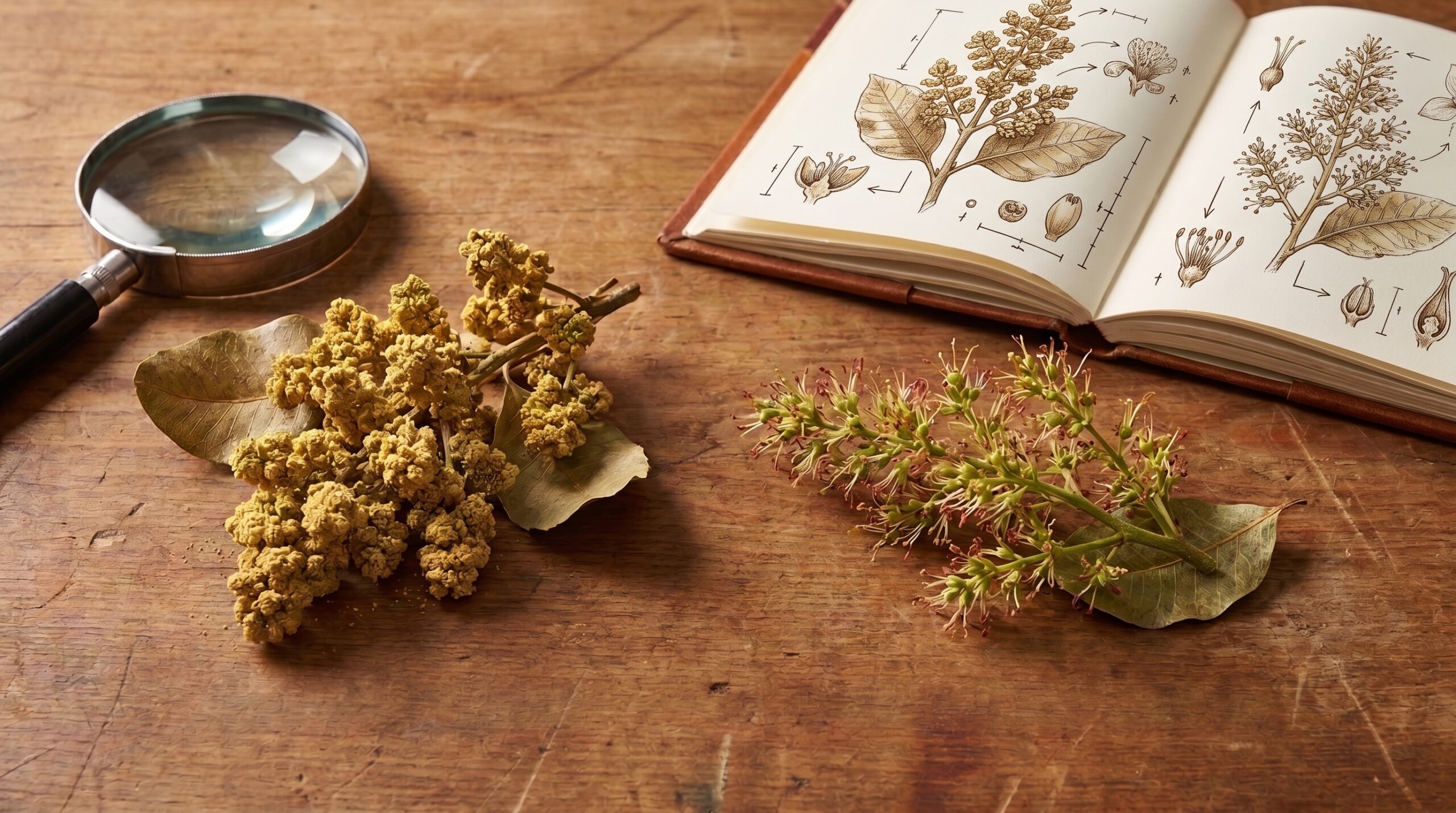
When it comes to the profitability of a pistachio plantation, many growers focus exclusively on the female variety they intend to plant, forgetting that without a good male pollinizer, that plantation will never reach its true production potential. At Agro Vivero del Mediterráneo, we have spent enough time supporting growers through this process to know that choosing the right male pollinizer is, without doubt, one of the most decisive technical choices in any pistachio project. That is why we have put together this guide, including a clear compatibility chart and practical explanations, so you can make the right decision from the very start.
If you are considering starting a pistachio plantation or expanding an existing one, this article will be genuinely useful to you. We will explain why pistachios require specific pollinizers, how to choose them correctly, and which combinations work best depending on the female variety you have selected.
Pistachio Is a Dioecious Species: The First Thing You Need to Understand 🌿
Unlike other nut crops such as almonds, the pistachio (Pistacia vera) is a dioecious species. This means male and female plants exist as completely separate individuals. Female plants are the ones that produce the nut that is eventually sold, while male plants only produce pollen and never yield a commercial crop.
This biological trait means that any pistachio plantation must necessarily include a proportion of male plants, strategically distributed throughout the plot. Without that presence, pollination simply does not occur, and yields on the female plants drop drastically or fail altogether.
We offer detailed information on the characteristics of each pistachio plant we supply, as well as the availability of male and female varieties suited to different climate zones.
How Pollination Occurs in Pistachios 🍃
Pistachio is a wind-pollinated (anemophilous) species, meaning pollination happens mainly through the air. Pollen released by male flowers travels on the wind until it reaches female flowers, which must be in a compatible state of receptivity at that same time.
This introduces two absolutely critical factors when designing a plantation:
- Flowering synchronization. The male must release pollen during the same period the female is receptive.
- Distance and layout of the male plants. They must be positioned so the wind can carry pollen effectively across the entire planted area.
Choosing a pollinizer, therefore, is not simply about picking any male variety, but about finding one whose flowering window matches that of the selected female variety. This is precisely why compatibility charts between varieties exist.
Why a Poor Pollinizer Choice Directly Affects Profitability 💰
One of the most common mistakes we see in plantations that come to us for technical advice is choosing an unsuitable pollinizer or distributing it poorly. The consequences usually include:
- Low nut set rates.
- Irregular yields from one year to the next.
- Blank nuts, meaning pistachios with no kernel inside.
- A significant drop in expected profitability per hectare.
If you’d like a clearer picture of how this factor affects the economic calculations of a plantation, we recommend reviewing our resources on pistachio plantation profitability, where we explain in detail how each technical decision impacts the final figures.
Compatibility Chart Between Male and Female Pistachio Varieties 📊
Below is an indicative chart showing the most common combinations used in professional plantations. It is worth noting that final compatibility can vary slightly depending on climate zone, altitude and the specific conditions of each site, so we always recommend confirming the final combination with our technical team before purchasing.
| Female Variety | Recommended Male Pollinizer | Approximate Flowering Period | Notes |
|---|---|---|---|
| Kerman | Peters | Late | The most widely used combination worldwide |
| Kerman | Randy | Late | A common alternative when greater floral overlap is needed |
| Sirora | Chico | Mid-season | Widely used in modern high-density plantations |
| Sirora | Randy | Mid-to-late | A good option in areas with cooler springs |
| Larnaka | Chico | Early-to-mid | Requires close monitoring of overlap in short springs |
| Mateur | Chico | Early | A classic combination in Mediterranean-climate regions |
| Kastel | Peters | Late | Recommended in areas with long, hot summers |
| Avdat | Randy | Mid-season | Performs well on calcareous soils |
As you can see, male varieties such as Peters, Randy and Chico are the most widely used in the industry because they cover different flowering windows, allowing them to be matched with almost any commercial female variety. At Agro Vivero del Mediterráneo we supply pistachio plants of these varieties, selected and adapted to Mediterranean growing conditions. 🌾
Kerman and Peters: The Reference Combination 🌸
If there is one combination that dominates the international pistachio landscape, it is Kerman as the female variety paired with Peters as the male pollinizer. Kerman is by far the most widely planted female variety in the world, valued for its high productivity and nut size.
Peters, in turn, has shown very consistent floral overlap with Kerman across multiple growing regions, which explains its popularity. However, in areas where spring is shorter or more irregular, many technical advisors recommend combining Peters with a second male variety, such as Randy, to widen the pollination window and reduce risk in atypical years.
Sirora: A Rising Variety That Requires Close Attention 🌼
Sirora has gained significant ground in new plantations, particularly in high-density systems with drip irrigation. Its standard pollinizer is usually Chico, although in certain areas it is complemented with Randy to improve coverage over time.
It’s worth noting that Sirora tends to flower somewhat earlier than Kerman, so if you’re planning a mixed plantation with both female varieties, you’ll need to carefully consider which pollinizers to use and in what proportion, since a single male variety doesn’t always serve both equally well.
Recommended Proportion of Male Plants in a Plantation ✅
One of the questions we hear most often through our technical advisory service is: how many male plants do I actually need? The answer depends on several factors, but as a general industry benchmark, the following proportions are commonly used:
- In traditional plantations: 1 male plant for every 8 to 10 female plants.
- In high-density plantations with favorable wind exposure: up to 1 male plant for every 12 female plants.
- In areas with irregular winds or heavily sheltered plots: the proportion is typically increased to 1 male for every 6–8 females to ensure even pollination.
These figures are indicative and should be adjusted based on the specific layout of each site. If you have questions about calculating the exact proportion for your land, our technical advisory services assess each case individually.
Distributing Male Plants Within the Plot 🧭
It’s not enough to plant the correct number of male trees — their placement within the plot matters just as much. Some recommendations we routinely apply in our projects include:
- Distributing male plants evenly across the entire area, avoiding concentration in a single spot.
- Taking into account the prevailing wind direction in the area, placing some male plants on the windward side.
- Avoiding situations where any female plant is more than 30–40 meters from a male pollinizer.
- In very large plots, interspersing full rows of male plants at regular intervals among the female rows, rather than planting them only at the edges.
Poor distribution, even with the correct total number of male plants, can create low-yield zones within the same plot — something we have repeatedly seen in sites that lacked a proper technical design from the outset.
Flowering Synchronization: The Factor That Makes the Difference ⏱️
As mentioned earlier, choosing the male variety “recommended” in a generic chart is of little use if, in practice, its flowering doesn’t align with that of the female variety under the actual climate conditions of your site. Pistachio flowering is strongly influenced by:
- Winter chill hours accumulated.
- Temperatures in late winter and early spring.
- The altitude and orientation of the plot.
- The specific microclimate of each geographic area.
For this reason, at Agro Vivero del Mediterráneo we don’t rely solely on generic charts: we study the historical climate data for each area to recommend the male-female combination best suited to those specific conditions, maximizing real floral overlap.
Common Mistakes When Choosing a Pollinizer 🚫
Throughout our work, we have identified a number of mistakes that come up repeatedly in new plantations:
- Choosing the male variety based solely on price, without considering floral compatibility.
- Planting all male trees in a single corner of the plot.
- Not allowing a sufficient proportion of male plants, in an attempt to “maximize” the area planted with females.
- Ignoring the effect of prevailing wind direction on row orientation.
- Overlooking flowering mismatches when combining several female varieties on the same site.
Avoiding these mistakes from the initial design stage is far more cost-effective than trying to correct them years later, once the trees are already in production.
Can Poor Pollination Be Corrected in an Existing Plantation? 🔧
Yes, although it isn’t always straightforward. If you notice your plantation has poor nut set or irregular yields, several solutions are available:
- Grafting branches from a compatible male variety onto existing trees within the plot.
- Planting new male trees in areas showing lower yields.
- Reinforcing pollination through supplementary techniques in specific years when flowering is out of sync.
In any case, we always recommend a proper technical assessment before taking action, since not all yield problems are related to pollination. You can request this type of analysis from our technical team.
Climate Factors That Influence Male-Female Compatibility ☀️
In addition to the varieties chosen, other environmental factors affect the success of pollination:
- Temperature during flowering. Excessively low temperatures can reduce pollen viability.
- Relative humidity. Excess humidity can hinder pollen dispersal through the air.
- Wind speed and direction. Winds that are too light limit the reach of pollination, while very strong winds can disperse pollen inefficiently.
- Rainfall during flowering. Rain can wash pollen out of the air, drastically reducing effective pollination rates.
All of these factors reinforce the idea that choosing the right pollinizer is not an isolated decision — it must be part of an overall plantation design adapted to the real conditions of each site.
Frequently Asked Questions About Pistachio Variety Compatibility ❓
Can I use a single male variety for several female varieties?
Yes, as long as its flowering period reasonably overlaps with all of them. In plantations with multiple female varieties, it can sometimes be more effective to combine two male varieties with different flowering windows.
What happens if my male variety flowers before my female variety?
Pollination will be very poor or non-existent that year, since pollen loses viability quickly. This is why choosing the right combination from the outset is so important.
How many years does it take for a male tree to produce enough pollen?
As a general guide, between the third and fifth year, depending on management, irrigation and growing conditions, although this can vary by region.
Is it necessary to renew pollinizer trees over time?
Not generally, but it is worth periodically checking the health and productivity of the male trees, since a weakened male tree also loses pollination capacity.
How Agro Vivero del Mediterráneo Can Help 🤝
At Agro Vivero del Mediterráneo, we work closely with growers across a wide range of markets, from small producers starting their first plantation to large operations looking to maximize profitability. Our technical team assesses each project individually, taking into account climate, soil, plot orientation and production goals, in order to recommend the most suitable combination of male and female varieties for each case.
You can learn more about our full range of specialized services, which include everything from the supply of certified plants to technical support throughout the entire life of the plantation.
Our Advice 🌰
Choosing the right combination of male and female varieties is not a minor detail in pistachio plantation design — together with soil selection and irrigation system, it is one of the pillars that will determine the future profitability of your investment. A compatibility chart is a very useful starting point, but it should always be checked against the real conditions of each site.
If you are considering starting your plantation or expanding an existing one, we encourage you to get in touch with our team. We will assess your specific case and help you design a distribution of male and female varieties aimed at maximizing your yield from the very first harvest. You can request a free, no-obligation quote and begin your project with all the technical guarantees offered by Agro Vivero del Mediterráneo. 🌱
Need a quote?
Tell us about your project and we will send you a proposal with no obligation.
Request a quote