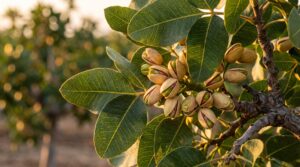
At Agro Vivero del Mediterráneo, as specialists with vast and deep experience in the exciting and increasingly relevant world of the pistachio, we face daily a question that is, at the same time, the cornerstone and the greatest source of uncertainty for farmers considering starting this journey: “How long does a pistachio tree take to bear fruit?”. This apparently simple question contains a complexity that deserves to be unraveled with the detail and precision that only years of field work, research, and support for producers can provide. We perfectly understand the concern this question generates, as the decision to invest in a pistachio plantation is not a short-term bet, but a life project, a legacy that requires meticulous financial planning, realistic expectations, and, above all, deep knowledge of the crop at hand.
We, the team at Agro Vivero del Mediterráneo, are here to be your guides on this path. We want to dispel doubts, demystify timelines, and offer a complete, transparent, and rigorous vision, based not only on theory but on the daily practice that defines us. The answer to the big question is not, and cannot be, a single and categorical number. The time that elapses from planting a young pistachio tree until the first profitable harvests hang from its branches is the result of a symphony of factors that must be perfectly tuned. We are talking about a complex interaction ranging from the genetics of the pistachio plant we choose, through the intrinsic characteristics of our land, to the last detail of the agronomic management techniques we apply with care year after year.
Throughout this comprehensive article, we will immerse ourselves in the depths of each stage of the pistachio tree’s life cycle. We will take a chronological journey that will begin with the momentous choice of plant material in the nursery and culminate with the exciting harvesting of the first profitable crops. We will analyze with a magnifying glass how the selection of the rootstock, the producing variety and the pollinator, the design of the planting frame, the irrigation and nutrition strategy, the architecture we give the tree through pruning, and the phytosanitary defense, become the levers that can accelerate or, conversely, slow down this exciting process. Our primary goal is to arm you with the necessary knowledge so you can make the wisest decisions, optimizing every resource and every day of work so that the path to profitability is as short and safe as possible. We want you to feel the peace of mind and confidence of being backed by a team of experts who do not limit themselves to selling plants, but are committed to the success of your project, offering comprehensive and personalized advice. Pistachio is our passion, and we want to share it with you.
The beginning of the journey: The importance of a good choice 🌱
Every great construction, to endure over time, needs solid foundations. In the agricultural architecture that a pistachio plantation entails, those foundations are undoubtedly the plant material. This first decision, the choice of the plant, is the most critical and momentous of the entire project. Its impact is not limited to the first years but will resonate throughout the useful life of the plantation, which can well exceed 100 years. At Agro Vivero del Mediterráneo we are firm defenders of a maxim: quality is not an option, it is an obligation. Trying to reduce costs in the initial phase by acquiring plants of dubious origin, without sanitary certification or of inferior quality, is a mistake that is paid very dearly in the future. It inevitably translates into a higher rate of failures (plants that do not survive transplantation), slower and uneven growth, greater susceptibility to diseases and, ultimately, a considerable delay in entry into production and a decrease in the final productive potential.
The rootstock: The underground engine of the tree
When we talk about a pistachio plant, we are actually talking about two genetically distinct individuals united into one: the rootstock (or pattern) and the variety. The rootstock constitutes the root system and the base of the trunk, and its choice is a strategic decision that must be based on an exhaustive analysis of the conditions of our plot. It is the underground engine that will determine the tree’s ability to adapt to the environment.
-
Pistacia terebinthus (Cornicabra): This is the native rootstock of the Mediterranean basin, the most traditional one. Its main virtue is its incredible rusticity and its adaptation to strict dryland conditions and poor, stony, and calcareous soils. They confer extraordinary longevity to the tree. However, this rusticity has a counterpoint: its vigor is moderate and its entry into production is the slowest of all options. Opting for cornicabra means betting on safety and adaptation in difficult terrain, assuming a longer wait to see the first yields.
-
Pistacia atlantica: Originating from North Africa, it is another rustic rootstock, with good tolerance to drought and salinity, superior in this last aspect to cornicabra. Its vigor is somewhat greater than that of P. terebinthus, which can induce slight precocity in production. It is an interesting option for semi-arid areas with certain salt problems in the soil or irrigation water.
-
UCB-1: This is undoubtedly the rootstock that has revolutionized modern pistachio cultivation. Developed by the University of California, Davis, it is a hybrid of Pistacia atlantica (female) x Pistacia integerrima (male). Its advantages are overwhelming and explain its dominance in new plantations:
-
Great Vigor: Its root system is extremely powerful and fast-growing, which drives spectacular vegetative development in the aerial part. This vigor is mainly responsible for plantations on UCB-1 being able to advance their entry into production by one, two, or even three years compared to traditional rootstocks.
-
Uniformity: Being clones (produced in vitro), all UCB-1 plants are genetically identical. This translates into an incredibly homogeneous plantation in terms of growth and development, which greatly facilitates all management tasks (pruning, irrigation, harvesting).
-
Disease resistance: UCB-1 shows high tolerance to devastating soil diseases such as Verticillium wilt (Verticillium dahliae), which can be lethal for other rootstocks. It also presents good behavior against Phytophthora. This resistance allows us to plant safely in plots with a history of these pathogens.
-
Salinity tolerance: Inherited from its parent P. atlantica, its tolerance to salinity is notable, opening the door to cultivation in areas where water quality is a limiting factor.
-
The choice of rootstock, therefore, is not trivial. It must be the result of a preliminary study that our team of technical services can perform, analyzing the soil (texture, pH, active lime), climatology, and availability and quality of water. Only then can we recommend the perfect base for your project.
The variety and the pollinator: The perfect dance couple
The variety is grafted onto the rootstock, which will be responsible for producing the nut. The choice of the variety (female) and its corresponding pollinator (male) is another critical factor.
-
Female varieties:
-
Kerman: It is the queen variety worldwide, originating from Iran. It produces a large-caliber pistachio, very round and with a very high percentage of natural opening. Its quality is exceptional. However, it needs a high number of winter chill hours (below 7ºC) to sprout and flower correctly, and its entry into production is relatively late.
-
Sirora: Australian variety that is becoming very popular. It is very productive, with a good quality nut, although slightly more elongated than Kerman. Its main advantage is that it is earlier in its entry into production and its cold needs are somewhat lower than those of Kerman, making it suitable for a wider range of areas.
-
Larnaka: Originating from Cyprus, it is a very interesting variety due to its low need for chill hours, making it ideal for coastal areas or mild winters. Its nut is of good quality and its entry into production is also early.
-
-
Male varieties (pollinators): The pistachio tree is a dioecious species, which means there are male trees and female trees. Pollination is carried out by the wind (anemophilous), so it is essential to intersperse males in the plantation in an appropriate proportion (generally 1 male for every 8-10 females). The key is that the male’s flowering period overlaps perfectly with that of the female.
-
Peter: It is the classic pollinator for Kerman. Its flowering is late and prolonged, ensuring pollen throughout Kerman’s receptive period.
-
C-Especial: Earlier flowering pollinator, ideal for varieties like Sirora or Larnaka.
-
An incorrect choice of pollinator, or a mismatch in flowering due to anomalous weather conditions, can result in zero harvest, no matter how many years we wait. Therefore, correct plantation planning, with the appropriate variety-pollinator combination for your area, is a fundamental pillar of success.
The first years: Growth and formation (Year 1 to Year 3) 🌳
Once we have made the most important investment in a certified quality plant, a period of intense and meticulous work begins that will lay the foundations for future productivity. During these first three years, the focus is not on obtaining nuts, but on building an efficient production “factory”: a tree with a robust structure, an extensive root system, and impeccable health status. Patience and attention to detail in this phase are crucial; any attempt to force premature production will be detrimental to the tree’s long-term development.
Year 1: The year of establishment in the field
The first year is, perhaps, the most delicate. The young pistachio tree, fresh from the controlled environment of the nursery, faces transplant stress and must adapt to its new home. All its energy is concentrated on one goal: developing a powerful and deep root system that serves as an anchor and allows it to explore the soil in search of water and nutrients. Aerial growth during the first spring and summer may seem scarce, and this should not be cause for alarm. Explosive growth in height without a good root system to support it would be a sign of weakness.
Our tasks during this first year are those of an attentive caretaker, focused on minimizing stress and maximizing the chances of survival and rooting of each plant:
-
Correct planting: Success begins in the hole. Planting must be done with the root ball intact, at the appropriate depth (leaving the graft point always about 10-15 cm above ground level) and orienting the graft curvature against prevailing winds to avoid breakage. Copious irrigation right after planting is vital to eliminate air pockets and ensure root contact with the soil.
-
Support irrigation: It is the most critical task of the first year. Even in plantations designed for dryland, support irrigation during the first summer is non-negotiable. A young pistachio tree without a developed root system cannot survive a dry and hot summer. It is recommended to install a drip irrigation system, even if provisional, to apply frequent and localized irrigation (e.g., 16-20 liters per plant per week, divided into 2-3 irrigations).
-
Exhaustive competition control: Weeds are the number one enemy of a young pistachio tree. They compete fiercely for scarce water and nutrient resources. Keeping the planting line or tree pits completely clean, whether by very superficial tillage, manual/mechanical clearing, or installing weed control fabric, is fundamental for all growth potential to be directed to the tree.
-
Protection and staking: From day one, each tree must be protected by an individual protector. These mesh or plastic tubes not only prevent devastating damage from rodents like rabbits and hares but also protect the tender trunk from sunburn and herbicide damage. Next to the protector, a robust stake (bamboo, wood, or fiberglass) must be driven in, to which the main shoot will be tied to guide perfectly straight and vertical growth, laying the foundations for a strong trunk.
-
Starter fertilization: Nutrition in this phase must be very restrained. Excess nitrogen can cause herbaceous and weak growth, attractive to pests like aphids. Ideally, provide a small amount of slow-release fertilizer or well-composted organic fertilizer, rich in phosphorus, at the bottom of the planting hole or located near the dripper, to stimulate root development.
At the end of the first winter, we will carry out the first training pruning, which will consist of heading back the main axis at the desired height for the future tree crotch (generally between 80 and 120 cm), to stimulate the sprouting of future main branches the following spring.
Year 2 and 3: Tree architecture
If we have done our job well during the first year, from the second spring onwards the tree will experience much more vigorous growth. It is now that our role resembles that of an architect, shaping the structure that will support future harvests. Training pruning becomes the main tool.
The most widespread training system and the one we recommend is the vase. It consists of creating a structure without a dominant central axis, with 3 or 4 main branches (arms) starting from the same point on the trunk and opening outwards. This shape has multiple advantages:
-
It allows excellent sunlight penetration into all parts of the canopy, which is fundamental for flower bud induction and nut quality.
-
It facilitates air circulation, reducing humidity and, therefore, the risk of fungal diseases.
-
It makes pruning, phytosanitary treatments, and harvesting tasks much simpler and more efficient.
Training pruning is done in winter, during vegetative dormancy. In the second winter, we will select from among the shoots that emerged after the first year’s heading back, the 3 or 4 best located, most vigorous, and with a good insertion angle on the trunk (between 45 and 60 degrees). We will remove all others. These selected shoots will be tipped at about 40-50 cm to promote branching.
In the third winter, on each of these main branches, we will select two secondary sub-branches, always seeking to open the canopy outwards. With this operation, the basic structure of the tree will be defined.
Parallel to pruning, we will continue with maintenance tasks:
-
Irrigation and Nutrition: Water and nutritional needs increase with tree size. Irrigation must be adjusted to avoid any type of stress during the growing season. The fertilization plan will intensify, providing nitrogen for vegetative growth, but always in balance with phosphorus and potassium. It is a good time to start considering foliar analyses to detect possible micronutrient deficiencies.
-
Phytosanitary Control: As the tree develops more leaf mass, it becomes more attractive to certain pests (aphids, psylla, lace bug) and diseases. Vigilance must be constant to act at the first symptom and prevent a health problem from slowing down tree development.
At the end of the third year of cultivation, if all operations have been carried out correctly, we should see in our plot young but vigorous trees, with a perfectly formed structure and enormous potential. We have built the factory; now it’s time to prepare it to start producing. If you want a detailed training plan adapted to your conditions, do not hesitate to contact our technical team; we will be happy to design a tailored strategy.
The expected appearance of the first fruits (Year 4 to Year 6) 🎉
This is the period that marks a before and after in the life of the pistachio farmer. It is the phase in which hope and invested work begin to materialize into something tangible: the first nuts. The excitement of seeing the first flowers and, subsequently, the small green clusters, is an immense reward. However, it is fundamental to keep feet on the ground and manage expectations realistically. Productions during these years are an indication of the plantation’s potential, not a significant source of income. The tree continues to invest a large part of its resources in growing and consolidating its structure. Forcing it to produce more than it can at this stage would be short-term gain for long-term pain, as it could compromise its development and future production.
Year 4: The first sign
In optimal growing conditions, especially in irrigated plantations on vigorous rootstocks like UCB-1, it is very likely that during the spring of the fourth year we will observe the appearance of the first flower buds. This is a momentous milestone, as it confirms that the trees have reached the physiological maturity necessary to reproduce.
Pistachio flowering is a discreet but fascinating event. Flowers lack petals and nectaries to attract insects, since, as we have mentioned, pollination depends exclusively on the wind. In male trees, we will see dense clusters of flowers emerge that will release clouds of yellowish pollen into the air. In female trees, flowers are smaller, reddish in color, and present a feathery stigma designed to catch pollen grains traveling in the air.
If the weather accompanies during flowering (dry weather, no late frosts, and light breezes) and the pollinator does its job, fruit set will occur and we will begin to see the development of the first pistachios. Production in this fourth year is, in most cases, merely token. We are talking about quantities that can range from a few nuts per tree to, in the most precocious and vigorous specimens, about 100 grams. The objective of this first harvest is not economic, but agronomic: it serves to verify that the choice of varieties and pollinators has been correct, that flowering overlap is adequate, and that plantation design allows correct pollen distribution.
Year 5 and 6: Gradual production increase
As we enter the fifth and sixth year, production begins to be more consistent and increase geometrically. The tree already possesses a significant woody structure and a root system that explores a large volume of soil, allowing it to allocate a greater proportion of its photosynthates to nut production without compromising its growth.
Production figures at this stage are very variable, but as a reference, a well-managed irrigated plantation could reach productions of between 200 and 500 grams per tree in the fifth year. In the sixth year, this figure could double or triple, placing in a range of 0.8 to 1.5 kilograms per tree. This, extrapolated to a hectare (with a frame of 285 trees), would mean going from about 57-142 kg/ha in the fifth year to about 228-427 kg/ha in the sixth. These are no longer symbolic quantities; although they still do not cover annual maintenance costs, they do represent a first income that alleviates the project’s financial burden. In dryland plantations, these milestones will be reached with a one or two-year delay, and figures will be more modest and highly dependent on each season’s rainfall.
Agronomic management during this phase becomes more complex and demanding, as we must find the perfect balance between encouraging vegetative growth (the tree must still fill its planting frame) and sustaining growing and quality production.
-
Production pruning: Pruning ceases to be exclusively formative and becomes production pruning. The goal now is to remove wood that has already fruited (pistachio produces on previous year’s wood), remove suckers and branches that shade the interior of the canopy, and perform flower bud thinning if the load is excessive. Good pruning at this stage is key to obtaining good caliber nuts and starting to mitigate the alternate bearing phenomenon.
-
Precision nutrition: Nutritional needs skyrocket. Nutrient export implied by the harvest, however small, must be replenished. Potassium (K) becomes a crucial element, as it is fundamental for kernel filling and nut caliber. Nitrogen (N) remains important for growth, but its application must be more controlled so as not to encourage excessive vigor to the detriment of production. Micronutrients like boron (B), essential for pollen viability and fruit set, and zinc (Zn), involved in bud development, acquire capital importance and must be monitored through foliar analyses.
-
Irrigation management: In irrigated land, water management becomes a precision science. There are critical periods where water stress has disastrous consequences. The first critical period is flowering and fruit set. The second, and most important, is the kernel filling phase, which occurs mainly in July and August. A water deficit at this time will result in a high percentage of empty pistachios (without kernel inside) and a drastic reduction in caliber, seriously affecting both weight and harvest value.
This stage is, ultimately, the prelude to profitability. Every year we see how effort translates into greater return, giving us the necessary boost to face the next phase: full production. The profitability of a plantation of pistachios is a marathon, not a sprint, and these years are proof that we have overcome the hardest part of the journey and are approaching the finish line.
Consolidation and full production (Year 7 onwards) 💰
From the seventh or eighth year, the pistachio plantation enters a new dimension. We can say it reaches its agronomic and economic “coming of age.” The tree has developed practically all its canopy volume, occupying the space assigned in the planting frame, and its root system is an extensive and efficient network. In this phase, the tree’s physiological balance definitely tips towards production. Energy captured through photosynthesis is primarily destined to generate and fill nuts, which translates into harvests that, finally, are economically profitable and begin to generate positive cash flow.
However, the journey towards maximum productivity does not end here. One of the most notable characteristics of the pistachio tree is its longevity and its ability to increase production for many years. The production peak is not reached in year 7 or 8, but the harvest will continue to increase progressively, good year after good year, until reaching its maximum productive potential, which is usually between year 12 and 15. Once this production plateau is reached, a well-managed plantation is capable of maintaining these high yields for many years, becoming an invaluable asset.
In this maturity stage, production figures are truly impressive and place pistachio as one of the most profitable woody crops. In a modern irrigated plantation, with a vigorous rootstock, adequate design, and professional agronomic management, it is perfectly feasible to reach and exceed average productions of 2,000 to 3,500 kilograms of dry pistachio per hectare. In dryland conditions, although productions are more subject to weather variability, averages of 800 to 1,200 kg/ha can be sustainably obtained, figures that also ensure excellent profitability due to lower production costs.
Managing alternate bearing: The great challenge of full production
The main agronomic challenge in this phase is managing alternate bearing or production alternation. This is a physiological behavior inherent to the pistachio tree, which leads it to alternate a year of very abundant harvest (“on” or loaded year) with a year of very reduced or almost zero harvest (“off” or discharge year). The mechanism is complex, but broadly speaking, the enormous energy effort the tree makes to produce and fill a large amount of nuts depletes its carbohydrate reserves and inhibits the formation of flower buds for the following campaign.
Although eliminating alternate bearing completely is practically impossible, we can apply a series of techniques to attenuate it and achieve more stable productions over time, which is highly desirable from the point of view of economic planning.
-
Load regulation pruning: It is the most powerful tool. In winters prior to a year expected to have a high load, more intense pruning is performed, removing a part of the flower buds. By reducing the load, the tree does not deplete its reserves as much and has more capacity to form buds for the following year.
-
Strategic fertilization: A fertilization plan that ensures rapid tree recovery after an abundant harvest is key. Applying nutrients, especially nitrogen and potassium, right after harvesting helps the tree replenish its reserves.
-
Regulated deficit irrigation (RDI): In certain development phases, controlled water stress can be applied to regulate vegetative growth and promote floral induction, although it is a technique that requires a high degree of knowledge and control.
-
Fruit thinning: Although it is a costly task, in years of excessive load, manual or chemical thinning of newly set fruits can be performed to reduce competition and ensure good filling of the remaining ones, in addition to favoring the following year’s harvest.
Tasks in the plantation during the full production phase become a high-precision routine, focused on maintaining a sustainable balance between production, growth, and reserves.
-
Maintenance and fruiting pruning: Performed annually in winter. Its objective is to renew productive wood, keep the canopy open and aerated, remove dry or poorly positioned branches and, as we have seen, regulate load to combat alternate bearing.
-
Restitution fertilization: The fertilization plan is based on “returning” to the soil the nutrients we have extracted with the harvest. Annual foliar and soil analyses are essential to adjust doses of each nutrient and avoid both deficiencies and excesses, which can be equally harmful.
-
Optimized irrigation management: Irrigation doses and frequencies are adjusted to crop water needs in each phenological phase, using soil moisture sensors and evapotranspiration data to maximize water use efficiency. The goal is to maximize caliber, percentage of open nuts, and minimize blanks.
-
Pest and disease monitoring: Vigilance must be constant. Pests like psylla (Agonoscena pistaciae) or various bug species, and fungal diseases like Alternaria or Botryosphaeria, can cause serious economic losses if not detected and treated in time. We firmly bet on Integrated Pest Management (IPM), prioritizing biological and cultural control methods and using phytosanitary products only as a last resort and in the most selective way possible.
-
Mechanized harvesting: Harvesting is done mechanically, using shakers with inverted umbrellas that collect the nut without it touching the ground. The optimal harvest time is critical and is determined by color and ease of detachment of the outer skin (epicarp). Once harvested, the nut must be processed (peeled and dried) within the next 24 hours to guarantee maximum quality and avoid shell staining and aflatoxin development.
Reaching full production is the culmination of a top-level agricultural business project. It is the moment when long-term vision materializes into a solid, sustainable, and highly profitable business. If you are considering taking the step and want a detailed economic projection, we encourage you to use our booking and quote form. Our team of experts will analyze the particularities of your project to offer you a clear roadmap to success.
Factors accelerating (or delaying) entry into production ⏱️
We have established a general calendar, but the reality of each plantation is unique. The speed at which a pistachio tree advances through different development phases is not predetermined, but is the direct result of the tree’s interaction with its environment and the management we provide. There are a series of critical factors acting as accelerators or brakes on this path to production. At Agro Vivero del Mediterráneo, our advisory service focuses precisely on optimizing each of these factors so your plantation expresses its maximum precocity potential.
1. Plant quality and rootstock choice:
This point is so fundamental it deserves emphasis. It is factor number one.
-
Accelerator: Starting with a top-notch, certified pistachio plant, with a well-developed root system in its pot, a well-healed graft, and a vigorous stem, is like starting a race on the front row of the starting grid. If, in addition, we have chosen a high-vigor rootstock like UCB-1, we are putting on “turbo mode.” Under irrigation conditions, UCB-1 can advance entry into production by 2-3 years compared to a P. terebinthus.
-
Brake: A low-quality nursery plant, with spiraling roots (pot-bound), a weak graft, or health problems, will spend the first year (and sometimes the second) simply trying to survive, rather than growing. A low-vigor rootstock or one poorly adapted to our soil (for example, a lime-sensitive rootstock in very calcareous soil) will slow down the entire process dramatically.
2. Water availability (Irrigation vs. Dryland):
This is the most determining factor in management, with direct and massive influence on growth speed.
-
Accelerator: Irrigation, especially localized and high-frequency drip irrigation, is the most powerful accelerator available to us. Providing the tree with the water it needs, when it needs it, eliminates the main limiting factor for growth in a Mediterranean climate. An irrigated tree can multiply by 3 or 4 the annual growth of a dryland tree during the first years, which translates into much faster structure formation and, therefore, much earlier entry into production.
-
Brake: Dryland, while a viable and profitable long-term option for pistachio, is synonymous with patience. The tree will grow at the pace set by rainfall, stopping its development during long, dry summers. Entry into production will inevitably be delayed several years. A practice we strongly recommend to “accelerate” a dryland plantation is installing support irrigation, even with minimal allocations, during the first 2-3 years. The investment pays off handsomely by advancing harvest several years.
3. Soil characteristics and preparation:
The home of roots is fundamental for their development.
-
Accelerator: Deep, loamy soil with good drainage and fluffy structure is paradise for pistachio roots. It allows rapid and unimpeded root exploration. Deep subsoiling prior to planting to break plow pans or compacted layers is one of the best investments that can be made to accelerate establishment.
-
Brake: Heavy, clayey soil with poor drainage will cause root asphyxia problems and greatly slow growth. Shallow soil, with a rock layer at shallow depth, will physically limit root expansion. Poor land preparation will condemn the plantation to slow development from day one.
4. Balanced and tailored nutrition:
Nutrition is fuel for growth.
-
Accelerator: A professional fertilization plan, based on prior soil analyses and adjusted annually with foliar analyses, ensures the tree has the 16 essential nutritional elements in adequate amounts and times. This allows all physiological processes (photosynthesis, growth, bud formation) to occur at maximum possible speed.
-
Brake: Absence of fertilization in poor soils, or unbalanced fertilization (for example, excess nitrogen causing uncontrolled and weak growth, or lack of a key micronutrient like zinc or boron), will act as a handbrake, preventing the tree from expressing its genetic potential for growth and precocity.
5. Pruning and tree training:
Pruning is the tool with which we direct growth.
-
Accelerator: Well-executed training pruning during the first 3-4 years, quickly defining a balanced and open vase structure, allows the tree to start producing on a well-formed structure. Once in production, pruning that balances load and renews wood efficiently accelerates achievement of stable harvests.
-
Brake: Absence of pruning (“letting the tree grow wild”) usually generates a tangle of competing branches, with poor light distribution and delayed entry into production. Excessively severe pruning, on the other hand, can delay production by removing too much wood and forcing the tree to focus solely on vegetative growth.
6. Climate and pollination:
We cannot control climate, but we can adapt to it.
-
Accelerator: An area with adequate winter chill hours for chosen variety, spring without late frosts and with moderate breezes during flowering, will create perfect conditions for good fruit set from early years. Correct distribution of pollinators in plot is life insurance.
-
Brake: Planting variety with high cold requirements (like Kerman) in mild winter area will result in erratic budding and flowering and scarce or zero production. Late frosts can wipe out a year’s harvest in single night. Lack of pollen due to poor choice or distribution of males is absolute brake on production.
In summary, precocity is not matter of luck, but result of agronomic excellence. It is sum of many small well-taken decisions, from farm analysis to daily crop management. At Agro Vivero del Mediterráneo, our commitment is to offer you not only best plant, but also knowledge and services necessary to optimize all these factors and put your plantation on fast track to success.
Production calendar summary: A visual guide 🗓️
To consolidate all detailed information and offer clear and structured perspective, we have prepared summary table serving as indicative roadmap. It is fundamental to interpret these data as what they are: average estimate based on professional management. Figures can vary, sometimes significantly, depending on whether plantation is dryland or irrigated (table data approximate more to well-managed irrigation condition), rootstock used (table assumes vigorous UCB-1 type rootstock), planting density and specific conditions of each agricultural year.
| Year | Development Phase | Main Objective | Expected Production (per tree) | Expected Production (per hectare – 285 trees) | Key Notes |
| 1 | Establishment | Maximum rooting and survival (98-100%) | 0 kg | 0 kg | Support irrigation, stakes, protectors and weed control are critical. |
| 2 | Vegetative Growth | Formation of main axis and crotch | 0 kg | 0 kg | Training pruning in winter to select 3-4 main branches. |
| 3 | Formation and Structure | Development of vase structure | 0 kg | 0 kg | Tree must have basic structure defined. Increased water and nutrient needs. |
| 4 | Start Sexual Maturity | Induction of first flower buds | 0 – 0.1 kg | 0 – 28.5 kg | Merely token harvest. Pollination verification. |
| 5 | Entry into Production | First measurable harvest | 0.2 – 0.5 kg | 57 – 142.5 kg | Tree continues prioritizing growth. Start of production pruning. |
| 6 | Initial Production | Exponential harvest increase | 0.8 – 1.5 kg | 228 – 427.5 kg | Harvest starts being significant, though not covering annual costs. |
| 7 | Growing Production | Growth/production balance | 1.5 – 3 kg | 427.5 – 855 kg | In optimal conditions, profitability threshold can be reached. |
| 8 | Commercial Production | Profitability consolidation | 3 – 5 kg | 855 – 1,425 kg | Alternate bearing manifests clearly. Pruning and nutrition management is key. |
| 9 | Commercial Production | Quality and quantity optimization | 4 – 7 kg | 1,140 – 1,995 kg | Management focuses on mitigating alternation and maximizing nut caliber. |
| 10 | Consolidation | Approaching maximum potential | 6 – 9 kg | 1,710 – 2,565 kg | Management routines fully established. Production is very high. |
| 11 | Towards Full Production | Production stabilization | 7 – 11 kg | 1,995 – 3,135 kg | Plantation is mature and highly productive system. |
| 12-15+ | Full Production | Maximum sustained profitability | 8 – 12+ kg | 2,280 – 3,420+ kg | Productive peak reached, which can be maintained for many years. |
Note on figures: Calculations per hectare are based on common planting frame of 7×5 meters, resulting in approximately 285 trees per hectare. Production ranges reflect variability between standard and high-precision agronomic management, as well as alternate bearing effect (“on” year will be in high range and “off” year in low or below). For dryland plantations, general delay of 2 to 4 years in reaching these productive milestones should be considered, and full production yields will be rather in range of 800-1,200 kg/ha .
This chronological projection clearly demonstrates nature of pistachio cultivation as long-term investment. Requires business vision, financial capacity to support first years without income and, above all, unwavering confidence in project. Reward, however, is agricultural asset of extraordinary profitability and durability, capable of generating wealth for generations.
Journey towards pistachio plantation in full production is, undoubtedly, marathon, not sprint. It is path demanding knowledge, strategic planning, considerable economic investment and, above all, generous dose of patience and perseverance. Throughout this extensive analysis, we have unraveled complexity hidden behind initial question, demonstrating that time pistachio tree takes to gift its fruits is not fixed figure, but variable dependent on endless agronomic decisions we take from day one. We have learned that every choice, from genetics of plant we select at Agro Vivero del Mediterráneo to last drop of irrigation water we apply, has direct impact on productive calendar.
We have traveled complete path, from initial excitement of planting young tree, passing through crucial training years, to immense satisfaction of harvesting first commercial crops. We have seen that, with professional management and use of elite plant material, we can expect first signs of production around fourth or fifth year, then progressively scale up to reach longed-for profitability from seventh or eighth year. And most importantly, we have understood that this is just beginning of long productive life that can extend for decades, turning our plantation into true legacy. This is project looking to future, bet on sustainable and high-value agriculture.
We are fully aware that starting project of this magnitude can generate vertigo and sea of doubts. Precisely for this reason, our purpose as company transcends simple sale of superior quality pistachio plant. Our true added value, our deepest commitment, lies in continuous accompaniment and expert advice we provide to each of our clients. We put at your entire disposal our team of agricultural engineers and field technicians, professionals passionate about pistachio, ready to guide you in every phase of process: from initial feasibility studies and plantation design, to advice on complex pruning, fertilization and phytosanitary management decisions you will have to make year after year.
If you feel call of “green gold”, if you are convinced of potential of this crop and want to embark on this adventure with maximum guarantees of success, we invite you to take next step. We encourage you to contact us. Let us listen to your project, understand your goals and resolve all your concerns. We want to be your strategic partners on this journey, your trusted nursery and your source of knowledge. Together, we can transform your land into thriving and profitable plantation, ensuring each tree reaches its maximum potential and your investment flourishes to give best fruits in shortest possible time.
Need a quote?
Tell us about your project and we will send you a proposal with no obligation.
Request a quote