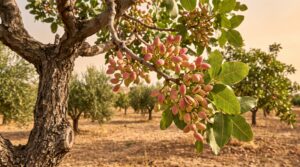
Hello, pistachio lovers! 👋 At Agro Vivero del Mediterráneo, we have been dedicated body and soul for years to the fascinating world of pistachios. Our experience has taught us that passion for this incredible nut knows no boundaries, not even those of the countryside. Increasingly, we receive inquiries from people who, like us, see the potential of integrating agriculture into all aspects of our lives, even in the heart of cities. That is why we have decided to create this complete guide, a detailed manual for all those pioneers who dream of seeing their own pistachio trees grow between asphalt and buildings.
We know it may sound like a considerable challenge. Cities present a unique set of conditions: limited space, altered soils, and a particular microclimate. However, with the right knowledge and correct planning, it is entirely possible not only to grow pistachios in an urban environment, but also to do so successfully. Join us on this tour where we will demystify the process and provide you with all the tools and tips you need to transform your patio, terrace, or even a small sunny corner into a small pistachio oasis. From selecting the right plant to the exciting harvest, we are here to guide you every step of the way. Let’s start greening our cities together! 🌳
Why pistachios in the city? Benefits beyond the harvest
Before diving into technical details, it is fundamental to understand why this idea is so attractive. Growing pistachios in an urban environment is not just about the satisfaction of harvesting your own nuts. It goes much further, providing both personal and community benefits.
-
Connection with nature: In the daily hustle and bustle of urban life, having a tree at home is a window to nature. Caring for it, seeing how it grows and changes with the seasons, reconnects us with natural cycles and provides us with a source of calm and well-being. It is green therapy at your fingertips. 🧘♀️
-
Sustainability and local food: Producing part of what we consume reduces our carbon footprint. By growing your pistachios, you are betting on a “zero kilometer” food model, more sustainable and conscious. You will know exactly what you have used to care for your tree, guaranteeing a final product free of unwanted chemicals.
-
Improvement of urban microclimate: Trees are the best allies against the “heat island” effect so common in cities. A pistachio tree, with its leafy canopy, provides shade, cools the environment through evapotranspiration, and helps purify the air we breathe. Every tree counts in the fight for greener and healthier cities. 🌬️
-
Educational and community value: A pistachio tree in an urban garden is a first-rate educational tool. It is a fantastic way to teach the little ones about the origin of food, patience, and care for the environment. In addition, it can become a meeting point and pride for the community, inspiring other neighbors to join the green revolution.
-
A touch of beauty and originality: Let’s be honest, a pistachio tree is simply beautiful. Its elegant bearing, its dense foliage and, of course, the sight of its pistachio clusters ripening in the sun, add undeniable aesthetic value to any space. It is an original and sophisticated way to beautify your surroundings. ✨
At Agro Vivero del Mediterráneo, we firmly believe that integrating agriculture into cities is the future. And pistachio, due to its resilience and high value, is an exceptional candidate to lead this transformation.
Space planning: The first step towards success
The success of any agricultural project, whether large-scale or in a small patio, begins with good planning. In an urban environment, where every centimeter counts, this phase is absolutely crucial.
Location choice: Sun, sun, and more sun ☀️
The pistachio tree is a sun lover. It needs direct and prolonged sun exposure to thrive and, more importantly, to produce a quality harvest. Look for the sunniest corner of your space, one that receives a minimum of 6 to 8 hours of direct sunlight per day during spring and summer.
-
Patios and gardens: If you are lucky enough to have a small garden, look for a clear area, away from the shade cast by tall buildings or walls. Keep in mind the final size of the tree so as not to plant it too close to structures or other trees.
-
Terraces and rooftops: Here sun exposure is usually excellent. However, the building structure must be considered. A pistachio tree, even in a large pot, represents considerable weight. Ensure that the terrace or rooftop can support the load of the tree, pot, substrate, and irrigation water. Consult with an architect or technician if you have doubts.
-
Balconies: A large and very sunny balcony could be an option, but will require very careful management of tree size through pruning and the use of suitable pots.
The importance of pollination: One tree is not enough ♂️♀️
This is one of the most important aspects and often forgotten by beginner growers. The pistachio tree is a dioecious species, which means there are “male” trees and “female” trees. The female tree is the one that produces the precious pistachio, but for this, it needs to be pollinated by pollen from a male tree. The wind is responsible for transporting pollen from one to another.
In a commercial plantation, one male is usually planted for every 8 or 10 females. In an urban environment, it is unlikely that you have space for two trees. What to do then?
-
Grafting two varieties on a single tree: This is the ideal solution for small spaces. At Agro Vivero del Mediterráneo, we offer pistachio plants that already have a branch of the male variety grafted onto a female rootstock. This way, you have pollination assured in a single tree. It is an innovation that greatly facilitates cultivation in small spaces.
-
Look for “pistachio” neighbors: If you know someone in your neighborhood who already has a pistachio tree, you could coordinate. If one has a male and another a female (and they are relatively close, a few hundred meters at most), the wind could do the job. It is a more uncertain option, but possible.
Do not underestimate the importance of this point. Without pollination, your female tree will flower every spring, but you will not get a single pistachio.
The soil: Preparing the perfect bed
The pistachio tree is not excessively demanding with soil, but it has two non-negotiable requirements: excellent drainage and adequate pH.
-
Drainage: Waterlogging is the number one enemy of the pistachio tree. Its roots are very sensitive to asphyxia and fungal development if water does not drain properly.
-
In direct soil: If you plant in a garden, improve soil structure. If your soil is clayey and compact, you will have to amend it. Add a good amount of river sand, fine gravel, and mature compost to improve aeration and permeability. Creating a small mound or raised ridge to plant the tree is also an excellent strategy to keep roots away from excess moisture.
-
In pot: This is the most critical aspect of container cultivation. Ensure the pot has multiple and large drainage holes. Place a layer of gravel, expanded clay, or ceramic pieces at the bottom to facilitate water outflow. The substrate should be specific for trees or a mixture you can prepare yourself with garden soil, perlite, sand, and compost in equal parts.
-
-
Soil pH: The pistachio tree prefers soils with a slightly alkaline pH, between 7.0 and 8.0. Most urban soils tend to be neutral or slightly alkaline, which is an advantage. You can measure pH with a simple kit found at any garden center. If your soil is too acidic, you can correct it by adding dolomitic lime or wood ash gradually.
Good soil or substrate preparation is a time investment your pistachio tree will thank you for throughout its life.
Plant selection: The most important decision
Choosing the pistachio plant is undoubtedly the most critical decision you will make. The tree’s adaptation to your environment, earliness in entering production, and final harvest quality will depend on it. At Agro Vivero del Mediterráneo, we pride ourselves on offering the highest quality plant material, and we want to share our knowledge so you make the best choice.
The rootstock: The basis of everything
The rootstock, also called stock, is the base on which the variety that will produce the pistachio is grafted. It is the tree’s root system and, therefore, responsible for its anchorage, water and nutrient absorption, and resistance to soil conditions and certain diseases.
-
UCB-1: This is undoubtedly the rootstock we recommend and work with primarily. It is a hybrid of Pistacia atlantica and Pistacia integerrima developed by the University of California, Davis. Why is it our choice?
-
Vigor and rapid growth: Enters production earlier than other rootstocks. This is especially interesting in an urban project, where we want to see results as soon as possible.
-
Salinity tolerance: Urban soils and mains water can sometimes have higher salt concentrations. UCB-1 shows good tolerance to these conditions.
-
Disease resistance: Shows remarkable resistance to soil diseases such as Verticillium, a fungus that can be devastating.
-
Adaptability: Adapts well to a wide range of conditions, making it very versatile.
-
Choosing a plant grafted onto a quality rootstock like UCB-1 is the best guarantee for your tree’s future.
The variety: What pistachio do you want to harvest?
Once the rootstock is decided, it’s time to choose the female variety (the one that gives the pistachio) and the male (the one that pollinates).
-
Female varieties:
-
Kerman: It is the most planted variety worldwide and one of our favorites. Why? It produces large-caliber pistachios, with a very high percentage of natural opening and exceptional organoleptic quality. Its shell is whitish and very attractive. Its harvest is relatively late, around September.
-
Larnaka: A very interesting variety, especially for its earliness. It enters production before Kerman and its harvest is advanced by a few weeks. The pistachio is of good size and quality.
-
-
Male varieties: The choice of male must be consistent with the female, as their flowering periods must coincide for pollination to be effective.
-
Peter: It is the perfect pollinator for Kerman. Its flowering synchronizes perfectly with that of this variety, guaranteeing good fertilization.
-
C-Especial: An excellent pollinator for Larnaka and other earlier flowering varieties.
-
As we mentioned before, the most practical solution for an urban environment is to acquire a plant that already has the male variety grafted onto one of its branches. This will save you space and headaches. Do not hesitate to contact us so we can advise you on the best combination for your specific project.
Planting and initial care: Welcoming your tree
The big moment has arrived. You have the space prepared and the perfect plant selected. Planting is a delicate moment that will mark the tree’s good initial development.
The ideal time to plant
The best time to plant a pistachio tree is during winter dormancy, from late autumn to early spring, provided there is no risk of severe frosts. This allows the tree to settle and begin developing new roots before the heat arrives and water demand increases.
The planting process step by step
-
Hydration: Before planting, immerse the root ball (the mass of soil and roots) in a bucket of water for about 15-20 minutes so it hydrates well.
-
The planting hole:
-
Planting: Place the tree in the center of the hole or pot. The key point is the graft height. The graft point must always remain, at least, 10-15 centimeters above ground level. Burying the graft is a fatal mistake that can cause tree death from diseases.
-
Filling: Fill the hole or pot with the prepared substrate, pressing gently to eliminate air pockets. Do not compact excessively.
-
Staking: Especially in windy areas like rooftops or terraces, it is essential to place a stake (a bamboo cane or sturdy stick) next to the trunk and tie the tree to it loosely. This will prevent the wind from moving it excessively and breaking new roots.
-
Settling irrigation: Right after planting, perform abundant and slow irrigation so the soil settles well around the roots. This is vital. 💧
Care during the first year
The first year is for adaptation. Your main goal is to promote good root system development and a strong structure.
-
Irrigation: Irrigation should be regular but without waterlogging. Frequency will depend on climate, substrate type, and pot size. The best rule is to check substrate moisture by inserting a finger or stick a few centimeters. If it comes out dry, it’s time to water. In summer, a young tree in a pot may need watering every 2-3 days.
-
Fertilization: Do not fertilize the tree right after planting. Wait until it shows signs of active growth (new shoots). During the first spring and summer, you can use a balanced fertilizer (like an NPK 20-20-20) very diluted, once a month. Excess fertilizer on a young tree can burn roots.
-
Training pruning: During the first winter, we will perform the first training pruning. The goal is to create a vase or central leader structure with several well-distributed main branches. This will ensure good aeration and lighting of the canopy in the future. Our services include personalized technical advice on pruning, a fundamental aspect for tree productivity.
Long-term maintenance: Caring for your green investment
A pistachio tree is a long-term investment. With proper care, it can live and produce for many years. Annual maintenance focuses on four pillars: irrigation, nutrition, pruning, and pest control.
Irrigation: Water balance
As the tree grows, its water needs increase, but also its ability to explore a larger volume of soil with its roots.
-
Frequency: An adult tree in the ground is quite drought-resistant once established. However, for good production, regular irrigation in spring and summer is crucial. The most critical moments are flowering, pistachio fruit set, and filling (summer).
-
In pot: Pot cultivation requires much stricter irrigation control throughout the tree’s life. The substrate dries out much faster. In the hottest months, you may need to water daily or install an automated drip irrigation system, the most comfortable and efficient option.
Nutrition: Feeding the champion
A tree that produces a harvest every year extracts nutrients from the soil that we must replenish.
-
Soil/substrate analysis: Every 2-3 years, it is advisable to do an analysis to know the nutritional status and adjust the fertilization plan.
-
Annual fertilization:
-
Late winter: It is time to apply a base fertilizer, rich in phosphorus (P) and potassium (K), which are essential for flowering and pistachio development. Well-composted manure or quality compost are excellent organic options.
-
Spring: With the start of bud break, the tree needs nitrogen (N) for vegetative growth. We can apply a nitrogen fertilizer or continue with a balanced fertilizer.
-
Summer: During pistachio filling, potassium (K) becomes key again.
-
-
Micronutrients: The pistachio tree is especially sensitive to zinc (Zn) and boron (B) deficiency, which are vital for pollination and fruit set. Foliar applications of these elements just before flowering can significantly improve the harvest.
An adequate fertilization plan not only improves quantity but also pistachio quality, directly influencing plantation profitability, even on a small scale.
Maintenance pruning: Sculpting productivity ✂️
Annual pruning is, along with nutrition, the most important task to maintain a healthy and productive tree. It is done in winter, during vegetative dormancy.
-
-
Maintain tree shape and size, something crucial in an urban space.
-
Remove dead, diseased, or crossing branches.
-
Thin the canopy to improve light and air penetration, which reduces disease risk and improves harvest quality.
-
Balance production, removing part of the previous year’s wood to avoid the “alternate bearing” phenomenon (alternation of years of high harvest with years of very low harvest).
-
Pruning is an art learned with practice. If you don’t feel confident, seek professional advice. A bad cut can damage the tree and affect production for years.
Pest and disease control: Constant vigilance
A healthy and well-cared-for tree is less prone to attacks. However, pests and diseases can also affect it in an urban environment.
-
Common pests: Aphids can appear on tender shoots in spring. The pistachio psyllid (Agonoscena pistaciae) is more specific and can cause damage if not controlled.
-
Diseases: Powdery mildew (a fungus creating white dust on leaves) can appear in high humidity and poor ventilation conditions. Root diseases, as we said, are prevented with impeccable drainage.
-
Control strategies: In an urban environment, we must prioritize ecological methods.
-
Prevention: A well-aerated canopy through pruning is the best prevention against fungi.
-
Biological control: Favor the presence of beneficial insects like ladybugs (great aphid predators).
-
Ecological treatments: If intervention is necessary, there are products authorized in organic farming such as potassium soap for aphids or sulfur for powdery mildew.
-
The key is observation. Check your tree regularly to detect any problem in its initial stages, when it is much easier to control.
Harvest and processing: The sweet moment of reward
After years of care and patience (a pistachio tree grafted on UCB-1 can start bearing its first fruits from the 3rd or 4th year), the most awaited moment arrives: the harvest. Harvesting your own pistachios is an incredibly rewarding experience.
When to harvest?
Harvesting takes place in late summer or early autumn, generally in September for the Kerman variety. You will know the time has come by several signs:
-
The outer shell, which is pinkish in color, easily detaches from the hard shell when pressed with fingers.
-
A high percentage of pistachios have already opened their shell naturally.
-
Clusters hang and their general color is straw-pink.
The harvest and post-harvest process
-
Collection: In an urban tree, collection is manual. Simply pick the clusters and detach the pistachios. You can place a tarp under the tree to collect those that fall.
-
Peeling: You must remove the soft outer shell (epicarp) as soon as possible, ideally within the first 24 hours after harvest. If not done, it can stain the shell and affect flavor. It can be done by rubbing pistachios against a rough surface or simply with hands.
-
Drying: This is a crucial step for preservation. Once peeled, pistachios must be dried to reduce their moisture. Spread them in a thin layer on a mesh or tray in a dry, airy, and shady place for several days. Stir them daily. You will know they are dry when they rattle when shaken and are crunchy when bitten.
-
Roasting and salting (optional): Once dry, you can consume them natural or roast them. To roast, spread them on a baking tray at 160ºC for 15-20 minutes, until golden and fragrant. If you want them salted, you can briefly dip them in brine before roasting.
-
Storage: Stored in an airtight container in a cool, dark place, dry pistachios keep for months.
Conclusion: A green dream at your fingertips
As we have seen throughout this extensive guide, growing pistachios in an urban environment is not a utopia. It is a viable, exciting project full of benefits that requires knowledge, planning, and dedication. From choosing the sunniest corner to the exciting moment of tasting your own harvest, every step is an opportunity to learn and connect with nature.
At Agro Vivero del Mediterráneo, we are convinced of the transformative power of agriculture, regardless of scale. We believe in greener, more sustainable, and tastier cities. And we believe that pistachio, that dryland treasure, has a place in them.
We hope this guide serves as inspiration and a practical manual to embark on the adventure. Remember that patience is the farmer’s best ally. A tree is a life companion that will amply reward you for your care.
If you are ready to take the first step and want to start with the best possible base, we invite you to explore our selection of pistachio plants of the highest quality. And if you already have your project in mind and want a tailored quote, do not hesitate to fill out our reservation and quote form. Our team of experts is at your disposal to advise and accompany you on the path to your own urban pistachio oasis.
Dare to plant a pistachio tree in your city! 🏙️💚
Need a quote?
Tell us about your project and we will send you a proposal with no obligation.
Request a quote