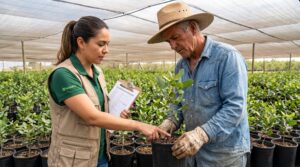
Hello to all pistachio enthusiasts! 👋 From Agro Vivero del Mediterráneo, your trusted nursery and experts in international pistachio cultivation, we welcome you to this space dedicated to unraveling all the secrets of this exciting world. Today, we are going to dive into a fundamental topic for anyone interested in establishing pistachio plantations in their target markets: current regulations and international legislation.
As leaders in the sector, with years of experience advising and providing pistachio plants of the highest quality exported from Spain, we know that navigating the legal maze can be a challenge. That is why we have created this comprehensive guide so that you have a clear and precise vision of everything you need to know to grow pistachios legally and successfully in your region. Join us on this informative journey! 🚀
Why is it crucial to know pistachio regulations? 🤔
Before going into details, it is important to understand why knowing the regulations is essential. It is not just about avoiding sanctions, which is also true, but about ensuring the long-term viability and sustainability of your plantation. Legislation influences key aspects such as:
-
The legality of your plantation: Ensuring that your project complies with all legal requirements from the start avoids future and costly problems.
-
Access to aid and subsidies: Many public aids are conditional on compliance with specific regulations. Knowing them opens the door to these opportunities.
-
The quality and safety of your product: Phytosanitary and quality regulations guarantee that the nut you produce is safe for consumption and meets market standards.
-
Environmental protection: Environmental legislation guides you to carry out responsible and sustainable cultivation, minimizing the impact on the environment.
-
Long-term planning: Knowing the rules of the game allows you to make informed decisions and plan your plantation with security and confidence.
At Agro Vivero del Mediterráneo, we always insist on the importance of planning. And regulations are a key piece of this puzzle. Do not start planting without knowing the legal framework that surrounds you. It’s like building a house without foundations! 🏠
🌍 General Legal Framework for International Agricultural Cultivation
Before focusing on specific pistachio regulations, it is fundamental to understand the general legal framework regulating agriculture internationally. This framework consists of laws at the national, regional, and, in some cases, local levels depending on your destination market.
🏛️ Fundamental National Legislation
At the national level of your target country, there are framework laws that affect the entire agricultural sector, including pistachio cultivation. Some of the most relevant regulatory areas are:
-
Forestry and Land Use Regulations: Although not exclusively agricultural, these laws are crucial if your plantation is located in forest or mountain areas, as they regulate land uses and possible restrictions. It is important to verify if your land is affected by these laws before starting the plantation. They establish limitations and requirements for activities carried out on rural land or that may affect it, including land use changes that might be necessary to establish a plantation. At Agro Vivero del Mediterráneo we advise you to ensure that your project complies with this regulation.
-
Agricultural Policy and Subsidy Frameworks: These laws adapt overarching policies (like the Common Agricultural Policy in the EU, or national agricultural funds in the Middle East and North Africa) to local contexts. These frameworks are fundamental for the agricultural sector, establishing guidelines and aid for agriculture. Pistachio, as a high-value agricultural crop, is affected by this regulation, especially regarding direct aid and rural development measures. Knowing these laws in detail is crucial to maximize the plantation profitability of pistachios, as it allows access to different lines of financing and support. From Agro Vivero del Mediterráneo, we keep you informed about international subsidy news and how you can benefit from them.
-
Water Resources and Hydraulic Domain Laws: Water is a vital resource for any plantation, and pistachio is no exception, although it is a fairly drought-tolerant crop. These laws regulate the public hydraulic domain, concessions and authorizations for water use, and water protection. It is fundamental to ensure that your plantation complies with regulations regarding water resources, both in abstraction and in the use and discharge of water. At Agro Vivero del Mediterráneo we promote efficient and sustainable irrigation practices, in line with current international legislation.
-
International Phytosanitary and Plant Health Standards: These laws establish the framework for plant health, including measures to prevent and control pests and diseases that may affect plantations or cross borders. Pistachio, like any other crop, is subject to this regulation, which is strictly monitored by customs during importation. It is important to stay up to date with phytosanitary alerts and apply appropriate control measures to protect your plantation. We at Agro Vivero del Mediterráneo provide you with certified and healthy plants exported directly from our state-of-the-art nurseries in Spain, ensuring they meet the highest global phytosanitary standards for safe import to your country.
-
Food Chain and Commercial Trading Standards: These laws seek to improve balance and transparency in the food chain, from production to distribution and sale to the final consumer. Although they do not directly affect cultivation itself, they can influence commercial relationships and contracts with pistachio buyers and international processors. Knowing these laws helps you protect your interests as producers.
🏘️ Regional and Local Legislation: A Regulatory Mosaic
Most target markets possess great regional diversity, and this is also reflected in agricultural legislation. Regional authorities or provinces often have competencies in agriculture and rural development, which means there is a set of regional regulations that complement and, in some cases, specify national legislation.
It is crucial to take into account the regulations of your specific region or province, as there may be important differences in aspects such as:
-
Requirements for plantations: Some regions may have specific requirements for authorizing new plantations, especially in protected areas or zones with environmental protection figures.
-
Regional aid and subsidies: In addition to national or EU aid, regions usually have their own aid lines for the agricultural sector, including pistachios. These aids can be specific for plantation modernization, incorporation of young farmers, organic farming, etc.
-
Specific phytosanitary regulations: Although national laws establish the general framework, some regions may have more specific regulations regarding plant health, especially for controlling pests and diseases that are more prevalent in their territory.
-
Regional environmental regulations: Regional authorities have important competencies in environmental matters and can establish additional requirements to national legislation in aspects such as the use of phytosanitary products, agricultural waste management, biodiversity protection, etc.
-
Land planning and urbanism: Regional and local urban planning regulations can affect the location of plantations, especially if they are in rural or peri-urban areas. It is important to verify land classification and possible urban planning restrictions before starting a plantation project.
Examples of relevant regulations across key markets:
-
Morocco: The Green Generation Strategy 2020-2030, although focused on general development, has major implications for agricultural modernization and water management in pistachio plantations. Additionally, Moroccan regulations regarding water and irrigation are especially relevant, given the importance of water resources in the region.
-
Greece: Ministerial Decisions regulating the procedure for authorizing new agricultural plantations can serve as a reference to understand the authorization procedures in this country. Greece is a region with a growing pistachio area, so it is important to be aware of specific CAP compliance regulations that may arise for this crop.
-
Saudi Arabia: The Organic Farming Law establishes a framework for the protection and promotion of sustainable agricultural spaces, which may be highly relevant for pistachio plantations in this country, especially in areas utilizing modern irrigation technologies for desert agriculture.
-
Romania: National decrees regulating the Agricultural Register establish the obligation to register agricultural holdings, including pistachio ones, in this official system to access European modernization subsidies.
This is just a small example, and each market has its own regulatory body. Therefore, from Agro Vivero del Mediterráneo, we strongly recommend that you inform yourselves about the specific regulations of your region before starting your plantation. Do not hesitate to contact us so we can guide you! 📞
🏘️ Local Regulations: Municipal Ordinances
In addition to national and regional legislation, it is also important to take into account local regulations, that is, municipal ordinances. City Councils or local municipalities have competencies in matters that may affect pistachio cultivation, such as:
-
Activity licenses: In some municipalities, it may be necessary to obtain an activity license to start an agricultural plantation, especially if it is considered a relevant economic activity.
-
Municipal urban planning regulations: Municipal urban planning ordinances may establish limitations or requirements for agricultural constructions and facilities, such as warehouses, irrigation sheds, etc. It is important to verify if your project complies with these rules.
-
Rural roads and access: Municipal regulations may regulate the use of rural roads and access to agricultural parcels.
-
Municipal waste management: Although agricultural waste usually has its own specific regulations, in some cases, municipal ordinances may establish additional rules for its management.
-
Urban and rural environment: Some municipalities may have specific ordinances for environmental protection in rural areas, which may affect agricultural practices.
It is fundamental to consult with your local municipality to verify if there are municipal ordinances that may be relevant to your pistachio plantation. At Agro Vivero del Mediterráneo we offer a comprehensive advisory service, which includes reviewing regulations applicable to international projects.
🇪🇺 European Regulations: The CAP and Other Directives
For buyers operating within Europe or exporting their yields to the continent, it is imperative to mention European regulations. The European Union has a great influence on the agricultural sector through the Common Agricultural Policy (CAP) and other directives and regulations.
🇪🇺 Common Agricultural Policy (CAP)
The CAP is the common agricultural policy of the European Union, and its main objectives are:
-
Guarantee a fair standard of living for farmers.
-
Promote sustainable development of rural areas.
The CAP is based on two pillars:
-
First pillar: Direct aid to farmers and market measures. These direct aids, in many cases, are conditional on compliance with environmental and social requirements (conditionality).
-
Second pillar: Rural development. This pillar finances rural development measures, such as farm modernization, rural economy diversification, environmental protection, etc.
Pistachio cultivation can benefit from CAP aid, both direct aid and rural development measures. It is important to know the requirements to access these aids and plan your plantation accordingly. From Agro Vivero del Mediterráneo we advise you on how to maximize CAP benefits for your pistachio plantation.
🇪🇺 Other Relevant European Directives and Regulations
In addition to the CAP, there are other European directives and regulations affecting pistachio cultivation and international commerce, including:
-
Regulation (EC) No 1107/2009 concerning the placing of plant protection products on the market: This regulation governs the authorization and use of plant protection products in the European Union. It is fundamental to use only authorized plant protection products and follow usage instructions to ensure food safety and environmental protection. At Agro Vivero del Mediterráneo we promote responsible use of phytosanitary products and inform you about available alternatives.
-
Directive 2009/128/EC establishing a framework for Community action to achieve the sustainable use of pesticides: This directive establishes measures to reduce the risks and impacts of pesticide use on human health and the environment. It promotes Integrated Pest Management (IPM) as a priority approach for pest and disease control in agriculture.
-
Regulation (EU) 2016/2031 on protective measures against pests of plants: This regulation establishes a framework for plant health protection, including measures to prevent the introduction and spread of plant pests. Because our production facilities are located in Spain, all plants shipped by Agro Vivero del Mediterráneo strictly comply with these EU phytosanitary measures, guaranteeing the delivery of safe, fully certified plants with official European plant passports ready for export to your market.
-
Regulation (EC) No 834/2007 on organic production and labeling of organic products: If you are interested in organic farming, this regulation establishes the rules for the production, processing, and labeling of organic products in the European Union. Pistachios can be grown organically, following the requirements of this regulation.
European regulations are a constantly evolving framework, so it is important to stay updated on the latest news. At Agro Vivero del Mediterráneo we continuously monitor European regulations to offer you the most precise and updated advice.
📝 Procedures and Permits Needed to Plant Pistachios
Once we know the regulatory framework, it is important to know what procedures and permits are necessary to start a pistachio plantation. Procedures may vary depending on your country, regional authorities, and the specific characteristics of your project. However, some common procedures are usually:
-
Local Land Use Consultation: Before starting any project, it is fundamental to carry out a planning consultation at the local municipality to verify land classification, possible urban planning restrictions, and project viability in the chosen location.
-
Construction Permits (if any building is necessary): If your project includes the construction of warehouses, irrigation sheds, or other facilities, it will be necessary to request the corresponding building permit from the local authorities.
-
Planting and Import Authorization (in some cases): In some regions, or for certain protected areas, it may be necessary to obtain a planting authorization. If you are importing our plants from Spain, you must also process the necessary phytosanitary import permits with your country’s Ministry of Agriculture.
-
Water Abstraction Permit (if irrigation is necessary): If your plantation requires irrigation, and you are going to use groundwater or surface water, it will be necessary to obtain the corresponding water abstraction permit from the competent river basin or national water authority.
-
National Register of Agricultural Holdings: It is typically mandatory to register your pistachio farm in the official agricultural register of your country or region.
-
Agricultural Subsidy Declarations: If you want to access aid, such as the CAP in Europe or national funds elsewhere, it will be necessary to submit the corresponding declaration each year.
-
Customs and Phytosanitary Import Registries: If you are going to import live plants and eventually market your nuts, it is necessary to register as a professional operator with the relevant national customs and agricultural health entities.
These are just some of the most common procedures. It is possible that, depending on your project, additional procedures may be necessary. From Agro Vivero del Mediterráneo we offer you a procedure and permit management service to facilitate the start of your plantation. Let us help you simplify this process! 🤝
🔎 Where to Find Detailed Information on Regulations
We know that all this information can be overwhelming. That is why we want to facilitate access to official information sources, where you can find detailed and updated regulations. As experts from Agro Vivero del Mediterráneo, we always seek to offer you the necessary tools for your plantations to be a success, and knowledge of regulations is fundamental. Here are some key concepts and resources:
-
Official National Gazettes: All laws and general provisions of your national government are published in their respective official gazettes. It is your main source for consulting national legislation affecting the agricultural sector and, of course, pistachio cultivation. You can search by keywords or law number to find the information you need. Keeping up with these publications is essential to ensure your plantation complies with current legislation.
-
Official Gazettes of Target Countries: Each country or region has its own Official Gazette where its laws, decrees, and orders are published. In these gazettes, you will find specific regional regulations on agriculture, rural development, environment, and other topics relevant to your pistachio plantations. Remember that regional regulations can complement or specify national legislation, so it is crucial to consult them.
List of Official Gazettes for key international markets, with their common names:
-
Italy: Official Gazette of the Italian Republic (Gazzetta Ufficiale)
-
Portugal: Diário da República (DR)
-
France: Official Journal of the French Republic Journal Officiel de la République Française
-
Romania: Official Monitor of Romania (Monitorul Oficial)
-
Bulgaria: State Gazette (Darzhaven Vestnik)
-
Serbia: Official Gazette of the Republic of Serbia (Službeni glasnik)
-
Croatia: Official Gazette (Narodne novine)
-
North Macedonia: Official Gazette of the Republic of North Macedonia Sluzben vesnik na Republika Severna Makedonija
-
Morocco: Official Bulletin of the Kingdom of Morocco Bulletin Officiel du Royaume du Maroc
-
Algeria: Official Journal of the Algerian Republic (JORA)
-
Tunisia: Official Gazette of the Republic of Tunisia Journal Officiel de la République Tunisienne
-
Egypt: Official Gazette (Al-Waqa’i’ al-Misriyya)
-
Saudi Arabia: Official Gazette (Umm Al-Qura)
-
United Arab Emirates: Official Gazette of the UAE
-
Jordan: Official Gazette of the Hashemite Kingdom of Jordan Al-Jarida Al-Rasmiya
-
Lebanon: Official Gazette of the Lebanese Republic
-
Turkey: Official Gazette of the Republic of Turkey (T.C. Resmî Gazete)
-
United Kingdom: The London Gazette (Official Public Record)
-
-
Websites of National Ministries of Agriculture: The Ministry website of your destination market is a treasure trove of information for the agricultural sector. You will find sections dedicated to agricultural legislation, subsidies, plant health, rural development, and many other topics of interest. You can access informative documents, guides, frequently asked questions, and consultation tools that will be very useful. We recommend exploring the “Legislation” and “Import Requirements” sections within these government websites.
-
Websites of Regional Agriculture Departments: Each regional authority has its own website where it publishes specific information for its territory. You will find data on regional aid and subsidies, regional regulations, information on plant health in your region, contacts of interest, and much more.
-
Professional Agricultural Organizations and Chambers of Commerce: Trade associations and chambers are organizations that represent the interests of farmers and importers. They usually offer legal and technical advisory services to their members and can provide valuable information on regulations and legislation applicable to pistachio cultivation and international trade. If you are thinking of starting a plantation, we recommend contacting the most representative organization in your area for personalized advice.
-
Agricultural Cooperatives: If you join an agricultural cooperative, you can benefit from the advisory services they offer to their members. Many cooperatives have technical and legal departments that can help you resolve doubts about regulations and necessary procedures for your plantation. Additionally, cooperatives are usually up to date with the latest legislative news and can inform you about aid and subsidy opportunities.
-
Agricultural Advisors and Specialized Firms: If you prefer more personalized and professional advice, you can turn to agricultural advisors or firms specialized in international agricultural law. These professionals can help you interpret regulations, carry out necessary import procedures, and defend your interests in case of any legal problems. At Agro Vivero del Mediterráneo we collaborate with a network of advisors we can recommend.
Remember that regulations are constantly changing, so it is essential to stay updated. Regularly consulting these information sources will help ensure your pistachio plantation complies with all legal requirements and avoid potential problems in the future. Information is power! 💡
⚠️ Penalties for Non-Compliance with Regulations
It is important to be aware that non-compliance with regulations and legislation on pistachio cultivation can lead to penalties. Penalties can be of different types, from administrative to criminal, depending on the severity of the infraction. Some of the most common penalties globally are:
-
Economic sanctions (fines): Administrative infractions usually carry economic fines, the amount of which can vary depending on the severity of the infraction, recidivism, and other factors. Fines can range from minor amounts to very high sums.
-
Loss of aid and subsidies: Non-compliance with regulations can lead to the loss of agricultural aid and subsidies you have received or are entitled to. This can mean significant economic damage to your plantation.
-
Closure of the plantation or confiscation of goods: In serious cases of infraction, particularly related to unauthorized imports, authorities can order the closure of the plantation or confiscate shipments, which would imply the cessation of activity and the loss of the investment made.
-
Criminal liability: In some cases, non-compliance with regulations can constitute a criminal offense, especially regarding the environment, plant health, or food safety. This can lead to severe sentences and other criminal penalties.
It is fundamental to take compliance with regulations and legislation seriously. It is not just about avoiding penalties, but about ensuring the long-term sustainability and viability of your plantation, and contributing to a responsible pistachio sector that respects the environment and society. At Agro Vivero del Mediterráneo we are committed to legal and sustainable pistachio cultivation, and we encourage you to follow this path. Legality is the basis of success! ✅
🌱 Good Agricultural Practices and Regulations
Beyond mere compliance with the law, from Agro Vivero del Mediterráneo we want to promote good agricultural practices in pistachio cultivation. We believe that regulations are a minimum framework, but we can go further and adopt practices that improve the quality of our nuts, protect the environment, and contribute to the sustainable development of the sector. Some of these good practices are:
-
Integrated Pest Management (IPM): IPM is an approach to pest and disease control that prioritizes preventive measures and biological and physical control methods, minimizing the use of chemical phytosanitary products. IPM is heavily encouraged globally and mandatory in the European Union, but it goes beyond mere legal compliance, seeking a balance between crop protection and respect for the environment and human health. At Agro Vivero del Mediterráneo we advise you on the best IPM strategies for your plantations.
-
Efficient water use: Water is an increasingly scarce resource, and it is fundamental to use it efficiently in pistachio cultivation, even though it is a drought-tolerant crop. This implies using efficient irrigation systems (such as drip irrigation), scheduling irrigation properly, monitoring soil moisture, and using pistachio varieties adapted to drought conditions. Complying with local water use regulations is essential, but we can go further and adopt practices that minimize our water consumption and protect this vital resource.
-
Sustainable fertilization: Fertilization is necessary to ensure good plantation yield, but it is important to do it sustainably, avoiding soil and water contamination. This implies using fertilizers rationally, based on soil and foliar analysis, preferring organic and slow-release fertilizers, and avoiding over-fertilization. Environmental regulations establish limits for the use of nitrates and other fertilizers, but we can go further and adopt practices that minimize our environmental impact.
-
Soil conservation: Soil is a fundamental resource for agriculture, and it is important to conserve and protect it from erosion and degradation. This implies practicing minimum tillage, maintaining soil cover, using green manures, and avoiding the use of heavy machinery that compacts the soil. Regulations establish requirements for soil protection, but we can go further and adopt practices that improve the health and fertility of our soil in the long term.
-
Biodiversity protection: Pistachio plantations can be integrated into the rural environment in a way that favors biodiversity. This implies maintaining hedges and boundaries, planting native species, creating refuge areas for wildlife, and avoiding the use of phytosanitary products that can harm auxiliary fauna and pollinators. Environmental regulations establish requirements for biodiversity protection, but we can go further and turn our plantations into friendly spaces for fauna and flora.
Adopting these good agricultural practices is not only positive for the environment and the quality of our nuts, but can also improve the image of our plantation and facilitate access to more demanding international markets and aid and subsidies that prioritize sustainability. At Agro Vivero del Mediterráneo we are at your disposal to advise you on implementing these practices in your plantations. Let’s grow pistachios responsibly and sustainably! 🌍
📊 Regulations as an Opportunity for Profitability
Although regulations can sometimes be seen as a burden or an obstacle, from Agro Vivero del Mediterráneo we want to highlight that they can also be an opportunity to improve the profitability of your pistachio plantations. How?
-
Access to aid and subsidies: As we have seen, many public aids are conditional on compliance with specific regulations. Knowing the regulations and complying with them opens the door to these aids, which can represent significant economic support for your plantation. This includes structural aid, regional funds, and other financing lines for modernization, sustainability, organic farming, etc.
-
Market differentiation: In an increasingly competitive market, differentiation is key. Complying with demanding regulations, such as those for organic farming or integrated production, allows you to differentiate your nuts and access market niches with higher added value. Consumers are increasingly concerned about quality, food safety, and sustainability, and are willing to pay more for products that meet these requirements.
-
Long-term cost reduction: Although some sustainable practices may involve an initial investment, in the long term they can generate savings and improve the profitability of your plantation. For example, efficient water use reduces irrigation costs, IPM reduces dependence on chemical phytosanitary products, and soil conservation improves fertility and reduces the need for fertilizers.
-
Improved image and reputation: A plantation that complies with regulations and adopts good agricultural practices improves its image and reputation with consumers, clients, global administrations, and society in general. This can generate trust, loyalty, and new business opportunities. In an increasingly transparent and connected world, reputation is a very valuable asset.
-
Greater legal security: Knowing and complying with regulations provides you with greater legal security and reduces legal risks associated with your cross-border activity. This allows you to plan long-term with greater confidence and avoid unpleasant surprises.
In short, regulations are not just an obligation, but also a tool to improve the profitability and sustainability of your pistachio plantations. At Agro Vivero del Mediterráneo we help you turn regulations into a competitive advantage. Profitable legality is possible! 💰
🤝 Agro Vivero del Mediterráneo: Your Partner in Legal Pistachio Cultivation
At Agro Vivero del Mediterráneo, we are experts in international pistachio cultivation and are committed to the success of your plantations. We know that cross-border regulations and legislation can be complex, but we are here to help you navigate this legal maze and ensure your project meets all requirements, right from the nursery to your field.
What do we offer you?
-
Personalized advice: Our team of experts offers you personalized advice on regulations and legislation for pistachio cultivation. We analyze your project, your location, and your specific needs to offer you the best solutions.
-
Management of procedures and export permits: We help you manage the logistics and permits necessary to export plants to your location. We simplify bureaucratic processes so you can focus on what really matters: your crop.
-
Certified and high-quality pistachio plants: We provide you with pistachio plants of the best varieties, grown in our Spanish nurseries, completely certified and backed by rigorous phytosanitary guarantees. We apply the most strict quality controls to ensure the success of your plantations from the start.
-
Training and technical support: We offer training and technical support throughout the entire cultivation cycle. We share our knowledge and experience with you so you can apply the best agricultural practices and obtain the best results globally.
-
Updated information: We keep you informed about the latest legislative news, available agricultural subsidies, and best practices in pistachio cultivation. Our goal is for you to always have the most precise and updated information to make the best decisions.
At Agro Vivero del Mediterráneo, we not only sell pistachio plants, but we offer you a comprehensive service so that your plantations are a success, from a legal, agronomic, and economic point of view. We are your trusted partner in legal and profitable pistachio cultivation worldwide.
If you are thinking of starting a pistachio plantation, or if you have any questions about regulations and import requirements, do not hesitate to contact us. We will be happy to assist you and help you make your project a reality. Together we will cultivate the future of the pistachio globally! 🚀
📞 Contact Us and Let’s Start Cultivating Together!
Do you have any questions? Do you need personalized advice? Do you want to request a quote without obligation for your pistachio plants? Don’t wait any longer and fill out our reservation and quote form or contact us directly. Our team of experts at Agro Vivero del Mediterráneo is at your disposal to help you with everything you need.
We look forward to meeting you and starting to work together on your international pistachio plantation project! The future of the pistachio awaits us! 🌱😊
Need a quote?
Tell us about your project and we will send you a proposal with no obligation.
Request a quote