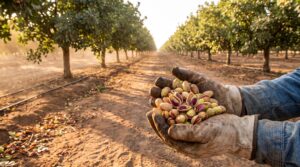
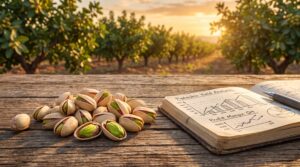
Hello to all agriculture and farming professionals! We are the team at Agro Vivero del Mediterráneo, and we have dedicated years of passion and expertise to the fascinating world of pistachio cultivation. Throughout our trajectory, we have seen this crop evolve from being largely unknown to becoming one of the most promising agricultural investments in Southern Europe. The question our international clients and partners ask us most often is always the same: is investing in a pistachio plantation truly profitable? 🌳💰
The short answer is a resounding yes. However, since we know that in commercial agriculture short answers are rarely sufficient, we want to dive into a detailed analysis with you. Based on our extensive experience, we will break down all the factors that influence the profitability of a pistachio orchard, from the initial investment to the long-term revenue it can generate. We want you to finish reading this article with a clear, realistic vision of what it means to invest in “green gold.”
The Current Global Context of Pistachio Cultivation 🌍
To understand why pistachios have become such an attractive option, it is essential to analyze the current landscape. Mediterranean countries, particularly Spain, occupy a privileged geographical and climatic position for this crop. It requires long, dry, hot summers, along with cold winters that provide the chilling hours the tree needs for proper bud break and flowering. Major agricultural regions in Spain perfectly meet these exact requirements, yielding exceptional export-quality live plants and nuts.
The global market is another key factor. The worldwide demand for this highly valued nut continues to grow relentlessly. Consumers increasingly appreciate its nutritional properties and unique flavor, which has caused consumption to skyrocket. However, global production is heavily concentrated in a few countries, mainly the United States (California) and Iran. This limited supply, contrasted with growing demand, creates a scenario of stable, high prices that is highly favorable for new producers and investors.
While production in emerging Mediterranean hubs is still developing compared to the global giants, this is a golden opportunity rather than a disadvantage. Spanish-grown pistachios are globally recognized for their exceptional quality, frequently surpassing competitors in caliber, flavor, and color. This allows us to position our product in the international market as a premium commodity, targeting buyers who demand excellence. With robust domestic demand and an open door for exports across Europe, the Middle East, and beyond, the market is eager for high-quality, traceable products.
The Initial Investment: Laying the Foundations for Success 🏗️
Establishing a commercial pistachio orchard requires meticulous planning and a thorough understanding of the initial investment. This is not a short-cycle crop; it is a long-term asset, and like any solid enterprise, the foundations must be strong.
-
Land preparation: Before planting a single tree, the soil is our canvas. A comprehensive soil analysis is essential to determine its composition, pH, and any potential deficiencies. Based on the results, the necessary soil amendments are applied. Agricultural practices such as deep subsoiling are crucial for decompacting the soil to ensure excellent drainage and root development. Depending on the plot’s condition, this initial step represents an estimated cost of $450 to $800 USD per hectare.
-
The plant: the heart of the orchard: This is undoubtedly the most critical expenditure, and one where cutting corners is highly inadvisable. The quality of the live pistachio plant will determine the future of your entire agricultural operation. At Agro Vivero del Mediterráneo, we dedicate all our resources to producing the highest quality grafted plants, featuring a well-developed root system and a perfectly healed, lignified graft union. Opting for mediocre plants to save a few dollars per unit is a costly mistake that leads to plant failure, stunted growth, and delayed production. While plant costs vary, you can estimate an investment of $2,800 to $3,900 USD per hectare, assuming a standard planting framework of 6×7 meters (approximately 285 plants/ha).
-
Irrigation system: Although the pistachio tree is highly drought-resistant, supportive irrigation is fundamental for a profitable commercial orchard. The most efficient and recommended system is drip irrigation. It allows for the optimization of every drop of water and precise fertigation. Installing a comprehensive irrigation system—including drilling (if necessary), pumps, filtration units, piping networks, and drippers—can range from $2,200 to $4,500 USD per hectare. While a substantial investment, it guarantees faster entry into production and much more abundant, consistent harvests.
-
Other initial costs: This includes the cost of staking the plants to guide their initial growth, protective guards to prevent damage from rodents or farm machinery, and the specialized labor required for planting. These costs can add an additional $550 to $1,100 USD per hectare.
In summary, the total initial investment to establish one hectare of pistachios averages between $6,000 and $10,300 USD. This is a significant figure, but it should be viewed as the foundational capital of a commercial agribusiness that will yield returns for many decades.
Maintenance Costs During the Early Years ⏳
Once planting is complete, the real work begins. During the first few years, the trees do not yield a crop but require a series of cultural practices to ensure proper development and structural framework. These are the “non-productive years,” and it is vital to account for them in your business plan.
-
Tree training and pruning: The first 3 to 4 years are crucial for establishing the desired open-vase or central-leader structure. This requires annual framework pruning by specialized agricultural labor. A well-trained tree will be easier to manage, highly productive, and less susceptible to diseases.
-
Weed control: Competition for water and nutrients is fierce, particularly for young plants. Keeping the crop rows free of weeds is essential, whether through mechanical tillage, manual clearing, or the controlled application of herbicides.
-
Phytosanitary treatments: Although pistachios are resilient, they are not exempt from pests and diseases. A rigorous monitoring and preventive treatment program is necessary, particularly against fungal pathogens like Verticillium or pests such as psyllids.
-
Fertilization: For vigorous growth, young trees require a balanced supply of nutrients. This is generally applied via the fertigation system or through basal dressing during winter.
-
Irrigation: While young trees do not have the same water requirements as a tree in full production, adequate irrigation during the summer months is key to their survival and vegetative growth.
Adding up all these components, we can estimate annual maintenance costs during the non-productive phase to be between $650 and $1,300 USD per hectare per year. This is an operational expense that must be managed with patience, knowing you are investing in the future productive capacity of your orchard.
Harvest Time! The Productive Years 📈
Patience pays off. Generally, by the fifth or sixth year after planting, the trees begin to yield their first commercial harvests. From this point on, the production curve trends upward until the orchard reaches full productive maturity, around year 10 to 12.
Maintenance expenses in this phase are similar to those of the early years, although certain budget lines increase. Irrigation and fertilization requirements are higher to sustain nut production, and pruning (now production pruning, rather than framework pruning) remains a mandatory annual task. However, the most significant additional expense at this stage is harvesting.
Pistachio harvesting takes place in late August or early September. It can be done manually, which is highly labor-intensive and only viable for very small plots, or mechanically. Mechanization, using trunk shakers with umbrella catchers, is the most efficient and profitable option for commercial agribusinesses. The cost of mechanized harvesting typically ranges from $0.35 to $0.55 USD per kilogram of harvested pistachios.
Analyzing the Revenue: What Are the Expected Returns? 💸
We have reached the key point you have all been waiting for. The revenue from a pistachio orchard relies on two fundamental factors: yield per hectare and the market selling price of the commodity.
-
Yield: Production varies immensely depending on the age of the orchard, agronomic management (rainfed vs. irrigated), the variety, and the specific climatic conditions of the season.
-
Rainfed (Dryland): A mature rainfed orchard can yield an average of 800 to 1,200 kg of processed, dry pistachio kernels per hectare.
-
Irrigated: With optimally managed irrigation, yields skyrocket. We are looking at averages of 2,000 to 3,000 kg/ha , with even higher peaks during exceptional harvest years.
-
-
Selling price: Pistachio prices have demonstrated remarkable stability and an upward trend in recent years. It varies based on quality, caliber, and whether it is conventionally or organically grown (the latter often commanding a 20-30% premium). Currently, a solid benchmark for the producer’s average price is between $8 and $11 USD per kilogram of dry, processed pistachio kernels.
Let’s run the numbers. For one hectare in full production under irrigation:
-
Gross revenue: 2,500 kg/ha x $9.50 USD/kg = $23,750 USD/ha
-
Annual production costs (including harvesting): Estimated at $3,300 to $5,000 USD/ha.
-
Net profit before taxes: $23,750 USD – $4,150 USD (average cost) = $19,600 USD/ha
For one hectare in full production under rainfed (dryland) conditions:
-
Gross revenue: 1,000 kg/ha x $9.50 USD/kg = $9,500 USD/ha
-
Annual production costs: Slightly lower than irrigated, around $2,200 to $3,300 USD/ha.
-
Net profit before taxes: $9,500 USD – $2,750 USD = $6,750 USD/ha
As you can see, the figures speak for themselves. Even in the most conservative rainfed scenarios, the profitability far exceeds that of most traditional woody crops. Under irrigation, we are looking at profit margins that make the pistachio one of the most lucrative crops in modern agriculture. These metrics prove why it is such an attractive long-term asset.
Key Strategies to Maximize Profitability: Our Expert Advice 🧑🌾
At Agro Vivero del Mediterráneo, we do not simply produce the best possible live plants; we offer comprehensive advisory services to guide our agricultural partners every step of the way. Based on our international expertise, here are the keys to ensuring success and maximizing the ROI of your plantation:
-
Selecting the right rootstock: This is the foundation of the tree. The rootstock must be perfectly adapted to your specific soil and climatic conditions. Pistacia terebinthus is excellent for poor, calcareous soils, while Pistacia atlantica offers high vigor. The UCB-1 hybrid is the gold standard for Verticillium resistance and adapts exceptionally well to irrigation, making it the most widely used rootstock in modern orchards due to its precocity and high yield.
-
Choosing the right scion variety: The producing variety (the scion grafted onto the rootstock) is equally decisive. Kerman has been the undisputed king for years due to its large caliber and premium quality. However, newer varieties like Larnaka or Sirora are gaining major international traction because they enter production earlier. The choice depends on the chilling hours in your growing region and your target commercial strategy.
-
Pollination, the overlooked critical factor: The pistachio is a dioecious plant, meaning there are distinct male and female trees. Wind is responsible for transporting pollen from males to females, making orchard design absolutely vital. You need a ratio of approximately one male for every 8 to 10 females, and it is crucial to select the correct male varieties (e.g., Peter for Kerman) so that their blooming period synchronizes perfectly with the females. Failed pollination means zero harvest.
-
Professional agronomic management: Pistachios are highly rewarding but require technical and professional management. Correct pruning, a fertilization plan tailored to the actual nutritional needs of the tree (based on foliar analysis), efficient irrigation management, and rigorous pest control are the factors that separate a mediocre orchard from an exceptionally profitable one.
-
Long-term vision: As we have seen, pistachio farming is a marathon, not a sprint. Patience during the early years and solid financial management to cover the initial investment and early operational costs are essential. Do not be discouraged by the lack of immediate returns. The reward will arrive, and it will be generous and enduring. A well-managed pistachio tree can produce at peak capacity for over 60 to 70 years.
If you are considering launching an agribusiness project or want to optimize the yield of your current orchard, do not hesitate to contact us. Our technical agronomy team will be delighted to analyze your specific case and provide the optimal, customized solution.
Commercialization: Closing the Cycle 🤝
Yielding a massive harvest is only half the battle. Strategic commercialization is critical to securing the highest possible price for your commodity. Pistachios offer several market avenues:
-
Cooperatives and agricultural partnerships: Joining forces with other producers allows for larger product volumes, strengthening your negotiating power with major international buyers and distributors. Furthermore, they often provide processing services (de-hulling, drying, grading), which adds significant value to the final product.
-
Direct sales to processors: There are industrial buyers who purchase pistachios directly from the farmer, either fresh (immediately after harvest) or already dried.
-
Direct-to-consumer sales: For smaller-scale operations, direct sales in local markets, via an e-commerce platform, or in bulk to boutique retailers can be highly lucrative, as it eliminates intermediaries. While it demands more effort in marketing and logistics, the profit margins can be substantially higher.
-
The organic market: If you have opted for certified organic farming, you will gain access to a premium niche market with significantly higher price points. The global demand for organic products continues to surge, and pistachios are no exception.
Diversification is a smart strategy. You might allocate a portion of your harvest to a cooperative to guarantee baseline revenue, while reserving another portion for direct sales to capture higher margins. The key is not to leave this crucial step until the last minute, but to plan your commercial strategy well in advance.
As we have broken down throughout this comprehensive analysis, the profitability of pistachio farming is not a myth; it is a tangible reality backed by solid data and the success of hundreds of commercial growers who have already invested in it. It is a major financial commitment that requires technical expertise, patience, and a long-term vision, but the potential returns are extraordinary and capable of completely transforming the economic profile of an agricultural enterprise.
The current market context is optimal, driven by surging international demand and highly stable pricing. The agro-climatic conditions in our Mediterranean regions are ideal. Furthermore, the supreme quality of Spanish-grown pistachio plants and nuts opens doors to the most demanding international markets. At Agro Vivero del Mediterráneo, we are convinced that this is one of the most transparent and robust opportunities in 21st-century global agriculture. If you are ready to invest the work and the passion, this “green gold” will return your efforts exponentially. Take the leap, plan your project, and join this rapidly expanding international sector. You can begin by requesting a no-obligation quote for your live plants. The future of profitable farming is paved with pistachios. 🌱✨
Need a quote?
Tell us about your project and we will send you a proposal with no obligation.
Request a quote