


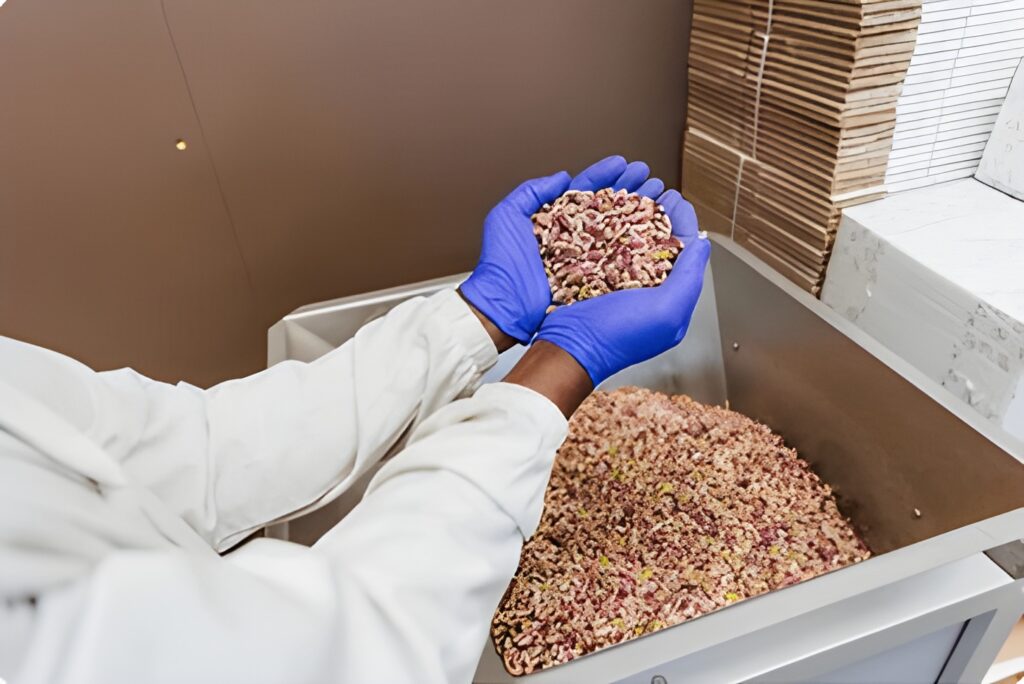
At Agro Vivero del Mediterráneo, we have spent years dedicating ourselves body and soul to the fascinating world of pistachios. Our experience, forged in the field, has taught us that the success of an orchard is not the result of chance, but the result of meticulous work, a deep knowledge of the tree, and the application of advanced strategies. Today, we want to share with you, fellow farmers, the keys we have identified to take your orchards to the next level and maximize the production of kilos per hectare. 📈
The path to excellence in pistachio cultivation is a marathon, not a sprint. It requires patience, investment, and, above all, expert planning from day one. Forget about shortcuts and miracle solutions. The real secret lies in understanding the tree’s needs in each of its phases and providing it with exactly what it needs to express its full productive potential. Throughout this article, we will break down the techniques and management practices that, in our experience, make the difference between a mediocre harvest and an exceptional one. Join us on this journey towards maximum profitability!
Genetics: The Starting Point of a Successful Orchard 🌳
Every great project begins with a solid foundation, and in agriculture, that foundation is undoubtedly genetics. The choice of plant material is the most important and momentous decision a farmer will make. A mistake at this initial point can drag down the profitability of the farm throughout its useful life, which can exceed 50-60 years. That is why, at Agro Vivero del Mediterráneo, we place special emphasis on the quality of our pistachio plant.
It is not just about choosing a female and a male variety. It is about understanding the interaction between the rootstock and the variety, and how this combination will adapt to the specific conditions of our farm: the climate, the soil type, water availability, and the planting framework.
Rootstocks: The Foundations of Our Tree
The rootstock is the tree’s root system, its anchor to the earth, and the one responsible for absorbing water and nutrients. Its choice will largely determine the tree’s resistance to soil diseases such as Verticillium, its tolerance to salinity, drought, and calcareous soils.
-
Pistacia terebinthus (Cornicabra): It is one of the most traditional rootstocks, known for its great hardiness and excellent adaptation to strict dry-farming conditions and poor soils. However, its vigor is lower and entry into production is somewhat slower. We recommend it for those farms with greater water and soil limitations.
-
Pistacia atlantica: Originating from the Atlas Mountains, this rootstock offers greater vigor than terebinthus, which translates into faster entry into production and greater productive potential. It has good tolerance to drought and salinity, although it is somewhat more sensitive to winter frosts in its early years.
-
UCB-1: This is the rootstock that has revolutionized the sector. It is a clonal hybrid of P. atlantica x P. integerrima, developed by the University of California. Its main advantage is its extraordinary vigor, which spectacularly accelerates entry into production, with the first significant harvests possible in the fourth or fifth year. In addition, it is very resistant to Verticillium dahliae and tolerant to salinity. However, it is more demanding in water and nutrients than the previous ones, so its choice must be linked to an irrigated cultivation approach.
From our experience, to maximize kilos per hectare in modern and highly technical orchards, UCB-1 is the preferred choice, provided an adequate water supply can be guaranteed.
Female Varieties: The Producers of the Precious Nut
The choice of the female variety will determine the characteristics of the nut (size, split percentage, flavor) and the harvest time.
-
Kerman: It has been the queen variety for many years, especially in California. It produces a large, excellent quality nut. Its main drawback is its tendency to alternate bearing and later ripening, which can be a problem in areas with a risk of autumn rains.
-
Larnaka: Originating from Cyprus, it is a very productive variety with less alternate bearing than Kerman. The size of its product is somewhat smaller, but it compensates with more constant production and an earlier flowering and ripening time. It adapts very well to the conditions of the Iberian Peninsula.
-
Sirora: An Australian variety that is gaining a lot of popularity. It is very productive, early in its entry into production, and with less alternate bearing. The nut size is intermediate, but it stands out for its high percentage of split nuts. It is a very interesting option to consider.
Pollinators: The Essential Supporting Actors
Without proper pollination, there is no harvest. It is crucial to choose the right pollinator, whose flowering perfectly overlaps with that of the female variety. The wind is responsible for transporting the pollen, so the distribution and percentage of males in the orchard are fundamental. Generally, we recommend a ratio of 1 male for every 8-10 females, strategically distributed to ensure full coverage.
-
Peter: It is the classic pollinator for Kerman, as its flowering coincides very well.
-
C-Especial and Guerrero: They are excellent pollinators for varieties like Larnaka and Sirora, with flowerings that better adapt to these earlier females.
The informed choice of plant material, advised by professionals, is the first unavoidable step to maximize future production. It is an investment, not an expense.
Nutrition and Irrigation Management: Feeding the Potential 💧
A tree with the best genetics will not be able to express its potential if it does not have the necessary water and nutrients at key moments. Precise management of irrigation and fertilization is the second pillar to achieve high and constant productions.
Irrigation: The Key to Intensification
Although the pistachio tree is traditionally a dry-farmed tree, to maximize production, supplemental irrigation or regulated deficit irrigation is essential. Water not only increases the size and weight of the nut, but also improves the regularity of harvests by reducing alternate bearing.
The critical moments when water cannot be lacking are:
-
Post-fruit set (May-June): During the initial growth of the nut. A lack of water in this phase can cause a massive drop of newly set fruits.
-
Nut filling (July-August): This is the phase of greatest water demand. The tree is filling the kernel, and a severe water restriction at this time will result in a high percentage of blank nuts, which translates into a direct loss of kilos.
-
Post-harvest (September-October): Many farmers make the mistake of cutting off irrigation after harvesting. However, this is a crucial period in which the tree accumulates reserves in its buds for budding and flowering the following year. Good post-harvest irrigation is the best investment to ensure the next season’s harvest.
We recommend installing drip irrigation systems that allow efficient and localized application of water, minimizing evaporation losses. Water allocations will vary depending on the soil, climate, and age of the orchard, but in modern irrigated farms, allocations of between 2,500 and 4,500 cubic meters per hectare per year can be managed.
Fertilization: A Tailor-Made Suit
There is no universal fertilization recipe. Fertilization must be a tailor-made suit for our orchard, based on soil and foliar analyses. These analyses will tell us what nutrients we have available in the soil and which ones the tree is actually absorbing.
The essential macroelements are:
-
Nitrogen (N): It is the engine of vegetative growth. It is essential in spring to ensure good development of the shoots that will bear the following year’s harvest. An excess can cause uncontrolled growth and health problems, while a deficiency will limit the tree’s development.
-
Phosphorus (P): Crucial for root development and the plant’s energy processes, such as flowering and fruit set.
-
Potassium (K): It is the “nutrient of quality and quantity.” It plays a vital role in kernel filling and sugar transport. The greatest potassium needs occur during the nut filling phase. An adequate supply of potassium is synonymous with larger sizes and, therefore, more kilos per hectare.
We must also pay attention to micronutrients, such as Zinc (Zn) and Boron (B), which are essential for proper flowering and fruit set. Deficiencies in these elements, although needed in small amounts, can drastically limit production.
Fertigation (applying fertilizers dissolved in irrigation water) is the most efficient technique, as it allows us to provide nutrients in split doses and adjusted to the tree’s needs at all times.
Pruning and Training: Designing Productive Trees ✂️
Pruning is one of the most powerful tools we have to direct tree growth, balance production, and ensure long-term profitability. A poorly trained tree or one with inadequate pruning will never reach its maximum productive potential.
Training Pruning (Early Years)
The goal during the first 3-4 years is to create a strong and balanced structure that can support large harvests in the future. At Agro Vivero del Mediterráneo, we recommend vase training with 3 or 4 well-distributed main branches. This allows good penetration of light and air throughout the canopy, which is essential for tree health and nut quality.
It is a job that requires patience. We must avoid the temptation to let the tree produce too soon. Premature entry into production in a tree with a weak structure can compromise its development and future production. First the factory (the tree), then the product (the harvest)!
Production Pruning (Adult Trees)
Once the tree is trained, production pruning seeks two main objectives:
-
Maintain the balance between vegetative growth and production: The pistachio tree bears fruit on the previous year’s wood. Therefore, we need to ensure that the tree produces enough new shoots each year to guarantee the next year’s harvest. Pruning stimulates this renewal.
-
Control alternate bearing: Alternate bearing or productive alternation is the natural tendency of the pistachio tree to alternate a year of heavy harvest with one of light harvest. Proper pruning, removing part of the load in “on” years (high production), helps mitigate this effect, achieving more regular harvests and, in the overall calculation of several years, greater production.
Pruning should be moderate, removing branches that cross, are poorly oriented, or prevent light from entering. The goal is to have an “aerated” canopy. In addition, some branches should be tipped to encourage the sprouting of wood buds, which will be the ones that give us future production.
Efficient Pollination: The Harvest Insurance 🐝 (Even if it’s by the wind!)
We have already talked about the importance of choosing pollinators well, but there are more factors that influence successful pollination. Let’s remember that the pistachio tree is dioecious (male and female trees) and its pollination is anemophilous (by the wind).
-
Correct distribution: Males must be distributed homogeneously throughout the orchard, ideally in the direction of the prevailing winds during flowering. The quincunx arrangement is usually very effective.
-
Flowering synchronization: It is vital. We must observe our local conditions. In some areas, it may be interesting to combine two pollinator varieties (one earlier and one slightly later) to ensure that, regardless of how spring arrives, we always have pollen available throughout the receptivity period of the female flowers.
-
Avoid phytosanitary treatments during flowering: Although pollination is by wind, any treatment during this sensitive period can affect the viability of both pollen and female stigmas.
-
Ensure the health of the males: Often, the farmer focuses on the females and neglects the males. A healthy and vigorous male produces a much higher quantity and quality of pollen than a weak one. They must receive the same irrigation, fertilization, and care as the female trees.
Good pollination translates directly into a greater number of fruits set per tree. It is the difference between a tree full of pistachio clusters and a tree with scattered fruits.
Plant Health: Protecting Our Investment 🛡️
It is useless to have the best genetics and impeccable agronomic management if pests or diseases ruin our harvest. An integrated pest management (IPM) program is essential to protect our crop sustainably and profitably.
The main threats we must monitor are:
-
Septoria and Alternaria: These are two fungi that cause leaf spots and premature defoliation of the tree. Early leaf loss greatly weakens the tree, affects kernel filling that year, and compromises the next year’s harvest. Control is based on preventive treatments with authorized fungicides at times of highest risk (wet springs). Good pruning that favors canopy aeration is the best preventive measure.
-
Pistachio psyllid (Agonoscena pistaciae): This small sucking insect can cause great damage by secreting honeydew that dirties leaves and fruits, and by weakening the tree. It is essential to monitor their populations with chromatic traps to decide the optimal time for intervention.
-
Bugs: There are several species that can bite the developing fruit, causing it to drop or the appearance of spots that depreciate its value. Monitoring the margins of the plot and weed control are key to preventing their appearance.
At Agro Vivero del Mediterráneo we advocate a proactive approach. This involves constantly monitoring the orchard, knowing the cycles of pests and diseases in our area, and acting only when strictly necessary, using the active ingredients that are most respectful of auxiliary fauna. Technical advisory services are a key tool to successfully implement these programs.
Harvest and Post-harvest: The Final Sprint 🏁
Reaching harvest with loaded trees is a great achievement, but the work is not over. The way we manage harvesting and subsequent processing can make a big difference in the kilos we finally sell.
-
Optimal harvest time: Harvesting too early means that many fruits will not have reached their final size and the split percentage will be lower. Harvesting too late increases the risk of the fruits becoming stained by moisture, falling to the ground, or being attacked by birds. The ideal time is when the outer skin (epicarp) easily separates from the woody shell when pressed with the fingers.
-
Mechanization: For orchards of a certain size, mechanized harvesting with a shaker and umbrella is essential. It allows harvesting quickly and efficiently, minimizing the time the nut is in the field exposed to possible contamination and ensuring that it is processed in the shortest possible time.
-
Fast processing: Once harvested, the pistachio must be hulled and dried within the first 24 hours. Leaving the product piled up in the trailer for longer can cause fermentation and the appearance of aflatoxins, a very serious problem that can ruin an entire batch. Fast processing guarantees maximum quality and food safety, which translates into a better selling price.
Every step, from shaking the tree to final drying, must be done carefully to minimize losses and maximize quality. This is key to understanding the profitability of the orchard.
As we have seen throughout this extensive analysis, maximizing pistachio production does not depend on a single factor, but on the sum and synergy of a set of advanced agronomic practices. It is a system where every piece counts. From the initial genetic choice, which defines the productive potential of the orchard, to precise water and nutrient management that allows the trees to express that potential. Passing through intelligent pruning that builds efficient nut factories and phytosanitary protection that safeguards our investment. Everything culminates in a harvest carried out at the right time and in the right way to ensure that every kilo produced reaches a successful conclusion.
At Agro Vivero del Mediterráneo, we live and breathe pistachios. Our mission goes beyond providing plants of the highest quality; we seek to be your traveling companions in this exciting crop. We know that each farm is a world of its own and that success lies in adapting these strategies to its particular conditions. Precision agriculture, knowledge, and planning are the tools of the 21st-century farmer. Investing in knowledge and expert advice is not an expense, it is the best investment to guarantee the viability and maximum profitability of your project. If you are thinking of starting or want to improve your current orchard, do not hesitate to contact us. We will be happy to put our experience at your service and help you design a plan to reach those longed-for thousands of kilos per hectare. You can even request a personalized quote through our reservation form. Together, we can take your harvest to the next level! 🚀