


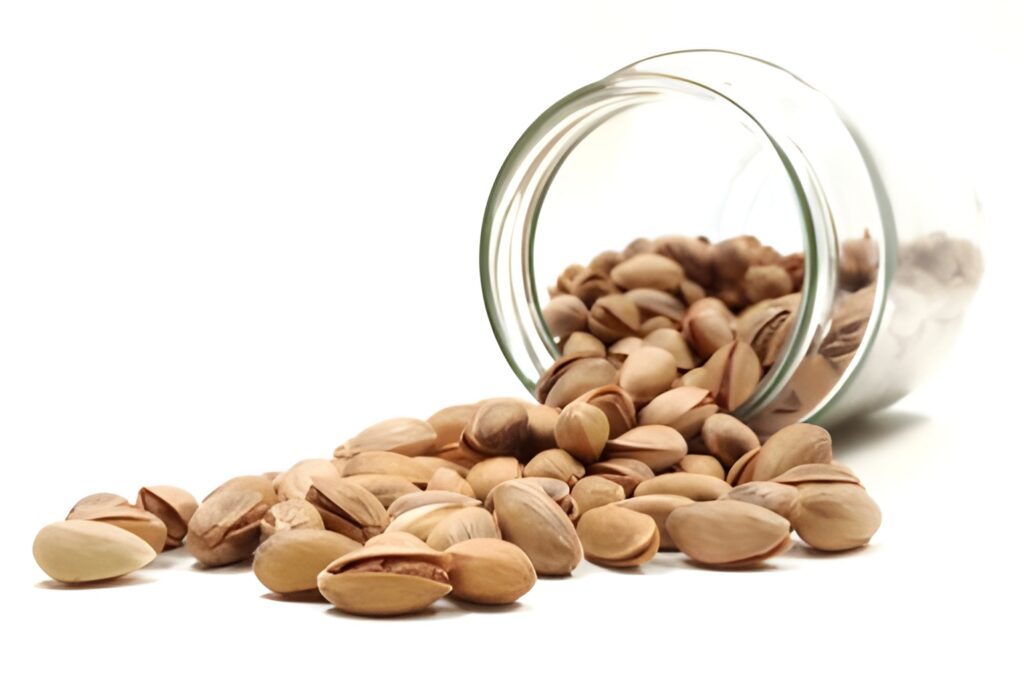
At Agro Vivero del Mediterráneo, we constantly analyze the international agricultural landscape to always offer the best information to our clients. We find ourselves at a historic moment for the agricultural sector and, very specifically, for pistachio farming. The year 2026 marks a turning point in the global demand for this valuable nut, opening commercial doors that seemed unattainable until recently.
Whether you are a small grower looking to diversify your income or managing large plantations and wishing to focus your production on exports, understanding how emerging pistachio markets are shifting in 2026 is the first step to ensuring the financial success of your project. Throughout this comprehensive guide, we will break down all the technical, commercial, and agronomic keys you need to master to position your harvest at the top of the global market.
The Evolution of Global Consumption of This Valuable Nut
To understand why we are talking about emerging pistachio markets in 2026, we must first look at global consumer behavior. In recent years, we have witnessed a radical shift in dietary habits worldwide. The search for plant-based proteins, heart-healthy diets, and the trend toward healthy snacking have placed this nut in an absolutely privileged position.
Unlike other agricultural products that suffer from sharp demand fluctuations, the pistachio has consolidated sustained growth. Economic projections for 2026 indicate that global consumption will grow at an annual rate of 5.5%. This increase is driven not only by traditional markets like the United States or the European Union, but by new demographic and economic powers that have discovered the immense nutritional and organoleptic properties of our product.
India and Southeast Asia: The Giants Awakening in 2026
When we at Agro Vivero del Mediterráneo design future strategies alongside our growers, we always look toward Asia. In 2026, India has established itself as one of the most aggressive emerging markets for pistachio imports. The exponential growth of its middle class, combined with a deep-rooted tradition of gifting nuts during festivals like Diwali, has skyrocketed the demand for large calibers and premium quality.
Meanwhile, Southeast Asia, led by countries such as Vietnam, Thailand, and Indonesia, is undergoing an unprecedented dietary transition. These countries increasingly demand Western products considered “gourmet.” In these destinations, the pistachio is not only consumed as a snack but has been massively integrated into the pastry, ice cream, and haute cuisine industries, which demands a product with an intense green color and flawless flavor.
The Middle East and Gulf Countries: In Search of Maximum Quality
Although the Middle East has historically been a producing region, extreme climatic conditions and the scarcity of water resources in some of these countries have limited their agricultural expansion capacity. By 2026, nations like the United Arab Emirates, Saudi Arabia, and Qatar stand as net importers with incredibly high purchasing power.
These markets are not looking for just any product; they demand excellence. They seek pistachios with a high percentage of dehiscence (natural opening of the shell), exceptional calibers, and immaculate presentation. For commercial growers, positioning their harvest in the Gulf countries means accessing the highest prices on the international market, provided that strict quality standards are met right from the very conception of the plantation.
Latin America: A Continent in Full Dietary Transition
Latin America represents another fascinating commercial bloc for the 2026 horizon. Countries like Brazil, Mexico, and Colombia are experiencing a boom in health and wellness trends (fitness and real fooding). The Latin American consumer is progressively replacing ultra-processed snacks with natural alternatives, and the pistachio tops the list of preferences.
The advantage of exporting to Latin America lies in the cultural affinity and language facilities for closing direct commercial agreements. However, phytosanitary requirements are rigorous, underscoring the importance of maintaining perfectly controlled pistachio plantations, free from pests and diseases, and with absolute traceability from the field to the shipping container.
Eastern Europe: A Strategic Market for Expansion
We cannot discuss emerging pistachio markets in 2026 without mentioning Eastern Europe. Poland, the Czech Republic, Romania, and Hungary have seen a notable increase in their purchasing power. For growers targeting the European market, this region is highly strategic due to its geographic proximity, which drastically reduces logistical costs and the carbon footprint of transportation.
The Eastern European consumer highly values the European seal of origin. The strict food safety standards guarantee minimum levels of aflatoxins and pesticide residues, something that pistachios from other latitudes cannot always certify. This grants us a decisive competitive advantage when marketing our harvests.
What New International Buyers Demand in 2026
To conquer these emerging markets, it is not enough to produce a lot; one must produce with excellence. Throughout our trajectory, we have seen that the international market severely penalizes quality defects. Buyers in 2026 focus their attention on four fundamental pillars:
-
Caliber: Large sizes are in high demand. An 18-20 caliber (number of kernels per ounce) will always secure better market prices than a 28-30.
-
Dehiscence: The natural opening of the shell must exceed 85% of the batch. Closed nuts require additional mechanical processing, which reduces their value.
-
Absence of Staining: The shell must present a clean, off-white color. Dark stains, generally caused by delays in hulling and drying after harvest, commercially depreciate the product.
-
Food Safety: It is non-negotiable to present batches completely free of aflatoxins and with heavy metal or pesticide levels well below the legally permitted limits.
Spain’s Strategic Position in Global Plant Export
Spain has established itself as the European epicenter for the cultivation of this nut. Our geographical position is unbeatable. We act as a natural bridge between the Americas, Europe, the Middle East, and Asia. But our advantage is not just logistical; it is fundamentally agronomic and climatic.
The edaphoclimatic conditions of the Spanish interior, with cold winters that guarantee the necessary chilling hours and long, dry, hot summers, foster perfect maturation and exceptional sanitary quality of the plant material. Unlike other global producing areas that suffer from severe humidity problems and fungal outbreaks, the Spanish climate allows us to produce healthy, top-tier grafted trees ready for global export.
Why Starting a Pistachio Plantation Today Remains a Smart Move
We are often asked if it is still a good time to plant. The answer, backed by export and demand data, is a resounding yes. Initiating an agricultural project of this magnitude requires a medium and long-term vision. The trees we plant today will be in full production when the global demand from emerging markets reaches its highest peaks.
The pistachio is a rustic crop, highly resistant to drought compared to other fruit trees, and with an exceptionally long productive life. A well-designed and professionally managed plantation can offer optimal yields for over 60 years. To deeply understand the financial figures behind this crop, we invite you to consult our detailed analysis on the profitability of a pistachio plantation, where we break down the real numbers of the sector.
Medium and Long-Term Cost and Benefit Analysis
For a project to be viable, we must conduct a rigorous financial analysis. We have prepared an indicative table reflecting the evolution of a standard plantation, always subject to variations depending on management, region, and 2026 market prices:
| Crop Phases | Years | Estimated Annual Costs (USD/ha) | Estimated Gross Revenues (USD/ha) | Financial Balance |
| Establishment | Year 1 | 5,000 – 7,000 | 0 | Strong initial investment |
| Development | Years 2 to 4 | 900 – 1,300 | 0 | Maintenance and training |
| Early Production | Years 5 to 7 | 1,300 – 1,700 | 1,600 – 3,800 | Return on investment underway |
| Full Production | Year 8 onwards | 1,600 – 2,200 | 8,200 – 13,500 | High sustained profitability |
As we can see, the initial effort is more than rewarded once the farm reaches its productive maturity. Our goal is to accompany you through each of these phases to minimize errors and bring forward the entry into production as much as possible.
Site Selection: The First Step Towards Internationalization
Success in exporting begins long before the tree yields its first flower; it begins in the soil. At Agro Vivero del Mediterráneo, we are very demanding when choosing a plot. The pistachio requires deep soils, preferably with a sandy loam or clay loam texture. Drainage must be perfect.
The greatest enemy of our plantations is waterlogging, which favors root asphyxia and the proliferation of lethal fungi such as Phytophthora or Verticillium dahliae. Therefore, we always recommend conducting soil test pits (excavations of at least 1.50 meters deep) and comprehensive physical-chemical soil analyses to determine the pH (the optimum is between 7.0 and 8.5), electrical conductivity, and organic matter levels before making any decisions.
Ideal Climate: Necessary Chilling Hours and Heat Units
The genetics of the plant demand very specific climatic conditions. For the tree to break its winter dormancy homogeneously and achieve an explosive and synchronized flowering between female plants and male pollinators, we need to accumulate a specific number of chilling hours (temperatures below 7.2 ºC). Depending on the variety, these requirements range from 700 to 1,100 hours.
On the other hand, for the nut to fully develop, the endocarp (the shell) to lignify correctly, and the inner kernel to reach its maximum size, forcing a natural opening, we require abundant heat units during the summer. If your farm meets these climatic requirements, you have a rough diamond in your hands.
Rootstocks: The Foundations of Your Agricultural Success
At Agro Vivero del Mediterráneo, we place special emphasis on the choice of rootstock. It is the foundation upon which your entire investment rests. In the current market, we mainly work with three fundamental options, each adapted to different agronomic realities:
-
Pistacia terebinthus (Cornicabra): Excellent rusticity, tremendous drought resistance, and adaptation to calcareous or stony soils. It is the traditional Spanish rootstock par excellence, ideal for strict dryland farming or farms with very limited irrigation.
-
UCB-1 Hybrid: The undisputed king of irrigated pistachio plantations. It offers extraordinary vigor, brings forward the farm’s entry into production by at least a couple of years, and resists Verticillium wilt well. Its root system is very powerful, which requires deeper soils.
-
Pistacia atlantica: An intermediate rootstock, with good vigor and adaptation to saline soils.
For us to advise you on the ideal rootstock for your land and budget, we invite you to visit the main page of Agro Vivero del Mediterráneo, where we detail our working methodology.
Selection of the Best Varieties for Export
The international market is very selective regarding varieties. Not all have the same commercial value. In our facilities, we produce and commercialize the most globally demanded genetics.
The Kerman variety remains the industry standard. It offers an excellent caliber, a high percentage of dehiscence, and a late flowering that allows it to escape dreaded spring frosts. It is the most recognized variety in emerging pistachio markets in 2026.
However, other varieties like Sirora or Larnaka are gaining massive ground. Sirora stands out for its very high productivity, an excellent percentage of split nuts, and a lower rate of blank nuts. Larnaka, on the other hand, is highly valued in the international pastry industry for the intense green color of its kernel.
We must not forget the crucial role of male pollinators (such as Peter or C-Especial). A proper ratio, generally one male for every eight or nine females (11% to 12% of the plantation), strategically distributed according to prevailing winds, is vital. Discover our full catalog and availability by visiting our specialized section on purchasing pistachio plants.
Deep Soil Preparation and Organic Amendments
Once the land has been analyzed and the plants selected, the next step is the physical preparation of the soil. We recommend performing a deep cross-subsoiling (between 80 and 100 centimeters) during late summer or early autumn. This process breaks up compacted subsoil layers (plow pan), drastically improves drainage, and facilitates the deep root development of the young trees.
Taking advantage of this labor, it is the ideal time to incorporate organic amendments. Applying well-composted manure (between 25,000 and 35,000 kilograms per hectare) will improve soil structure, increase water and nutrient retention, and encourage beneficial microbial activity in the rhizosphere.
Designing the Planting Grid to Optimize Harvesting
The planting grid will determine the geometry of your farm for the rest of its useful life. When deciding the distance between rows and between trees, we must inevitably consider future mechanization. Manual harvesting is unfeasible in commercial farms oriented towards export, so the passage of tractors with umbrella shakers or over-the-row harvesters must be guaranteed.
| Planting Grid (meters) | Plants per Hectare | Recommended For | Main Advantages |
| 7 x 7 | 204 | Dryland and high-vigor irrigated land | Maximum sunlight and aeration |
| 7 x 6 | 238 | Standard irrigated land | Excellent production/space balance |
| 7 x 5 | 285 | Controlled intensive irrigation | Higher production in the early years |
| 6 x 6 | 277 | Less fertile soils or cool drylands | Good density without crowding the alleys |
At Agro Vivero del Mediterráneo, we usually recommend the 7 x 6 meter grid for farms on UCB-1 rootstock under irrigation, as it allows for comfortable canopy development and the easy transit of heavy machinery down the alleys.
High-Efficiency Irrigation and Fertigation Systems
Although the tree survives in extreme drought conditions, if our goal is to satisfy emerging pistachio markets in 2026, water supply must be precise and highly technical. A drip irrigation system with double driplines per row is the smartest investment.
We apply Regulated Deficit Irrigation (RDI) strategies. This technique consists of supplying 100% of water needs during critical phases (spring shoot growth and late summer kernel filling) and drastically reducing irrigation during shell hardening (phase II, from mid-May to early July), a time when the tree barely requires water. This technique saves costs, prevents crown diseases, and maximizes the nut’s opening percentage.
If you need advice on the installation and management of irrigation, we invite you to explore our wide range of agricultural services.
Soil Management and Cover Crop Control
Soil management is another fundamental pillar for keeping the farm healthy. The current trend, highly valued in Europe and emerging markets, is the use of cover crops in the center of the alleys. Sowing legume and grass species helps fix atmospheric nitrogen, prevents soil erosion from torrential rains, improves water infiltration, and serves as a refuge for auxiliary fauna (beneficial insects that prey on pests).
Along the planting line, right under the tree canopy, we do recommend keeping the ground clear of weeds to avoid direct competition for water and nutrients, either through shallow mechanical weeding passes or through the highly controlled and localized use of authorized herbicides.
Training and Production Pruning: Balancing the Tree
The pistachio has a very pronounced apical dominance; if we do not prune it correctly, it will tend to grow straight up toward the sky without branching, creating fragile and unproductive structures. Training pruning during the first four years is critical. The objective is to form an “open vase” or “modified vase” tree, selecting three or four main branches well distributed in space (at different heights on the trunk to prevent breakage from future crop weight).
Once the farm enters production, pruning focuses on maintaining internal canopy lighting (lack of light causes the death of fruiting buds), renewing old wood, and controlling the size of the tree to facilitate the work of umbrella shakers. This is a technical and specialized task that requires deep knowledge of this species’ physiological behavior.
Plant Nutrition: Essential Macronutrients and Micronutrients
A nut destined for the global elite is not achieved with malnourished trees. The fertilization plan must be backed by annual foliar analyses conducted in July, which will indicate exactly what the plant is assimilating.
Nitrogen is vital for vegetative growth, Phosphorus ensures a strong root system and good flowering, and Potassium is the true engine of nut sizing, responsible for increasing caliber and specific weight. Furthermore, the pistachio is highly sensitive to a lack of micronutrients like Boron (essential for pollen fruit set), Zinc (the lack of which causes small, yellowish leaves), and Copper. Fertigation allows us to apply these elements diluted in the irrigation water, achieving immediate assimilation by the crop.
Prevention and Control of Common Pests and Diseases
Climate change and agricultural intensification have brought new sanitary challenges. A farm oriented towards export in 2026 must maintain exhaustive pest control. The Clytra (a defoliating beetle) can wreak havoc on young plantations during the spring. The pistachio Psylla secretes honeydew that stains leaves and weakens the tree.
Regarding diseases, prevention is the only real cure. Fungal diseases such as Septoria or Alternaria attack the leaves, causing severe premature defoliation. The use of preventive treatments based on copper salts in autumn and winter, added to good canopy aeration through pruning, are mandatory agronomic strategies in our manual of good practices.
The Optimal Harvest Time and Its Impact on Quality
The harvest is the peak moment of the year and one of the critical points where we risk all our export quality. Harvesting too early means obtaining a high percentage of immature and closed nuts. Delaying it means exposing the nut to bird attacks, pests, and fungal infections, in addition to drastically increasing shell darkening.
The optimal time arrives when the hull (the fleshy outer skin covering the hard shell) changes color, going from an intense green to a translucent pink or reddish tone, and separates easily from the inner shell with the fingers. At that precise moment, the mechanical vibration of the trunks must be fast and efficient.
Post-Harvest Processing: Hulling, Drying, and Safe Storage
It is fundamental to understand that harvesting this crop does not end in the field. From the moment the nut falls into the umbrella shaker, the grower has a maximum period of 24 hours to process it. If the fleshy hull oxidizes or ferments around the shell, it will irreversibly stain brown, degrading the product from premium category to low-priced industrial category.
Processing at the plant requires mechanical water hulling, a pass through flotation tanks (where blank or aborted nuts float and are discarded), and an intensive forced hot air drying process. The objective is to reduce the nut’s moisture from an initial 30% in the field to a maximum of 5% or 7% to guarantee preservation and prevent any risk of aflatoxin development during storage in silos.
The Added Value of Organic Certification in Emerging Markets
If there is an upward trend that will dominate emerging pistachio markets in 2026, it is the demand for organically certified products. Organic farming involves dispensing with synthetic chemical fertilizers and herbicides, replacing them with biological control techniques, natural composting, and mechanical tillage.
Although organic management may slightly increase production costs and marginally reduce the total kilograms harvested, the selling price more than compensates for this effort. Batches certified as organic achieve price premiums on the international market ranging between 20.5% and 35.0% above conventional products. It is one of the most powerful differentiation strategies for commercial growers.
Practical Export Cases from Commercial Plantations
In our extensive experience, we have seen projects grow from scratch to become export benchmarks. Take, for example, a 20-hectare irrigated farm. By applying rigorous technical management, this plantation managed to stabilize a yield of 2,200 kilograms per hectare of the Sirora variety by its eighth year.
By achieving exceptional caliber and certifying its harvest as free of chemical residues, the owner, through a second-degree marketing cooperative, managed to introduce 80% of their harvest into Eastern European markets and the United Arab Emirates. This model of success demonstrates that professionalizing agricultural operations is the safest way to dominate emerging markets.
Common Mistakes to Avoid When Designing Your Project
To guarantee the success of your pistachio plantation, knowing what not to do is just as important as knowing what to do. Over the years, we have diagnosed entire farms ruined by basic planning errors that could have been avoided with specialized technical advice:
-
Planting in Unsuitable Soils: Skipping prior soil test pits and planting in pure clay soils that waterlog in winter condemns the trees to a slow, certain death.
-
Skimping on Plant Quality: Acquiring plant material of doubtful origin, without a phytosanitary passport, introduces soil pathogens into the farm that are impossible to eradicate.
-
Poor Distribution of Pollinators: Placing males in areas where the prevailing wind does not carry pollen toward the females results in harvests full of blank nuts.
-
Overwatering Before Flowering: Erroneous water management can cause root rot and excessive vegetative growth to the detriment of nut production.
Our Working Model at Agro Vivero del Mediterráneo
Understanding the complexity and potential of the global market can be overwhelming. That is where we come in. At Agro Vivero del Mediterráneo, we do not limit ourselves to being a simple plant supplier; we are your long-term strategic partner.
Our team of agronomists and field technicians works side-by-side with the grower from the very first draft of the project. We analyze your soil, study your plot’s historical climate, calculate your water needs, and design a tailor-made financial viability plan. We want your plantation to be not just a beautiful field, but a highly profitable agricultural business ready to conquer international markets.
Specialized Services for the Comprehensive Development of Your Plantation
We offer comprehensive solutions covering the complete life cycle of pistachio plantations. Our catalog of services includes:
-
Preliminary Studies and Topography: Soil and water analysis and planimetric design for irrigation optimization.
-
Supply of Certified Plant Material: Grafted plants with absolute guarantees of establishment and health.
-
Turnkey Planting: Use of GPS-guided precision machinery to guarantee perfect alignments.
-
Installation of Irrigation Systems: Efficient hydraulic designs, automatic filtration heads, and next-generation fertigation systems.
-
Continuous Agronomic Audits: Periodic visits to your farm to control nutrition, sanitary status, and provide guidance on pruning techniques.
If you have technical questions or want us to evaluate your plot’s potential without any commitment, we are entirely at your disposal. Visit the contact page for Agro Vivero del Mediterráneo and tell us about your project.
The Next Step Towards Your New Agricultural Reality
The agricultural landscape proves to us every day that excellence is the only sure path to profitability. Emerging pistachio markets in 2026 represent a historic, genuine, and highly lucrative opportunity, but they demand professionalism, technical knowledge, and top-quality plant material right from the moment of planting.
Do not let this window of opportunity pass you by. Our technical team is ready to analyze your land, design a customized strategy, and provide you with the plants and services necessary for your farm to become an international production benchmark.