


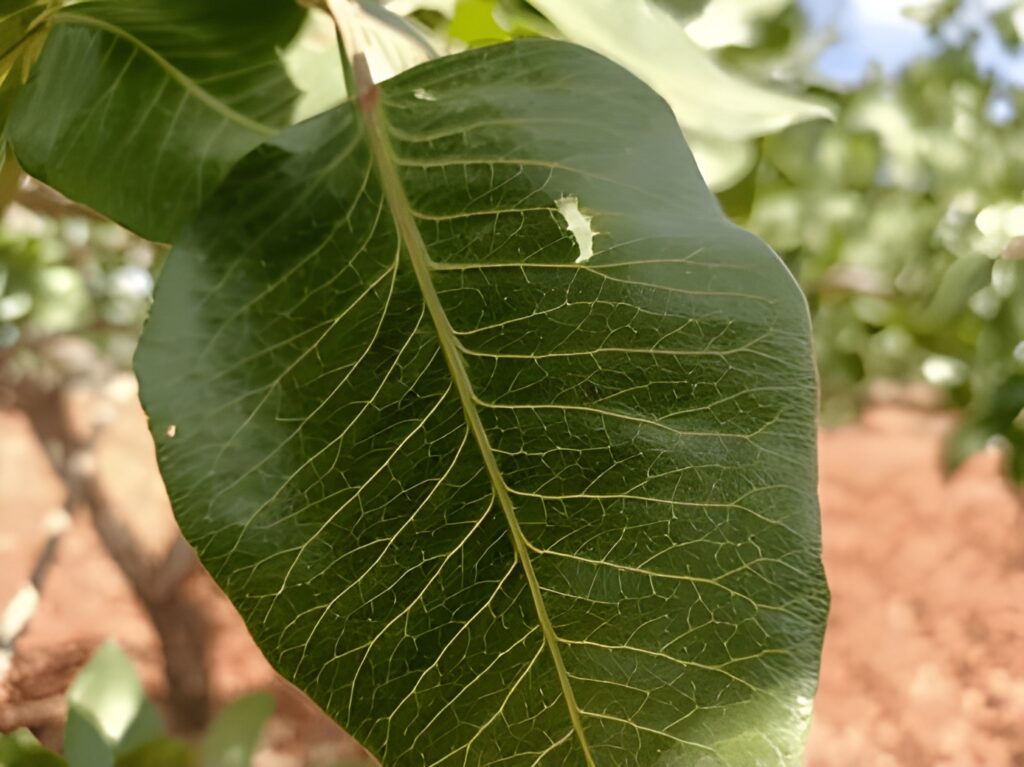
At Agro Vivero del Mediterráneo, our relationship with the pistachio goes beyond a simple crop; it is a passion that we have perfected over the years. We do not measure our journey in units of time, but in the vigor of each pistachio plant that we raise and in the tangible success of the plantations that we have the privilege of advising. We are fully aware that the journey towards an exceptional harvest, both in volume and quality, is fraught with challenges. Among them, plant health stands as the fundamental pillar on which the entire project rests. 🌳💪
A healthy pistachio tree is the promise of a productive future. However, like every living being, our trees are in a constant battle against an army of pathogens that can compromise their development, drastically reduce production, and, in the most bleak scenarios, cause their death. The ability to identify the first and most subtle symptoms of a disease in time is the first, and most critical, line of defense. This ability to “listen” to what the tree tells us through its leaves, branches, and nuts is what differentiates a manageable setback from a crisis that can jeopardize the viability of the operation. For this reason, we have decided to distill all our practical and technical knowledge into this definitive guide. Our goal is to arm you, the farmers who have placed your trust in us and in this noble crop, with the most powerful tool: the knowledge to protect your investment and maximize the profitability of your plantation.
Throughout this comprehensive article, we will immerse ourselves in the depths of pistachio phytopathology. We will break down with an unprecedented level of detail, but always with clear and accessible language, the main diseases that can threaten your trees. We will teach you the art of methodical observation: how to examine leaves for the most insignificant spot, how to feel branches for hidden cankers, how to interpret a change in trunk coloration, and, of course, how to evaluate the health of the precious clusters. Every sign, however subtle—a deformation, an exudate, a chlorosis—has a story to tell, and we will give you the dictionary to interpret it. But we will not stop at diagnosis. As your strategic allies, we will provide you with an arsenal of the most effective prevention and control strategies. Our approach is based on Integrated Pest and Disease Management (IPDM), a philosophy that prioritizes cultural practices, enhances biological control, and reserves the use of phytosanitary treatments as a precision tool, used only when indispensable and always with maximum respect for the environment and the auxiliary fauna that helps us so much.
At Agro Vivero del Mediterráneo, we are convinced that applied knowledge is the most transformative force in agriculture. And the power to shield your pistachio trees, to secure your legacy, begins at this very moment. We invite you to join us on this learning journey to become, together, the most diligent and effective guardians of the health of our plantations. Let’s get to work! 🕵️♂️🌿
The importance of prevention: Building a biological fortress
Before starting our immersion in the catalog of specific pathologies, it is imperative that we assimilate and elevate to the category of dogma a fundamental concept: prevention. In the complex board of modern agriculture, and especially in a long-haul crop like pistachio, anticipating problems is not only a more effective strategy, but it is infinitely more profitable and sustainable than reacting to them. Proactive and holistic management of the plantation is not limited to reducing the incidence of diseases; it goes much further. It strengthens the intrinsic health of the trees, increases their resilience against all types of stress (water, thermal, nutritional), and, as a final result, raises the quality and quantity ceiling of each harvest.
The health of a pistachio plantation is a robust building constructed on four master pillars. If one of them fails, the entire structure wobbles.
-
Genetics and origin: The cradle of health
Everything begins long before the tree touches the soil of our farm. It begins with the choice of superlative quality plant material. At Agro Vivero del Mediterráneo, this is our non-negotiable starting point. We subject our plants to the strictest quality and health controls, ensuring not only their vigor and correct formation but also their varietal purity and, crucially, their phytosanitary status. Starting with a certified pistachio plant, with a phytosanitary passport in order, is the first and greatest barrier we can raise against the introduction of devastating pathogens such as Verticillium or quarantine bacteria into our plot. A plant of uncertain origin, although it may seem like an initial saving, is a ticking time bomb that can carry latent problems, viruses, or wood diseases that will not manifest until years later, when the investment is already huge and the damage, irreparable. -
Plantation architecture: Designing a resilient ecosystem
A plantation is not just a sum of trees; it is an ecosystem that we must design for health. Intelligent agronomic design favors aeration, reduces leaf wetness hours, and minimizes ambient humidity, three factors that are the Achilles heel of most pathogenic fungi.-
Planting frames: The choice of distance between trees and between rows is a strategic decision. Frames that are too dense can increase production in the first years, but in the long run create a microclimate of shade and stagnant humidity, perfect for Septoria, Alternaria, and Botryosphaeria. We must seek a balance that allows maximum light interception and optimal air circulation throughout the life of the plantation.
-
Orientation: The orientation of planting rows in relation to prevailing winds and the sun’s path can notably influence how quickly foliage dries in the morning.
-
Training pruning: It is the internal architecture of the tree. From the first year, we must guide the tree to create an open structure, with well-distributed main branches, allowing air and light to penetrate to the interior of the canopy. A tangled and dark interior is a refuge for diseases.
-
Soil management: Soil is a living organism. Healthy soil promotes healthy roots. Avoiding waterlogging through good drainage, or even creating ridges in heavy soils, is vital. The use of cover crops, whether sown or controlled spontaneous, is a practice we strongly recommend. These covers improve soil structure, increase organic matter, foster beneficial microbiology that competes with soil pathogens, and prevent erosion.
-
-
Precision nutrition: The tree’s immune system
A well-nourished tree is analogous to a person with a robust immune system: it is prepared to defend itself effectively against aggressions. A fertilization plan must be a tailored suit, not a generic recipe.-
Prior analyses: The basis of any fertilization plan must be a complete soil analysis before planting and periodic foliar analyses during the life of the crop. Only then will we know what the tree really needs and what is available in the soil.
-
N-P-K Balance: Nitrogen (N) is essential for growth, but its excess is one of the biggest mistakes that can be made. It causes exuberant vegetative growth, with tender tissues, weak cell walls, and high water content, making them an irresistible treat for sucking insects and an easy entry point for fungi. Phosphorus (P) is key for the root system and energy transfer, and potassium (K) is fundamental for water management, stress resistance, and nut filling. An imbalance between them weakens the tree.
-
Microelements, the great forgotten ones: Deficiencies of microelements such as Zinc (Zn), Boron (B), or Manganese (Mn) not only cause chlorosis symptoms but weaken essential metabolic functions of the tree, making it more vulnerable to diseases.
-
-
Intelligent hydrology: Water as an ally, not an enemy
Water is the engine of life, but poor irrigation management can be the trigger for the worst phytosanitary nightmares.-
Irrigation method: Drip irrigation is undoubtedly the system of choice for the pistachio tree. It applies water directly to the root zone, keeping the trunk, neck, and leaf mass dry. Sprinkler or flood irrigation are extremely high-risk practices that create ideal humidity conditions for the proliferation of foliar fungi and neck diseases such as Phytophthora.
-
Dose and frequency: It is crucial to adjust water inputs to the real needs of the tree in each phenological state (budding, flowering, pistachio growth, kernel filling) and to climatic conditions (evapotranspiration). The use of monitoring tools such as tensiometers or moisture probes allows us to irrigate with precision, avoiding both drought stress (which weakens the tree and favors Botryosphaeria) and waterlogging (which suffocates roots and is paradise for Phytophthora and Verticillium).
-
By internalizing and rigorously applying these four preventive pillars, we are not simply avoiding diseases; we are building a biologically strong plantation, an ecosystem in balance where trees can express their full productive potential. Now, with this fortress built, we are ready to know, identify, and combat the enemies that try to assault it.
Fungal diseases: The invisible and persistent army
Fungi represent, by an overwhelming majority, the main biotic threat to pistachio cultivation worldwide. Their incredible diversity, adaptability, and sophisticated dispersal and survival mechanisms make them a formidable adversary. They spread with the wind, rain splashes, through our pruning tools, on machinery, and even on our own clothes. They can survive as resistance structures in the soil for years or in the form of latent mycelium in plant debris or in the tree’s own wood. Most of them find their particular paradise in conditions of high humidity and moderate temperatures, which makes spring and autumn the maximum red alert seasons in our plantations.
Septoria Leaf Spot (Septoria pistaciarum): The thief of photosynthesis
Septoria Leaf Spot is undoubtedly the most widespread and easily recognizable foliar fungal disease in pistachio plantations. Although its lethality for the tree is practically nil, we must not underestimate its impact. A severe and uncontrolled attack can trigger massive premature defoliation. This loss of “solar panels” mid-season has serious consequences: it deeply weakens the tree, prevents it from accumulating the necessary reserves in buds and roots for the following campaign (affecting budding and flower bud differentiation), and can seriously compromise the correct filling of the current harvest’s kernel, resulting in a higher percentage of empty pistachios. 🍂
-
Detailed identification of symptoms:
-
On leaves (the telltale canvas): Diagnosis begins with the appearance of small spots, initially 1 to 3 millimeters in diameter, predominantly circular or subcircular in shape. In the initial phase, these spots present a reddish-brown or violet color, often with a darker border. The most distinctive sign, especially in the early stages, is the presence of a very clear yellowish halo surrounding the spot, as if the leaf were reacting to isolate the infection. As the disease progresses, the tissue in the center of the spot becomes necrotic, dying and acquiring a grayish or whitish color, similar to ash paper. It is in this necrotic center where we must look for the confirmatory sign. With a field magnifying glass (an indispensable tool for every pistachio grower), we will be able to observe tiny black dots, as if we had sprinkled ground pepper. These are the pycnidia, the fruiting bodies of the fungus, where the spores (conidia) that will perpetuate the disease are gestated. In conditions of high infection, spots can be so numerous that they merge, creating large necrotic areas of dead tissue that crack the leaf.
-
The consequence: defoliation: A tree heavily affected by Septoria presents a sickly appearance. Leaves, riddled with spots, lose their photosynthetic capacity, yellow generally, and fall prematurely, especially from late summer to early autumn. This anticipated “undressing” leaves the tree weakened facing winter and compromises future production.
-
Symptoms on other organs: Although much less frequent and of lesser economic importance, the fungus can sporadically affect leaf petioles and the epicarp (the outer fleshy skin of the pistachio), where it can cause small dark and depressed spots that usually do not affect the kernel.
-
-
Epidemiology and favorable conditions: To fight an enemy, you have to know its life cycle. Septoria pistaciarum hibernates comfortably in infected leaves that have fallen to the ground. It is its winter refuge. With the first rains or sprinkler irrigations of spring, and as temperatures rise, pycnidia on these leaves release their spores. Water splashes act as a springboard, launching these spores towards new and tender leaves in the lower part of the tree. For infection to be successful, a leaf wetness period of at least 6-12 hours and mild temperatures are required, with an optimal range between 20 and 25°C. Once primary infection is established, new pycnidia formed on tree leaves will generate secondary infections throughout spring and summer if humidity conditions persist, creating a snowball effect.
-
Integrated control and management strategies:
-
Preventive and cultural measures (the basis of success):
-
Sanitation: The star measure: The most powerful, economical, and ecological strategy is the reduction of primary inoculum. This translates into a very concrete action: eliminate or accelerate the decomposition of fallen leaves during winter. A pass with a harrow or superficial cultivator at the end of winter to bury leaf litter is a highly effective practice. Contact with soil and its microorganisms decomposes leaves and the fungus before it can sporulate in spring. In smaller or organic plantations, collection and composting (ensuring high temperatures) or destruction of leaves is another option. Reducing inoculum by 90% means drastically reducing disease pressure.
-
Pruning for aeration: As we already mentioned, a well-ventilated tree canopy is a hostile environment for fungi. Pruning that eliminates crossed branches, suckers, and thins the interior allows leaves to dry much faster after rain, interrupting the infection cycle.
-
-
Chemical control (a precision tool):
-
The use of fungicides must be a thoughtful decision, not a routine. It is justified in plots with a recurrent history of severe attacks and, above all, when weather forecasts announce an especially rainy spring.
-
Timing is everything: Treatments are always preventive. Applying a fungicide when the leaf is already full of spots serves very little purpose. The critical moment for the first application is usually after pistachio fruit set (when the small nut is visible), as this is when leaf surface is maximum and climatic conditions are usually most propitious. Depending on pressure and weather, 1 or 2 additional applications may be necessary, spaced according to product indications and rains.
-
Active ingredients and resistance management: Copper fungicides (copper oxychloride, cupric hydroxide, copper calcium sulfate) are an excellent preventive and low-cost tool, especially in early phases. Other effective chemical groups include strobilurins (Azoxystrobin, Pyraclostrobin, Trifloxystrobin) and triazoles (Difenoconazole, Tebuconazole, Myclobutanil). It is vitally important not to always use the same active ingredient or chemical family. Alternating products with different modes of action is the only way to prevent the appearance of fungal resistance to fungicides, an increasingly serious problem in agriculture. At Agro Vivero del Mediterráneo, through our technical advisory services, we develop personalized treatment schedules that optimize efficacy and minimize risks.
-
-
Alternaria Late Blight (Alternaria alternata and other species): The target fungus
Alternaria is another very common foliar fungus that can cause defoliation and directly affect nut quality. Often its first symptoms can overlap with those of Septoria, leading to confusion, but a trained eye can distinguish them clearly. Its impact can be significant, especially in summers with high relative humidity or in plantations located in areas with persistent morning dews.
-
Detailed identification of symptoms:
-
On leaves (the target clue): Alternaria produces leaf spots that generally are larger than those of Septoria, ranging between 5 and 15 millimeters in diameter, and even more. Their shape is irregular, but with a clear tendency to be circular. The color is dark brown, almost blackish. The most reliable and distinctive diagnostic feature is that mature spots usually develop concentric rings, giving the lesion the appearance of a target. This pattern is the result of intermittent fungal growth within leaf tissue. Unlike Septoria, the center of the spot does not turn grayish nor present black pycnidia. Lesions can coalesce, forming large necrotic blights that cause the leaf to curl, dry, and fall.
-
On nuts (direct damage to harvest): This fungus has a predilection for nuts, especially when infection occurs close to harvest. It causes black, slightly sunken spots on the outer shell (epicarp). In conditions of prolonged high humidity, visible fungal growth can develop on these spots: a velvety greenish-black mold, which are the reproductive structures of the fungus (conidiophores and conidia). In severe infections, the fungus can penetrate through the shell and reach the kernel, causing dark spots that depreciate its commercial value and can confer anomalous flavors.
-
-
Epidemiology and favorable conditions: Alternaria is a very cosmopolitan fungus. Its spores (conidia) are omnipresent in the air and it survives as a saprophyte on decaying organic matter. Unlike Septoria, it does not need liquid water to germinate, but it does require prolonged periods of high relative humidity (above 90%) for several hours. Optimal temperatures for its development are higher, ranging from 25-30°C. For this reason, its attacks are more characteristic of late spring and, above all, summer, especially in plantations with poor ventilation, in valleys, hollows, or near bodies of water where humidity tends to stagnate during the night and early morning hours.
-
Integrated control and management strategies:
-
Preventive and cultural measures:
-
Ventilation is key: Any practice promoting air circulation is a first-order control measure against Alternaria. Well-executed thinning pruning is probably the most effective tool. Removing suckers, inner branches, and excess vegetation creates a less humid and more hostile microclimate for the fungus.
-
Irrigation management: It is fundamental to avoid sprinkler irrigation. Drip is the ideal system. In addition, it is important to schedule irrigations to be done in the morning, allowing time for any splash or soil surface to dry during the day, instead of irrigating at dusk, which would prolong the period of nocturnal humidity.
-
-
Chemical control:
-
Constant vigilance is essential. Treatments should start as soon as the first symptoms are detected, provided weather conditions are risky (stormy summers, periods with intense dews).
-
There is a good number of effective fungicides against Alternaria. In addition to the triazole and strobilurin families already mentioned, products based on Mancozeb, Iprodione, or Boscalid have shown good control. The strategy of alternating active ingredients to avoid resistance is, if anything, even more important with this fungus, which has a known ability to develop them.
-
-
Verticillium Wilt (Verticillium dahliae): The silent killer of the soil
We enter the terrain of the most feared and destructive diseases for the pistachio tree: Verticillium Wilt. It is not a foliar disease, but a systemic vascular disease. The fungus, Verticillium dahliae, lives in the soil and penetrates the tree through the root system. Once inside, it colonizes the xylem, the system of pipes transporting water and nutrients from roots to the aerial part. The fungus grows inside these vessels, producing mycelium and spores that physically obstruct them. In addition, the tree, in its defense attempt, produces gels and tyloses that contribute to further clogging its own “veins.” The result is a collapse of the vascular system, a kind of “heart attack” preventing water from reaching branches and leaves, causing lethal wilting. 😱
-
Detailed identification of symptoms:
-
Fulminant wilting (apoplexy): The most dramatic and characteristic symptom is sudden and rapid wilting of leaves on one or several branches of the tree. This usually happens spectacularly during the first days of intense summer heat (June-July). One day the tree looks healthy and the next, an entire branch or even half the tree presents limp leaves, as if suffering extreme thirst. Leaves first acquire a pale green color, then yellow, and finally dry out, turning light brown. A very typical feature is that these dry leaves often remain attached to the branch for weeks or months, giving the tree a burned or scorched appearance.
-
Unilateral affection: It is very frequent for symptoms to start affecting only one side of the tree, a single main branch. This is because the initial infection in roots is usually localized and affects only vessels connecting to that specific part of the canopy.
-
Definitive diagnosis (autopsy): To confirm without a doubt that it is Verticillium Wilt, it is necessary to make a cross-section or peel the bark on one of the affected branches. Doing so will reveal the unequivocal sign of the disease: staining or discoloration of vascular tissue (xylem). Instead of showing a healthy cream or white color, a complete ring or stippling of brown, greenish, or almost black color will be observed. This staining is the fungus’s signature inside the wood.
-
Evolution and death: The disease can progress and spread to other parts of the tree in subsequent years. In young trees (less than 8-10 years old), Verticillium Wilt can be fulminant and kill them in a single season. In adult trees, it sometimes becomes chronic, manifesting as slow decline, with short shoots, small and chlorotic leaves, and zero or very scarce production, until they finally succumb.
-
-
Epidemiology and favorable conditions: Verticillium dahliae is an extremely persistent soil pathogen. It survives in the form of microsclerotia, tiny resistance structures, compact and melanized, which can remain viable in soil for more than 15 years, even in the absence of a host crop. The fungus activates with moisture and mild soil temperatures in spring and penetrates roots, mainly through small wounds (caused by tillage, nematodes, natural growth, etc.). The disease is exacerbated by heavy, clayey soils with poor drainage and excessive irrigation creating anaerobic conditions in the root. A first-order risk factor is plot history. This fungus has a very wide host range, including crops such as cotton, tomato, pepper, eggplant, melon, watermelon, sunflower, and, very importantly, olive. Planting pistachios on land where any of these species has previously been grown is buying almost all tickets for a disaster.
-
Control and management strategies (prevention is the only strategy):
-
Preventive measures (the battle is won before planting):
-
Plot choice: It is the most critical decision of all. Before investing a single euro, it is absolutely mandatory to investigate the plot’s crop history for the last 15-20 years. If there is the slightest suspicion or history is unknown, it is essential to perform a quantitative soil analysis in a specialized laboratory to detect presence and concentration of Verticillium dahliae microsclerotia. If results show inoculum levels above a risk threshold (varying by laboratory, but usually very low), that plot must be discarded for pistachio, unless drastic measures are taken.
-
The rootstock: our protective shield: This is the most powerful tool available to us today. Using resistant or tolerant rootstocks is key to being able to grow pistachios in risk areas. The UCB-1 hybrid rootstock, which is the quality standard we work with at Agro Vivero del Mediterráneo, has demonstrated excellent tolerance to Verticillium Wilt in countless trials and commercial plantations. Other rootstocks such as Pistacia terebinthus (cornicabra) also show notable natural resistance. Conversely, rootstocks such as Pistacia atlantica are considerably more sensitive. Investing in a plant with a resistant rootstock is the plantation’s life insurance.
-
Soil and irrigation management: Even if we use resistant rootstocks, we must help them. Improving soil structure and drainage, avoiding waterlogging at all costs, and applying precise and efficient irrigation are practices reducing stress on root system and fungal activity.
-
-
Management of infected trees (damage mitigation):
-
There is no chemical cure for an infected tree. Fungicides do not reach vascular system to control fungus.
-
At first symptoms, affected branches should be pruned, always cutting well below zone with vascular staining, in apparently healthy wood. It is crucial to disinfect pruning tools (with 10% bleach solution or specific products) between each cut and, above all, between tree and tree, so as not to act as disease vectors.
-
Affected trees must be “pampered” to help them cope with infection: avoid any water or nutritional stress. Sometimes, an adult and vigorous tree can overcome, isolating infection and surviving.
-
If a young tree dies, it must be uprooted and burned. Another pistachio tree should not be replanted in that same hole, as inoculum concentration will be extremely high.
-
-
Botryosphaeria or Panicle and Shoot Blight (Botryosphaeria dothidea): The cancer of the pistachio tree
This is another wood disease of enormous severity, which can cause death of entire branches, main scaffolds, and even the entire tree if not managed actively and rigorously. It is known as a “stress disease” or an “opportunistic pathogen,” since, although it can infect healthy trees, it shows its most aggressive face in plants weakened by other causes: severe water stress, frost damage, sunburn on bark, acute nutritional deficiencies, or attacks by other pests or diseases.
-
Detailed identification of symptoms:
-
Cankers on wood: The most characteristic symptom is formation of cankers on bark of branches and trunk. These areas appear depressed, darkened, and often with cracked bark. A very common sign associated with these cankers is gummosis, exudation of an amber and sticky substance, especially in spring. If bark of affected area is scraped, it is observed that underlying wood (cambium and xylem) is necrotic, with brown or blackish coloration contrasting with surrounding healthy tissue.
-
Dieback: Direct consequence of a canker girdling a branch is death of entire part distal to it. Branch begins to dry from tip towards base. Leaves on that branch wither, dry, and die, but, similarly to Verticillium Wilt, usually remain attached to branch for long time, creating typical symptom of dry branch “flags” scattered throughout tree canopy.
-
Symptoms on other organs: Fungus can also manifest in other places. Can cause blight of floral panicles, where flowers or newly set small pistachios blacken and die. Can also cause necrotic leaf spots, large and irregular, and dark lesions on developing nuts.
-
-
Epidemiology and favorable conditions: Botryosphaeria is a fungus needing a wound to enter tree. Any break in bark continuity is potential entry door: pruning cuts, scars from leaf or peduncle fall, cracks from frost or sun, damage by agricultural machinery, or galleries of boring insects. Once inside, remains latent until tree suffers stress episode. Water stress (drought) is main trigger activating fungus virulence. Spores produced in fruiting bodies (pycnidia) formed on bark of dead wood and cankers, and disperse mainly with rain splashes.
-
Integrated control and management strategies:
-
Preventive and cultural measures (stress management is key):
-
Irrigation and nutrition management: First line of defense is maintaining trees in optimal vigor state. This means ensuring adequate and constant water supply, especially during hot summer months. Balanced fertilization plan also fundamental.
-
Protection against abiotic stress: Protecting trunks of young trees with white paint or protective meshes to avoid sunburn (causing cracks) is highly recommended practice.
-
-
Tree surgery: Relentless sanitary pruning: This is most important direct control tool. Periodic and exhaustive visual inspections of plantation must be carried out, at least a couple of times a year, to detect and eliminate any branch showing symptoms of drying or cankers. Cut must always be made in healthy wood, at least 20-30 cm below last visible symptom of internal necrosis. Disinfection of pruning tools (saw, shears) after each cut on affected branch is MANDATORY. If not done, tool becomes infected scalpel spreading disease throughout tree and plantation.
-
Inoculum removal: All pruned and affected wood must be immediately removed from plot and destroyed, preferably by burning (if regulations allow). Leaving pruning remains in plot is creating nursery of fungal spores that will rain on healthy trees.
-
Wound protection: In pruning branches of certain thickness (more than 3-4 cm diameter), advisable to protect pruning wounds with healing paste or mastic containing fungicide to create physical and chemical barrier against fungus entry.
-
Chemical control: Fungicide efficacy limited and mainly preventive. Do not cure already infected wood. Copper treatments in autumn (at leaf fall) and late winter (before budding) help protect multiple micro-wounds occurring in tree and reduce spore load on surface. In spring, applications with systemic fungicides (such as triazoles or strobilurins) can offer some protection to new shoots, but should never replace sanitary pruning.
-
Bacterial diseases: The invisible threat
Although fungal diseases grab most of spotlight, phytopathogenic bacteria can also cause serious problems in pistachio tree. Chemical control generally more complex and less effective than fungi, redoubling importance of preventive measures.
Fire Blight (Erwinia amylovora): A phytosanitary emergency
While disease infamous for devastating impact on pome fruit trees like pear and apple, fire blight can, although infrequently, affect pistachio tree. Susceptibility seems to vary greatly between different varieties and rootstocks. Given severity and status as quarantine disease in many regions, mere suspicion should trigger all alarms. Disease of mandatory declaration to plant health authorities. 🔥
-
Symptom identification:
-
Sudden scorched appearance: Disease name extremely graphic. Infected parts (flowers, young shoots, leaves) wither and necrose with astonishing speed, turning dark black color, as if burned with blowtorch.
-
Bacterial exudate: In high humidity conditions, on affected tissues (especially shoots and flowers), droplets of sticky exudate appear, milky looking at first and then oxidizing to amber tone. This exudate concentrate of millions of bacteria and highly infectious.
-
“Shepherd’s crook”: Tender shoots in active growth, when infected, often bend at tip, forming 180-degree curve reminiscent of shepherd’s crook. This one of most iconic and diagnostic symptoms of disease.
-
Cankers and advance in wood: Infection can progress from shoots towards woodier branches, forming cankers on bark. These cankers can exude bacterial liquid in spring, reactivating disease cycle.
-
-
Epidemiology and favorable conditions: Bacteria Erwinia amylovora requires warm temperatures (optimal range between 21-27°C) and high humidity (rain, dew, relative humidity > 60%) to multiply and infect. Flowers main entry door. Bacteria transported from flower to flower by pollinating insects, like bees. Can also enter through wounds of any kind (hail, wind, tools).
-
Control and management strategies (zero tolerance):
-
Exclusion: Best strategy preventing bacteria entering plantation. Implies using exclusively plant material from certified and trusted nurseries, like ours at Agro Vivero del Mediterráneo, guaranteeing absence of disease.
-
Surveillance and early detection: Perform frequent inspections during and after flowering, especially if weather conditions risky.
-
Eradication: At slightest suspicion, immediately contact official Plant Health services of autonomous community. Do not attempt to prune or handle suspicious material on own, as extremely high risk of spreading disease run. Official confirmation usually entails obligation to uproot and destroy in situ not only affected tree, but also adjacent ones, to create biological firewall.
-
Preventive chemical control: No curative bactericides exist. Preventive treatments with copper-based products just before flowering can reduce bacteria levels on tree surface, decreasing infection risk, but not eliminating completely.
-
The art of differential diagnosis: Not everything that glitters is a fungus
Expert farmer must cultivate, above all, observation capacity and skepticism. Many symptoms appearing at first glance like disease can originate from completely different factors. Wrong diagnosis leads to ineffective treatments, unnecessary expenses, and worse, not solving real problem, potentially continuing to undermine health and productivity of trees. 🧐
Nutritional disorders: When tree speaks of its diet
Deficiencies or toxicities of mineral nutrients cause visual symptoms on leaves often confused with diseases. Key to differentiating usually lies in symptom distribution on plant and plantation.
-
Zinc Deficiency (Zn): Very common in pistachio. Symptoms very characteristic: leaves at shoot tips abnormally small (“little leaf”), internodes shorten, giving shoots rosette appearance, and interveinal chlorosis (yellowing between veins, remaining green) occurs on these young leaves. Distribution apical, affecting new growth.
-
Iron Chlorosis (Fe): Typical of calcareous soils with high pH blocking iron absorption. Causes very intense interveinal chlorosis on youngest leaves, turning bright yellow or almost white, while veins contrast with very marked dark green, creating very aesthetic but worrying reticulated pattern.
-
Potassium Deficiency (K): Unlike previous ones, affects older leaves, at branch base. Symptoms begin with yellowing at leaf margins, progressing to necrosis or burning of edges and tip (“tip burn”).
-
Boron (B) or Chloride (Cl) Toxicity: Pistachio sensitive to salinity and excesses of certain elements. Excess boron or chlorides in irrigation water or soil causes very severe necrosis on margins of older leaves, advancing towards leaf interior, giving burned appearance.
Clues to differentiate: Nutritional deficiencies usually manifest more symmetrically and generally on tree. If problem soil, likely all trees in certain plot area show same symptoms. Diseases, conversely, usually start in foci, with asymmetrical spots or lesions and more random distribution. Additionally, fungal lesions usually have defined border and often present signs (pycnidia, mold). Definitive confirmation of nutritional problem requires foliar and soil analysis. If help needed, do not hesitate to contact our technical department.
Damage caused by pests: The impostors
-
Psylla (Agonoscena pistaciae): This sucking insect secretes abundant honeydew, on which saprophytic fungus known as sooty mold settles. This fungus covers leaves and nuts with black powdery layer potentially alarming, but not disease penetrating tissue. If rubbed, black layer detaches, revealing healthy tissue underneath. Presence of sticky honeydew and psyllids themselves (small jumping insects) key to diagnosis.
-
Wood borers: Beetles like Capnodis tenebrionis or scolytids bore galleries in trunk and branches. Affected branches dry out similarly to Botryosphaeria, but close inspection reveals insect entry and exit holes, often with sawdust.
Plantation guardian’s calendar: Surveillance and actions month by month
Plant health not managed with specific actions, but with planned and constant strategy throughout four seasons. Each phase of pistachio cycle has vulnerabilities and requires specific approach. 🗓️
Winter Rest (December – February): The great cleanup
Time to lay foundations for healthy campaign. Plant sleeps, but we don’t.
-
Winter surgery (Sanitary pruning): Most important task. With bare tree, easier than ever to detect dead wood, branches with Botryosphaeria cankers or affected by borers. Exhaustive cleaning pruning must be performed, applying all principles of tool disinfection and debris removal detailed.
-
Winter treatment: After pruning and before buds swell, treatment with high volume cupric fungicide, wetting all wood well, very profitable investment. Acts as general disinfectant, drastically reducing population of fungal and bacterial spores overwintering in bark.
-
Soil management: Ideal time to perform superficial tillage burying leaf litter and reducing Septoria inoculum. Also time to apply organic amendments improving soil life.
Spring Awakening (March – April): Maximum alert
Budding and flowering moments of maximum sensitivity. Tissues tender and weather conditions often ideal for infections.
-
Weather surveillance: Glued to weather forecasts. Rainy spring high risk spring for Septoria, Alternaria and other fungal diseases.
-
Key preventive treatments: If conditions risky, time to position preventive treatments. Treatment just before announced rainy period can make difference for entire campaign.
-
Fire Blight Surveillance: Flowering period maximum risk for devastating disease. Inspecting flowers and first shoots crucial.
Growth and expansion (May – June): Consolidation phase
Tree in full growth, developing large leaf mass and fattening newly set nuts.
-
Foliar spot monitoring: Continue weekly leaf surveillance searching for first symptoms of Septoria or Alternaria. Early detection allows acting before infection spreads.
-
Start of wood disease surveillance: As temperatures rise, watch for appearance of first wilting symptoms by Verticillium or branch drying by Botryosphaeria. Mark suspicious tree with tape to follow evolution.
High summer (July – August): Stress management
Heat and water demand at peak. Stress enemy to beat.
-
Precision irrigation: Absolute priority avoiding water stress. Thirsty tree perfect candidate for Botryosphaeria attack. Irrigation must be constant and adjusted to demand.
-
Maximum Verticillium Wilt expression: Wilting symptoms by Verticillium usually more evident and dramatic during these months of maximum heat. Best time to diagnose and census affected trees.
Ripening and harvest (September): Ensuring final quality
Effort of whole year about to bear nuts. Cannot lower guard.
-
Cluster rot surveillance: Late summer humidity can favor development of fungi like Alternaria or Aspergillus in nuts, especially those opened prematurely or with insect damage.
Autumn (October – November): Preparing rest
Harvest over, but cycle not. Must help tree prepare for winter in best conditions.
-
Post-harvest irrigation: Often forgotten but fundamental practice. One or two generous irrigations after harvesting help tree replenish water reserves and accumulate nutrients for next year’s budding.
-
Autumn treatment: Copper treatment with 50-75% leaf fall protects leaf scars, important entry door for many pathogens. Golden clasp to good annual health program.
At Agro Vivero del Mediterráneo, know theory important, but practical application in each plot determines success. Therefore, our services go beyond providing quality plant; offer comprehensive technical accompaniment to design and implement tailored plant health plans. If wish case studied and personalized strategy offered, invite filling booking or quote form.
Path to excellence in pistachio cultivation marathon, not sprint. Protecting plantations from diseases continuous task demanding knowledge, dedication and, above all, deep connection with trees. Throughout extensive journey, dissected main threats lurking, learned to decode symptom language and unraveled strategies to keep strong and productive. Understood leaf spot can presage defoliation, and dry branch not isolated event, but signal something serious may be happening inside tree.
Fundamental message family forming Agro Vivero del Mediterráneo wants to endure is power lies in anticipation. True battle against diseases fought in prevention field. Pistachio plant of impeccable genetic and sanitary origin, plantation intelligently designed to favor health, nutrition program acting as vaccine and water management source of life not problems, non-negotiable pillars on which strength and profitability of plantation built. Decisions separating success from failure long term.
Understanding plant health not as cost, but most crucial investment for future, changing game rules. Encourage becoming best observers, touring farms with scientist curiosity and parent affection. And on path, every doubt arising, every symptom unable to interpret, remember not alone. Team of technicians and specialists at entire disposal. Never hesitate to contact us. Because in adventure pistachio cultivation is, success reflection of work and greatest satisfaction. 🌿💚