


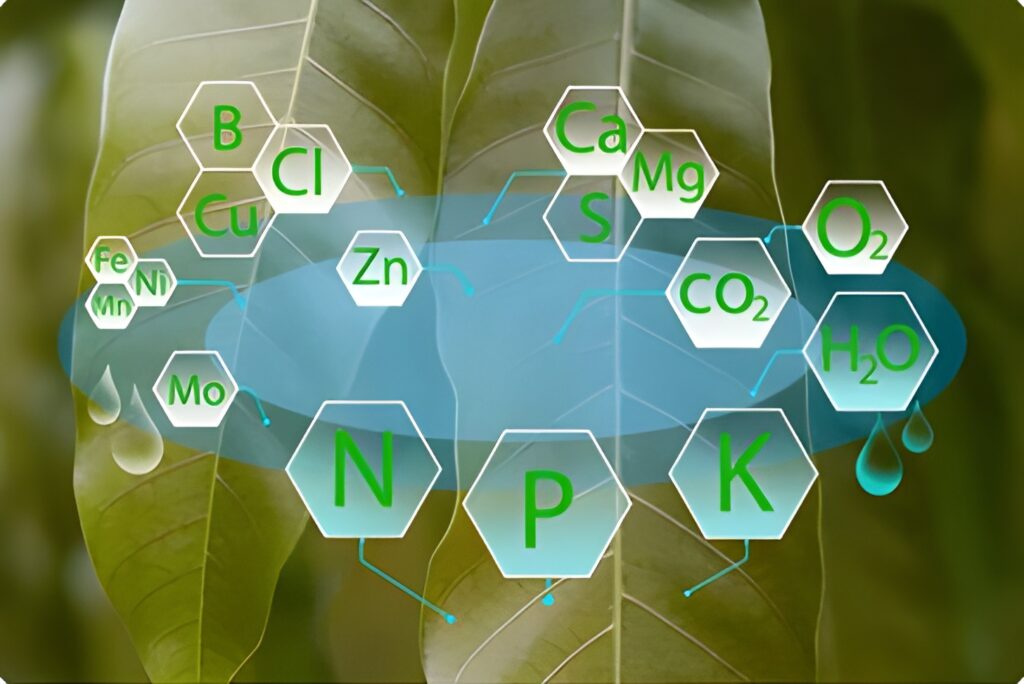
At Agro Vivero del Mediterráneo, we have accumulated vast experience advising and accompanying farmers in the exciting world of pistachios. We understand that the success of a plantation does not lie solely in big decisions, such as the choice of land or the variety of pistachio plant, but also in meticulous attention to detail. Micronutrients, those elements that the tree needs in tiny amounts, are often the great forgotten ones and, nevertheless, can make the difference between a mediocre harvest and an exceptional one. 📈
Today, we want to share with you our knowledge about two of the most critical and, at the same time, most confusing microelements to diagnose: Zinc (Zn) and Manganese (Mn). Their deficiencies manifest themselves with subtle symptoms, often masked or confused with other problems, but their impact on the profitability of the pistachio plantation is direct and significant. Join us in this deep analysis to learn to read the signals our trees send us and to act with the precision that characterizes us.
The silent but vital role of Zinc and Manganese
To understand the importance of an accurate diagnosis, we must first understand exactly what these two elements do inside the pistachio tree. They are not structural components like nitrogen or potassium, but catalysts, the “orchestra conductors” of hundreds of essential metabolic processes.
Zinc (Zn) is fundamental for the synthesis of tryptophan, an amino acid precursor of auxins. And what are auxins? They are the plant hormones responsible for growth. 🌿 Without enough zinc, there are not enough auxins, and without auxins, the tree simply does not develop correctly. Internodes shorten, leaves do not reach their optimal size, and the entire plant takes on a stunted appearance. In addition, zinc plays a crucial role in the stability of cell membranes and in the activation of numerous enzymes. A zinc deficiency not only slows growth but weakens the tree against stresses such as drought or frost.
For its part, Manganese (Mn) is the heart of the photosynthesis process. It is part of the enzymatic complex that breaks the water molecule (photolysis) to release electrons and oxygen, the first step in converting sunlight into energy. ☀️ A manganese deficiency translates directly into a lower photosynthetic capacity, that is, the tree produces less “food” for itself. This affects overall vigor, nut filling, and the accumulation of reserves for the next season. It also participates in nitrogen metabolism and in the synthesis of lignin, a compound that gives rigidity and resistance to plant tissues.
Ignoring these two micronutrients is like trying to build a sturdy house with poor foundations. Sooner or later, the structure will suffer. At Agro Vivero del Mediterráneo, we have seen how plantations with seemingly impeccable macronutrient management did not reach their productive potential due to a hidden Zn or Mn deficiency.
Diagnosing Zinc (Zn) Deficiency: The Growth Thief
Zinc deficiency is one of the most common and economically damaging in pistachios, especially in calcareous soils with high pH (>7.5), very common conditions in the growing areas of the Iberian Peninsula. The great danger of zinc is that its initial symptoms are very subtle and can go unnoticed by the untrained eye, a phenomenon we know as “hidden hunger.” When the symptoms are evident, the production of that season has already been seriously compromised.
Subtle Visual Symptoms to Watch Out For:
-
Microphylly or “Little Leaf”: It is the most characteristic symptom. Young leaves, especially on terminal shoots, do not reach their normal size. They are noticeably smaller, narrower, and sometimes pointed. If we compare an affected shoot with a healthy one, the difference in leaf size is evident.
-
Shortening of Internodes and “Rosetting”: Due to the lack of auxins, the distance between leaves (internodes) is drastically reduced. The shoots do not elongate, and the leaves group at the end forming a kind of rosette. This is a clear symptom indicating an already established deficiency. 🌳
-
Interveinal Chlorosis in Young Leaves: A pale yellowing or mottling appears between the veins of the newest leaves, while the veins remain green. Unlike other chloroses, this one can be irregular and less defined at first. In severe cases, the leaves can turn almost white before becoming necrotic and falling off.
-
Delayed Budding: In spring, trees with zinc deficiency usually bud later and more irregularly than healthy trees. The buds may be smaller and have a lower opening percentage.
Direct Impact on the Harvest:
The lack of zinc not only affects the vegetative part of the tree. Its impact on production is devastating:
-
Lower Fruit Set: Pollen viability and pollen tube development are affected, resulting in a lower fertilization percentage and, therefore, poor fruit set.
-
Increased Fruit Drop: The few fruits that set are more likely to fall prematurely during the summer.
-
Small and Deformed Nuts: Pistachios that reach term are smaller, often empty, or with a deformed shell. This drastically reduces both the yield in kilos and the commercial caliber, directly affecting the profitability of the plantation.
The Definitive Confirmation: Foliar Analysis
Although visual symptoms are an important guide, the only way to confirm a zinc deficiency with certainty and quantify its severity is through a foliar analysis. In our provision of agronomic services, we always insist on the importance of this analysis. Sampling should be done at the right time, generally between July and August, collecting mature leaves from the middle part of the current year’s shoots.
The reference levels we use are the following:
-
Deficient: < 15 ppm (parts per million)
-
Marginal: 15 – 20 ppm
-
Sufficient: 20 – 50 ppm
-
Excess/Toxic: > 300 ppm
A soil analysis is also useful to understand the context. There may be zinc in the soil, but if the pH is very high or there is an excess of phosphorus, it may be blocked and unavailable to the plant. Foliar analysis tells us what the tree is actually absorbing.
Diagnosing Manganese (Mn) Deficiency: The Great Imitator
Manganese deficiency is another nutritional beast. It is often called “the great imitator” because its symptoms can easily be confused with those of iron or even magnesium deficiency. However, there are nuances that, with experience, allow us to differentiate it. Like zinc, its availability is drastically reduced in soils with high pH, well-aerated, and with high levels of organic matter.
Visual Symptoms and Clues for Identification:
-
Interveinal Chlorosis in “Mosaic” or “Net”: This is the most distinctive symptom. Yellowing appears between the veins, but unlike iron chlorosis (where the main and secondary veins remain very green and well-defined), in manganese deficiency the finer veins also tend to yellow, creating a reticulated or pale green mosaic pattern on a yellow background. 🎨
-
Affects Mature Leaves, but Not Old Ones: Unlike zinc, which manifests itself mainly in the youngest leaves, manganese deficiency usually appears in fully developed leaves in the middle or upper part of the shoot. The older leaves at the base usually remain green, as manganese has little mobility within the plant.
-
No Drastic Reduction in Leaf Size: Another key difference with zinc deficiency is that manganese does not usually cause a significant reduction in leaf size or shortening of internodes. The tree maintains its architecture, but with a chlorotic and “sickly” appearance.
-
Appearance by Zones or Branches: It is not uncommon for symptoms to be more severe in one part of the tree than another, often on the side most exposed to the sun, where photosynthetic activity is greater and the demand for Mn is higher.
Physiological and Production Impact:
A tree with a manganese deficiency is a tree that works “at half throttle.” Its impact translates into:
-
Lower Photosynthetic Efficiency: The plant generates fewer sugars, which translates into lower vigor, poorer growth, and lower accumulation of reserves in roots and buds for the next season.
-
Poor Nut Filling: The lack of energy directly affects kernel development, resulting in a higher percentage of empty or poorly filled pistachios.
-
General Weakness: A weakened metabolism makes the tree more susceptible to pest and disease attacks.
Foliar Analysis: The Indispensable Tool
Again, when in doubt, foliar analysis is our best ally. It is the only way to avoid unnecessary or wrong treatments (for example, applying iron chelates when the problem is manganese). The sampling time is the same as for zinc (mid-summer).
The reference levels for manganese are:
-
Deficient: < 20 ppm
-
Marginal: 20 – 30 ppm
-
Sufficient: 30 – 200 ppm
-
Excess/Toxic: > 400 ppm
It is important to note that the balance between nutrients is key. An excess of manganese can induce an iron deficiency, and vice versa. Therefore, a professional interpretation of the analysis results is crucial, something our technical team places special emphasis on. If you have doubts about your analyses or need a fertilization plan, do not hesitate to contact us.
Management and Correction Strategies: Our Work Philosophy
At Agro Vivero del Mediterráneo, we believe in a proactive and holistic approach. It is not just about applying a product when a problem appears, but about creating a resilient system that minimizes the appearance of these deficiencies. Correction is necessary, but prevention is the key to long-term success.
Prevention Starts Before Planting
Everything starts with good planning. A complete soil analysis before establishing the plantation is an investment, not an expense. It allows us to know the pH, organic matter level, texture, and the presence of possible blocking elements. With this information, we can make amendments (organic, elemental sulfur in very alkaline soils, etc.) to improve the starting conditions. Good land preparation creates a healthy root environment where nutrients are more accessible.
Curative Solutions for Zinc Deficiency
Once the deficiency is diagnosed, we must act quickly and effectively. The application method will depend on the severity and the timing.
-
Foliar Applications: They are the fastest and most efficient way to correct an acute zinc deficiency. The tree absorbs it directly through the leaves.
-
Application Timing: There are two key windows. The first is in early spring, when the leaves are expanding and have maximum absorption capacity. 1-2 treatments separated by 15-20 days can be carried out. The second, and for us very important, is a post-harvest (autumn) application, before leaf fall. This treatment does not seek to correct the symptoms of that year, but to increase zinc reserves in the buds and wood, ensuring strong and vigorous budding the following spring.
-
Products: Zinc sulfate is an economical and effective option, but care must be taken with doses and application timing (with high temperatures it can be phytotoxic). We usually recommend the use of zinc chelates (Zn-EDTA) or zinc complexes with amino acids or organic acids, which are safer for the plant, have greater absorption efficiency, and are more stable in the tank mix.
-
Dosage: Doses vary depending on the product, but as a reference, for zinc sulfate, concentrations of 200-500 grams per 100 liters of water can be used, while with chelates the doses are much lower and the manufacturer’s instructions must be followed.
-
-
Soil Applications: They are a longer-term strategy, aimed at increasing the levels of available zinc in the root zone.
-
Products and Method: Zinc sulfate can be applied directly to the soil in winter, burying it in the drip line. The dose can range between 500 grams and 2,000 grams per tree, depending on the age and severity of the deficiency. In drip irrigation systems, the application of zinc chelates via fertigation is a very efficient option, as we take the nutrient directly to the root absorption zone.
-
Considerations: In very calcareous soils (pH > 8), the effectiveness of soil applications is greatly reduced, with foliar applications being the main strategy.
-
Curative Solutions for Manganese Deficiency
The correction of manganese deficiency is based almost exclusively on the foliar route, since manganese applied to the soil oxidizes very quickly in alkaline pH conditions, becoming insoluble and unavailable to the plant.
-
Foliar Applications: It is the method of choice par excellence.
-
Application Timing: The best time is in spring, once the leaves are well developed (May-June). This is when the demand for photosynthesis is highest. Several treatments may be necessary throughout spring and early summer if the deficiency is severe.
-
Products: Manganese sulfate is very effective and reasonably priced. There are also manganese chelates (Mn-EDTA) and other formulations that improve absorption and reduce phytotoxicity risks. We often recommend products that combine several micronutrients (Zn, Mn, Fe) for a more balanced treatment, always based on the results of the foliar analysis.
-
Dosage: With manganese sulfate, concentrations are usually around 300-600 grams per 100 liters of water. It is crucial to thoroughly wet the entire foliar mass of the tree to ensure good absorption.
-
An Integrated Approach for Sustainable Success
Managing zinc and manganese deficiencies should not be a series of isolated and reactive actions. At Agro Vivero del Mediterráneo we promote an integrated approach that combines prevention, constant monitoring, and precise corrective action.
-
Know Your Soil: Start with a complete analysis before planting and repeat it every 4-5 years.
-
Monitor Your Trees: Conduct regular visual inspections throughout the crop cycle. Learn to recognize the subtle symptoms we have described. 🕵️♂️
-
Confirm with Foliar Analyses: Don’t guess. Invest in an annual or biennial foliar analysis. It is the most valuable tool for making informed and efficient fertilization decisions.
-
Create an Annual Nutrition Plan: Don’t just apply nitrogen, phosphorus, and potassium. Integrate micronutrients into your fertilization program, both in preventive and corrective applications.
-
Seek Expert Advice: Every farm is a world of its own, with its own soil, climate, and management conditions. Having the support of specialized technicians can save you a lot of problems and money. Our team is at your disposal to help you design the nutritional strategy your plantation needs. We invite you to request a personalized quote for your project, where we will guide you from choosing the plant to managing the adult crop.
Mastering the nutrition of micronutrients like zinc and manganese is what differentiates an amateur farmer from a pistachio professional. It is the details that build profitability. Paying attention to these subtle signals that the trees send us and acting accordingly will not only improve your short-term yields but will guarantee the health, longevity, and productivity of your plantation for years to come. At Agro Vivero del Mediterráneo, we are committed to your success and want to be your partner on this fascinating journey. 🤝