


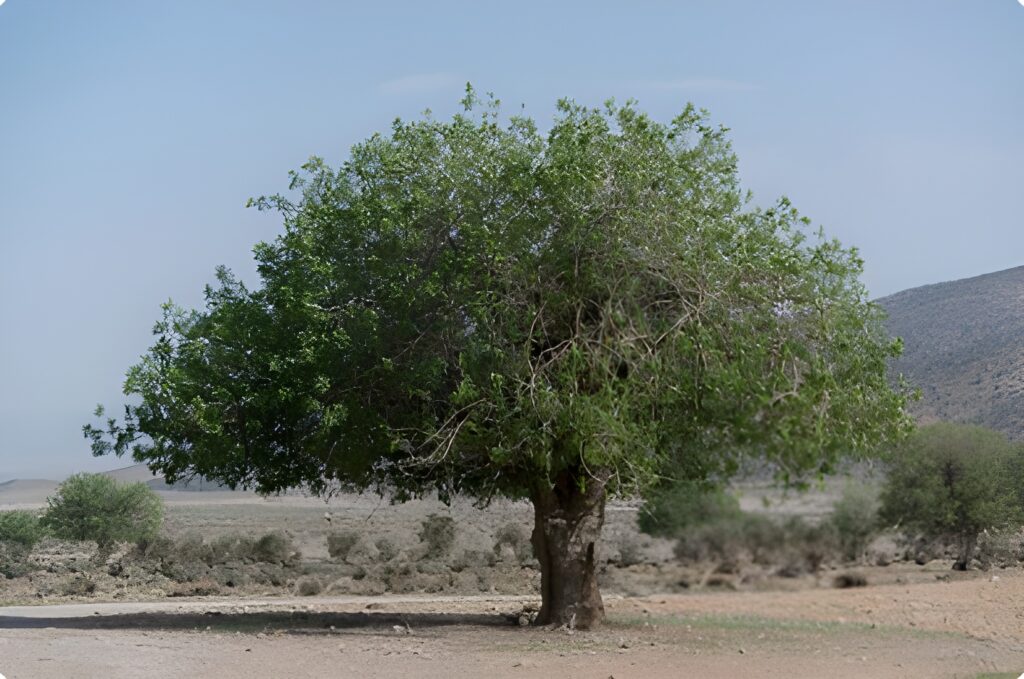
Hello to all pistachio lovers! 👋
At Agro Vivero del Mediterráneo, we are aware that pistachio cultivation is more than just a simple agricultural activity; it is a long-term investment, a commitment to quality, and a tradition that, combined with innovation, allows us to look towards a promising future. As experts with years of experience in the sector, we have seen techniques evolve and have accompanied countless farmers on the path to success with their pistachio plantations. Today, we want to delve into one of the most exciting frontiers of agricultural biotechnology: CRISPR-Cas9 gene editing and its revolutionary potential for the pistachio tree. 🌳🔬
The pistachio, that prized nut with an unmistakable flavor and extraordinary nutritional properties, faces growing challenges, like many other crops. Climate change, with its prolonged droughts, heatwaves, and altered rainfall patterns, demands that we seek innovative solutions. Added to this are diseases and pests that can significantly reduce production and profitability. At Agro Vivero del Mediterráneo, we firmly believe that science and technology are our best allies in overcoming these obstacles.
The CRISPR-Cas9 Revolution: A Precision Tool for the Pistachio Tree
You may have heard of CRISPR (Clustered Regularly Interspaced Short Palindromic Repeats) and Cas9 (CRISPR-associated protein 9). In essence, it is a technology that works like high-precision “molecular scissors.” It allows us to modify an organism’s DNA in a very specific way: we can cut, delete, add, or replace genetic sequences with unprecedented accuracy. Imagine being able to “edit” the book of life of a pistachio tree to enhance its best qualities or correct its vulnerabilities. It is truly fascinating!
Unlike traditional genetic modification techniques, which often involve inserting genes from other species, CRISPR can be used to make subtle changes within the plant’s own genome, accelerating processes that nature would take centuries to achieve through conventional selection and crossbreeding. This opens up an immense range of possibilities for developing stronger, more productive pistachio varieties adapted to our environment.
At Agro Vivero del Mediterráneo, we follow these advances very closely, because we understand that innovation is key to ensuring the sustainability and plantation profitability of pistachios. The goal is not to create artificial “super plants,” but to optimize the natural characteristics of the pistachio tree so that it can thrive even in adverse conditions.
Current Challenges in Pistachio Cultivation
Before diving into how CRISPR can help us, it is important to remember the challenges we face as pistachio producers:
-
Water Stress and Salinity: Water is an increasingly scarce and precious resource. Many of our growing areas face recurrent droughts and, in some cases, soil salinization. We need pistachio trees that make more efficient use of water and better tolerate certain levels of salinity. 💧🧂
-
Fungal and Bacterial Diseases: Diseases such as Verticillium wilt (caused by Verticillium dahliae), Alternaria, Septoria, or bacteriosis (Pseudomonas syringae) can cause significant damage, affecting both production and tree longevity. Combating them with traditional methods can be costly and have environmental implications. 🍄🦠
-
Pests: Insects such as the pistachio psyllid (Agonoscena pistaciae) or various species of aphids and bark beetles can drastically reduce the harvest and weaken the trees. Integrated pest management is fundamental, but genetic resistance would be a major breakthrough. 🐛🐜
-
Climate Change Adaptation: In addition to drought, rising average temperatures, heatwaves, and extreme weather events (late frosts, hailstorms) put considerable stress on pistachio trees. We need more resilient varieties. ☀️🌡️
-
Long Juvenile Period: Traditionally, a pistachio plant can take between 5 and 7 years to enter significant production. Reducing this unproductive period would have a very positive economic impact for farmers. ⏳
-
Production Variance (Alternate Bearing): The phenomenon of alternate bearing, or alternation in production (an abundant harvest year followed by a scarce one), is characteristic of the pistachio tree and complicates planning and profitability. Although it is a complex trait, genetics could play a role in mitigating it. 📊
-
Pollination and Fruit Set: Ensuring good pollination and optimal fruit set is crucial. Environmental and genetic factors influence this process.
These challenges, far from discouraging us, drive us at Agro Vivero del Mediterráneo to explore all the tools at our disposal, and CRISPR is emerging as one of the most promising.
CRISPR to the Rescue: Developing More Resistant Pistachio Trees
One of the most direct and hopeful applications of CRISPR gene editing in pistachio trees is the development of varieties with improved resistance to various threats.
-
Disease Resistance:
Imagine being able to identify the genes that make a pistachio tree susceptible to, for example, Verticillium wilt. With CRISPR, we could “deactivate” or modify those specific genes so that the fungus cannot infect the plant or so that the plant develops a much more effective defensive response. This would not only protect the harvest but also reduce the need for fungicide treatments, contributing to more sustainable and ecological agriculture. Genes involved in plant defense pathways are being investigated, and CRISPR allows them to be enhanced. For example, genes could be edited to strengthen the cell wall of the roots, making it difficult for the pathogen to enter, or to improve the production of natural antifungal compounds by the tree itself. At Agro Vivero del Mediterráneo, we understand that a plant that is healthy from its genetic origin is the foundation of a successful plantation. -
Drought and Salinity Tolerance:
The pistachio is a rustic tree, native to arid regions, but extreme conditions can overcome it. CRISPR offers us the possibility of enhancing natural drought tolerance mechanisms. For example, we could edit genes to improve water use efficiency (WUE), meaning the plant produces more biomass for every liter of water consumed. This could be achieved by modifying genes that regulate the opening and closing of stomata (small pores on the leaves where gas exchange and transpiration occur), or by improving root system development for greater water uptake.
Similarly, for salinity tolerance, genes could be identified and edited that allow the plant to exclude excess salts from the soil or compartmentalize them in cellular vacuoles where they cause less damage. Achieving pistachio trees that thrive with less water or in slightly saline soils would expand the areas suitable for their cultivation and provide greater security to existing pistachio plantations. Our advisory services have always emphasized the importance of adaptation to the environment. -
Pest Resistance:
Although it is a more complex field, CRISPR could also contribute to developing pistachio trees that are less appetizing or more resistant to certain pests. This could be achieved by modifying genes that produce volatile compounds that attract insects, or by enhancing the production of the plant’s natural defenses, such as insecticidal proteins or secondary metabolites that deter insects from feeding. For example, genes could be edited so that the plant constitutively produces small amounts of a protein that is toxic to a specific pest insect but harmless to other organisms and for human consumption. The reduction in the use of chemical insecticides would be a considerable environmental and economic benefit. -
Adaptation to Extreme Temperatures:
Climate change brings with it more frequent and intense heatwaves. CRISPR could be used to improve the thermo-tolerance of pistachio trees. This would involve editing genes that code for heat shock proteins (HSPs), which help protect cells from heat damage, or genes that regulate the production of antioxidants to combat oxidative stress induced by high temperatures. Modifications could also be sought that optimize photosynthesis at higher temperatures or improve the stability of cell membranes. Greater heat resistance would ensure the viability of the crop in a changing climate.
CRISPR for More Productive and Efficient Pistachio Trees
In addition to resistance, gene editing can play a crucial role in improving the productivity and efficiency of pistachio plantations.
-
Reduction of the Juvenile Period:
One of the greatest desires of any farmer starting a pistachio plantation is to see it enter production as soon as possible. The long juvenile period, which can extend from 5 to 7 years and even longer in some conditions, represents an initial investment with no returns for a considerable time. With CRISPR, the genes that regulate the transition from the juvenile to the adult phase in pistachio trees could be investigated and edited. By modifying these “genetic clocks,” we could get the trees to start flowering and fruiting one or two years earlier. This would not only accelerate the return on investment but also allow for faster selection of improved varieties. At Agro Vivero del Mediterráneo, we know that time is money for our clients. -
Yield Increase:
The yield of a pistachio tree depends on many factors: number of flowers, fruit set percentage, nut size, etc. CRISPR could be used to optimize some of these aspects. For example, genes that influence flowering prolificacy or pollen viability and stigma receptivity could be edited to improve fruit set. Work could also be done on genes that control the final size of the pistachio or the fill percentage, always seeking a balance that does not compromise quality. Increasing the number of pistachios per tree or the individual weight of each one, while maintaining or improving their organoleptic characteristics, is a key objective to improve plantation profitability. -
Mitigation of Alternate Bearing:
Alternation in production is a complex challenge, influenced by hormonal, nutritional, and genetic factors. While eliminating it completely is difficult, CRISPR could help mitigate it. Key genes in regulating resource allocation within the tree (for example, between vegetative growth and nut production) or in the hormonal signaling that triggers this behavior could be investigated. Subtle modifications could lead to more consistent production year after year, facilitating management and marketing. -
Improvement of Nut Quality:
Although the pistachio is already an exceptional food, there is always room for improvement. CRISPR could be used to subtly modify the composition of the nut, for example, to increase the content of certain beneficial fatty acids, antioxidants, or vitamins. Work could also be done on aspects such as the ease of shell splitting or the intensity of the green color of the cotyledon, characteristics appreciated by consumers. At Agro Vivero del Mediterráneo, quality is our hallmark. -
Optimization of Tree Architecture:
The shape and structure of the tree (its architecture) influence light capture, aeration, ease of pruning, and harvesting. With CRISPR, genes that control the branch insertion angle, foliage density, or tree height could be modified, seeking a bearing that facilitates agricultural tasks and optimizes production. Trees that are more efficient in their use of space and light could translate into more productive plantations.
The Process: From the Laboratory to the Field with CRISPR
Developing a new pistachio variety using CRISPR is a complex and meticulous process that combines cutting-edge biotechnology with traditional agronomic techniques. Although each case is unique, the general steps are usually:
-
Identification of the Target Gene: The first step, and one of the most crucial, is to identify the specific gene or genes to be modified. This requires a deep understanding of pistachio genomics and the function of its genes. Do we want to improve resistance to a disease? We need to know which genes are involved in susceptibility or the defensive response. Are we looking to reduce the juvenile period? The genetic regulators of flowering must be identified. This phase involves a lot of basic research.
-
Design of the CRISPR-Cas9 Tool: Once the target gene is identified, a specific guide RNA (gRNA) molecule is designed. This gRNA is what “guides” the Cas9 protein (the “molecular scissors”) to the exact point on the DNA to be edited. The precision of the gRNA is fundamental to ensure that the editing occurs only in the desired location and not in other parts of the genome.
-
Introduction of the CRISPR-Cas9 System into Pistachio Cells: This is one of the biggest technical challenges. The CRISPR-Cas9 complex (the Cas9 protein and the gRNA) needs to be introduced into the plant cells of the pistachio tree. There are several methods for this, such as transformation mediated by Agrobacterium tumefaciens (a bacterium that has the natural ability to transfer DNA to plants) or biolistics (shooting DNA-coated microparticles directly into the cells). In the case of woody trees like the pistachio, regenerating a complete plant from transformed cells can be a long and laborious process. Explants (small pieces of plant tissue, such as young leaves or embryos) are typically used and cultured in vitro.
-
Selection of Edited Cells and Plant Regeneration: After transformation, not all cells will have incorporated and correctly used the CRISPR-Cas9 system. Therefore, it is necessary to select those cells in which the gene editing has occurred successfully. This can be done using selection markers or through direct molecular analysis. Once the edited cells are selected, they are induced to regenerate a complete plant using tissue culture techniques. This regeneration process can take months or even years for woody species.
-
Verification of Editing and Phenotypic Analysis: When regenerated plants are obtained, it is crucial to verify that the gene editing has been performed correctly and that there have been no unintended edits elsewhere in the genome (off-targets). This is done through DNA sequencing. In addition, it must be checked whether the editing has had the desired effect at the phenotypic level (i.e., if the plant actually shows the improved characteristic, such as greater drought resistance or early production). These plants will be grown under controlled conditions (greenhouses, growth chambers) and then in the field to evaluate their agronomic behavior over several years.
-
Field Trials and Deregulation (if applicable): The new genetically edited pistachio lines must undergo rigorous field trials under different environmental conditions to confirm their stability, yield, and adaptation. Depending on the nature of the edit and the legislation of each country, these plants may or may not be subject to the same regulation as traditional genetically modified organisms (GMOs). In many cases, if genes from other species have not been introduced, CRISPR-edited plants could have a simpler regulatory path.
As you can see, it is a long road that requires investment, patience, and a high level of specialization. At Agro Vivero del Mediterráneo, although we do not directly perform gene editing in the laboratory, we collaborate and stay informed through research centers and universities that are at the forefront of these technologies. Our role is, and will be, to evaluate these innovations and, once their efficacy and safety are proven, to make the best pistachio plant adapted to their needs available to farmers.
Agro Vivero del Mediterráneo: Commitment to Innovation and the Future of the Pistachio
At Agro Vivero del Mediterráneo, our philosophy is based on combining traditional experience with constant innovation. We have been dedicated to the pistachio sector for decades, offering not only plants of the highest quality but also a complete range of services that range from initial advice for plantation design to post-sales follow-up.
CRISPR-Cas9 gene editing represents for us one more tool, albeit an extraordinarily powerful one, to continue fulfilling our commitment: offering farmers the best solutions to optimize their pistachio plantations and improve their plantation profitability.
We imagine a future where we can offer pistachio varieties that:
-
Require less water and fertilizers, reducing environmental impact and production costs.
-
Are naturally resistant to major local diseases and pests, decreasing dependence on phytosanitary products.
-
Enter production more quickly, accelerating the return on investment.
-
Offer more stable and predictable harvests, facilitating planning and marketing.
-
Produce superior quality pistachios, satisfying the demands of the most discerning consumers.
This future is not as distant as it seems. Research on CRISPR applied to woody crops is advancing by leaps and bounds. While technical and regulatory challenges remain to be overcome, the potential is undeniable.
We, as specialized nurserymen, have the responsibility to be at the forefront, to understand these technologies, and to prepare to incorporate them responsibly. This involves not only following scientific advances but also participating in the dialogue about their ethical, social, and environmental implications. If you wish to start a project or need advice, do not hesitate to get in contact with our team or request information through our quote reservation form.
Ethical Considerations and Public Perception
It is natural that any new technology involving the modification of an organism’s genes generates questions and even concerns. At Agro Vivero del Mediterráneo, we believe that transparency and open dialogue are fundamental.
-
Difference from Traditional GMOs: It is important to note that many of the edits made with CRISPR do not involve the insertion of genes from other species (transgenesis), but rather are precise edits within the plant’s own genome (cisgenesis or intragenesis). In some cases, the edit may simply consist of “turning off” a gene or making a small change similar to those that occur spontaneously in nature or through conventional breeding techniques, but much faster and more targeted. This has led to regulations for CRISPR-edited products being different and less strict than for traditional GMOs in some countries.
-
Food and Environmental Safety: Like any new plant variety, genetically edited pistachio plants will have to undergo rigorous controls to guarantee their safety for human consumption and the environment before commercialization. Studies will evaluate their nutritional composition, the possible presence of new allergens (although this is highly unlikely if foreign genes are not introduced), and their impact on the ecosystem. The precision of CRISPR minimizes the risk of unexpected changes in the genome.
-
Consumer Acceptance: Public perception is key. It is fundamental to communicate clearly and honestly the benefits of this technology, how it works, and what safety measures are applied. Highlighting that the goal is to achieve more sustainable agriculture, with less use of resources and phytosanitary products, and with better quality products, can help increase acceptance.
-
Access to Technology: It is important that the benefits of these innovations reach all farmers, including small and medium-sized producers, and that they do not become an exclusive technology of large corporations.
At Agro Vivero del Mediterráneo, we advocate for a prudent yet optimistic approach, where science advances hand in hand with ethics and social responsibility.
The Future of Pistachio Cultivation is Promising and CRISPR is Part of It 🚀
Let’s visualize for a moment what the pistachio plantations of the future could be like thanks to gene editing:
-
More Resilient Plantations: Trees that better withstand periods of drought, that are not severely affected by heatwaves, and that resist the most common diseases without the need for intensive treatments. This means fewer losses for the farmer and a lower environmental impact.
-
Greater Productive Efficiency: Pistachio trees that enter production earlier, that offer more regular and abundant harvests, and whose nuts have the characteristics demanded by the market. This translates directly into better plantation profitability.
-
Reinforced Sustainability: A lower use of water, fertilizers, and pesticides contributes to a more sustainable and environmentally friendly agricultural model, something increasingly valued by society.
-
Proactive Adaptation: Instead of reacting to problems as they arise, we will be able to anticipate and develop varieties prepared for future challenges, such as new strains of pathogens or even more extreme climatic conditions.
CRISPR-Cas9 technology is not a “silver bullet” that will solve all problems overnight, but it is an extraordinarily powerful tool that, combined with good agronomic practices, proper soil and water management, and a deep knowledge of the crop, will positively transform the pistachio sector.
At Agro Vivero del Mediterráneo, we are excited about these prospects. Our commitment is to continue being a benchmark in the sector, not only by providing the best pistachio plant and the most complete services, but also by being a bridge between scientific advances and farmers. We want our clients to be the first to benefit from these innovations, always in a safe and proven manner.
We invite you to stay informed, to ask questions, to debate. The future of the pistachio is being written today, and gene editing is one of its most exciting chapters. If you are curious to know more about how to optimize your current plantation or plan a new one with an eye on the future, do not hesitate to get in contact with us or fill out our quote reservation form for personalized advice.
Conclusion: Innovating Together Towards a Stronger Pistachio Sector
CRISPR-Cas9 gene editing represents a true revolution in plant breeding, and its applications in the pistachio tree are immensely promising. From the development of varieties resistant to diseases and environmental stress to the improvement of productivity and nut quality, this technology provides us with unprecedented tools to face the challenges of the 21st century and ensure a prosperous and sustainable future for pistachio cultivation.
At Agro Vivero del Mediterráneo, as your trusted experts in pistachio cultivation, we reaffirm our commitment to responsible innovation. We will closely follow every advance, evaluating its potential and preparing to integrate the best genetic solutions into our offering of pistachio plants and services. We believe that, by working together—scientists, nurserymen, and farmers—we can make the pistachio sector a benchmark for resilience, productivity, and sustainability.
The path towards the widespread implementation of these techniques will take time and effort, but the potential benefits for plantation profitability and food security are too great not to explore them with determination and optimism. The future of the pistachio is green, and science helps us cultivate it! 🌱✨
Thank you for joining us on this journey through the forefront of agricultural technology! We will be delighted to answer your questions and help you with your projects.